Are you a professional woodworker constantly pushing the boundaries of intricate design and precision craftsmanship? The right heavy-duty scroll saw isn’t just a tool; it’s the heart of your workshop, enabling you to transform complex visions into tangible works of art. Investing in a professional-grade scroll saw means seeking unparalleled durability, whisper-quiet operation, and surgical accuracy that can withstand hours of continuous use. This comprehensive guide will navigate you through the top heavy-duty scroll saws available in 2026, exploring their defining features, comparing leading brands, and offering essential advice on selection, usage, and maintenance to ensure your next scroll saw is truly a cut above the rest.
What is a Scroll Saw?
A scroll saw is a specialized woodworking tool renowned for its ability to cut intricate curves and delicate joinery in various materials, primarily wood. Unlike a band saw, which uses a continuous loop blade, a scroll saw employs a small, fine blade that moves rapidly up and down. This reciprocating action, combined with a thin blade, allows for incredibly tight turns and interior cuts that would be impossible with other saws.
For professionals, the applications of a scroll saw are vast and critical. It is indispensable for creating detailed fretwork in furniture, crafting precise inlays and marquetry, producing custom puzzles, and shaping complex joinery components. From fine art pieces to decorative architectural elements, a heavy-duty scroll saw provides the control and accuracy needed to elevate projects requiring exceptional detail and finesse, making it a cornerstone for serious artisans and custom fabricators.
Key Features Defining a Professional Heavy-Duty Scroll Saw
When selecting a heavy-duty scroll saw for professional use, several critical features differentiate top-tier models from hobbyist machines. These attributes ensure the saw can handle demanding workloads, maintain precision over time, and contribute to an efficient, productive workshop.
The throat capacity is paramount, typically ranging from 20 inches upwards. A larger throat allows professionals to work with bigger workpieces, offering greater versatility for a wide array of projects, from large panels to intricate designs on broader surfaces. This extended reach minimizes the need to reposition materials, streamlining workflows and enhancing creative freedom.
Motor power and variable speed control are equally vital. Professional saws boast robust motors, often 1.3 amps or higher, delivering consistent power for cutting various wood species and thicknesses. Variable speed, usually from 400 to 1800 strokes per minute (SPM), allows for precise adjustment to match the material and cut type, ensuring smooth, burn-free results and optimal control for delicate tasks.
Minimizing vibration is crucial for accuracy and user comfort during extended operation. High-quality scroll saws incorporate advanced vibration reduction systems, such as double parallel link arm designs and heavy cast-iron bases. These features stabilize the machine, reduce operator fatigue, and ensure the blade tracks true, even during intricate cuts.
Efficient blade changes are a hallmark of a professional saw. Look for tool-free blade clamps and tensioning systems that allow for quick, effortless blade swaps. Features like an upper arm that lifts and locks or flip-open side panels drastically simplify internal cuts and blade rethreading, maximizing uptime and project flow. Pinless blades are standard for intricate detail work, requiring compatible clamping mechanisms.
The table design also significantly impacts functionality. A large, precision-ground cast-iron table provides a stable, low-friction work surface. The ability to bevel up to 45 degrees left and right is essential for angled cuts. Some advanced models even feature a tilting head rather than a tilting table, which keeps the workpiece flat and easier to manage during angled operations, offering enhanced control and safety.
Finally, overall durability and build quality are non-negotiable. Heavy-duty scroll saws are constructed with robust materials designed to withstand continuous, rigorous use in a professional setting. They are engineered for longevity, minimizing downtime and ensuring reliable performance day after day. Ergonomic considerations such as conveniently placed controls, integrated dust blowers or ports, and work lights further enhance efficiency and user experience.
 Close-up of a heavy-duty scroll saw highlighting its robust cast iron table, variable speed controls, and quick-release blade clamp for professional use.
Top Heavy-Duty Scroll Saw Brands and Models for Professionals
For professionals seeking the finest heavy-duty scroll saws, several brands consistently stand out for their exceptional performance, durability, and advanced features. These machines are engineered to meet the rigorous demands of continuous workshop operation and intricate projects.
The DEWALT DW788 Variable Speed Scroll Saw is often cited as a benchmark for professional scroll saws. Its double parallel-link arm design is celebrated for dramatically reducing vibration, resulting in incredibly smooth and accurate cuts. With a 20-inch throat capacity and variable speeds from 400 to 1,750 SPM, the DW788 handles demanding applications with ease. Its tool-free blade clamps and conveniently located controls make blade changes and tension adjustments swift, a crucial factor in productivity.
Delta Power Tools, particularly models like the Delta 40-694, are recognized for their superior durability and robust construction. Featuring a 20-inch throat and variable speed control, Delta saws are built to last, offering reliable performance with minimal vibration. The large cast-iron table and efficient blade tensioning system contribute to its professional appeal, providing a stable platform for intricate work.
For those prioritizing innovative design, Excalibur scroll saws, often identified by their unique tilting head mechanism rather than a tilting table, offer distinct advantages. This design keeps the workpiece flat, providing better control and safer operation for angled cuts. Excalibur saws are known for their smooth performance and precision, making them a favorite for detailed fretwork and marquetry.
Hegner Multimax series scroll saws from Germany are legendary for their unparalleled build quality and longevity. Often considered a lifetime investment, Hegner saws are prized for their extremely precise, true vertical cutting action and virtually vibration-free operation. While the blade changing mechanism can be more traditional, their cutting accuracy and ability to handle various materials with finesse remain unmatched by many, making them a top choice for dedicated artisans.
The Jet JWSS-22B 22-Inch Scroll Saw is another professional-grade option, particularly favored for marquetry due to its excellent blade-holding system and an arm-lift feature that simplifies internal cuts. Its 22-inch throat capacity and robust construction provide ample space and stability for larger projects, while variable speed control offers versatility for different materials.
WEN LL2156 21-inch Parallel Arm Scroll Saw provides a large capacity and user-friendly features. Its flip-open side panels make blade changes a breeze, and its solid steel table accommodates substantial workpieces. While sometimes considered a more accessible professional option, its performance can rival higher-end models, especially for projects requiring extended reach.
King Industrial Scroll Saws, such as the KXL-30/100, also feature the head-tilt design, enhancing control during angled operations. With generous throat capacity and variable speed motors, King saws offer reliable performance for demanding professional tasks, emphasizing user convenience and precision.
| Model | Throat Capacity | Motor (Amps) | Speed (SPM) | Tilt Type | Key Features |
|---|---|---|---|---|---|
| DEWALT DW788 | 20-inch | 1.3 | 400-1750 | Table | Double parallel-link arm for minimal vibration, tool-free blade clamps, conveniently located controls. |
| Delta 40-694 | 20-inch | 1.3 | 400-1750 | Table | Robust cast-iron construction, efficient blade tensioning, large work table. |
| Excalibur EX Series | 16-30 inch | Varies | 400-1400 | Head | Tilting head design for flat workpiece, smooth operation, high precision. |
| Hegner Multimax Series | 14-22 inch | Varies | Varies | Table | Exceptional durability, true vertical cut, virtually vibration-free, long lifespan. |
| Jet JWSS-22B | 22-inch | 1.3 | 400-1750 | Table | Superior blade-holding system, arm-lift for easy internal cuts, robust. |
| WEN LL2156 | 21-inch | 1.6 | 400-1600 | Table | Flip-open side panels for easy blade changes, large capacity, solid steel table. |
| King Industrial KXL-30/100 | 22-inch | 1.3 | 550-1550 | Head | Tilting head for better workpiece control, easy access controls, built-in dust blower. |
How to Choose the Right Heavy-Duty Scroll Saw for Your Professional Workshop
Selecting the ideal heavy-duty scroll saw involves a careful evaluation of your specific professional needs, budget, and workspace limitations. Making an informed decision ensures you invest in a tool that will enhance your craft and stand the test of time.
Begin by assessing your typical projects. Do you primarily work with large sheets of wood for intricate fretwork, or are you focused on small, highly detailed marquetry pieces? The size and complexity of your projects will dictate the necessary throat capacity and the precision features required. If you often cut thicker materials, a more powerful motor and a stable, vibration-dampened design become crucial. Consider the frequency of use; a saw destined for daily, extended operation demands a higher level of durability and robust construction.
Budget considerations are always a factor, but for professionals, viewing a scroll saw as a long-term investment is key. While some entry-level professional models offer excellent value, higher-end saws like Hegner often provide unmatched longevity and cutting perfection that can justify a greater initial outlay. Factor in not just the purchase price, but also potential maintenance, blade costs, and the overall impact on your productivity and quality of work.
Your workspace and setup also play a significant role. Most heavy-duty scroll saws are stationary benchtop models. However, consider if you need an optional stand for optimal working height and ergonomics, especially if you spend long hours at the machine. Ensure you have adequate space around the saw for maneuverability of large workpieces and for efficient dust collection systems. A well-organized and ergonomic setup is essential for both safety and efficiency in a professional shop.
When creating an essential features checklist, prioritize the following: a minimum 20-inch throat capacity for versatility, a variable speed range (400-1800 SPM) for cutting diverse materials, a robust motor (1.3 amp or higher), and advanced vibration dampening for precision. Look for tool-free blade changes and easy blade access to minimize downtime. A large, cast-iron table that bevels, or a head-tilting mechanism, is important for angled cuts. Finally, consider integrated dust management, reliable hold-down clamps, and clear lighting to maintain a clean and safe work area.
Optimizing Performance: Usage and Maintenance of Your Professional Scroll Saw
Maximizing the performance and lifespan of your heavy-duty scroll saw involves diligent usage and consistent maintenance practices. These steps ensure precision, safety, and efficiency in your professional woodworking endeavors.
Proper preparation is the foundation of successful scrolling. Always ensure your workspace is clean and well-lit, free from obstructions. Selecting the correct blade for your material and cut type is paramount; thinner blades with more teeth per inch (TPI) are for intricate details and delicate materials, while thicker blades with fewer TPI are suited for faster cuts in harder woods. Properly tensioning the blade—tight enough to produce a clear ping when plucked, but not overly stretched—is critical for straight cuts and preventing blade breakage. Secure your workpiece with a hold-down clamp to prevent lifting and ensure consistent pressure against the table.
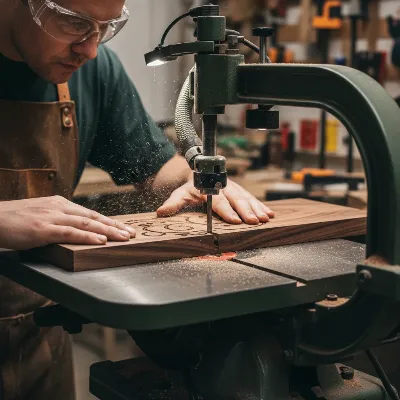 A professional woodworker demonstrating a precise cutting technique on a heavy-duty scroll saw, emphasizing focus and control.
Mastering cutting techniques requires practice and patience. For basic cuts, guide the material slowly and evenly into the blade, allowing the saw to do the work. For intricate designs, rotate the workpiece smoothly, using minimal pressure to follow the lines. When performing interior cuts, drill a pilot hole in the waste area of your design, thread the blade through, and then clamp it back into the saw. Angle cutting, either by tilting the table or the saw head, demands careful setup and slow, controlled passes to maintain accuracy. Stack cutting, where multiple thin pieces are taped together, allows for identical repetitive cuts, enhancing productivity for production work.
Safety protocols are non-negotiable. Always wear appropriate eye protection to shield against flying debris. Keep your fingers clear of the blade path, utilizing push sticks or a hold-down foot when working with smaller pieces. Ensure the saw is securely mounted and stable, minimizing any potential for tipping or movement. Maintain a comfortable posture to reduce fatigue, especially during extended cutting sessions. Disconnect the power before performing any blade changes or adjustments.
Consistent maintenance is key to extending the life of your scroll saw. Regularly clean sawdust and debris from the table, blade clamps, and motor vents using a shop vacuum or compressed air. Inspect blades for dullness or damage and replace them promptly; a dull blade will tear wood and lead to inaccurate cuts. Periodically check and lubricate moving parts according to the manufacturer’s recommendations. Ensure all fasteners are tight, and inspect the power cord for any signs of wear. Proper care not only preserves the tool but also maintains its cutting precision and ensures a safe operating environment for years to come.
Common Issues and Troubleshooting with Professional Scroll Saws
Even the most robust heavy-duty scroll saws can encounter issues over time. Understanding common problems and knowing how to troubleshoot them can save valuable time and prevent more significant damage.
Blade breakage is a frequent occurrence, often caused by improper blade tension, using the wrong blade for the material, or forcing the workpiece too quickly. To prevent this, ensure your blade tension is optimal (a high-pitched ping), select a blade with the correct TPI for your material, and guide the workpiece gently. If a blade breaks, turn off the saw immediately, carefully remove the broken pieces, and replace with a new, properly tensioned blade.
Excessive vibration and cutting inaccuracies can be frustrating. Vibration often stems from an unstable mounting, worn-out internal components, or an unbalanced blade. Check that your saw is securely bolted to a stable workbench or stand. Inspect the saw’s internal linkages for wear and ensure the blade is correctly installed and tensioned. Inaccuracies like non-square cuts can often be traced to incorrect table tilt settings, a dull blade, or an improper hold-down. Recalibrate your table angle, replace dull blades, and ensure your hold-down clamp is firm.
Motor issues, such as overheating or a noticeable loss of power, typically indicate either prolonged heavy use or a need for maintenance. Ensure the motor’s ventilation slots are clear of dust to prevent overheating. If power loss persists, it might suggest a brush issue in universal motors or a deeper electrical problem, which may require professional servicing.
Dust accumulation is an ongoing battle in any woodworking shop. Without effective dust management, sawdust can obscure cut lines, clog internal mechanisms, and pose health risks. Regularly clear dust from your work area, utilize the saw’s integrated dust blower, and connect it to a shop vacuum or dust collector via the dust port. Keeping the work area clean improves visibility, tool performance, and overall air quality.
Knowing when to seek professional service is crucial. While many minor issues can be resolved with simple adjustments or part replacements, persistent electrical problems, significant mechanical failures (e.g., in the arm linkage or motor bearings), or any safety concern that you cannot confidently fix should prompt a call to an authorized service center. Attempting complex repairs without proper expertise can void warranties or lead to further damage.
Conclusion
Choosing a heavy-duty scroll saw for your professional workshop in 2026 is a commitment to precision, durability, and unparalleled craftsmanship. The right saw empowers you to tackle the most intricate designs with confidence, transforming raw materials into exquisite works of art. From the vibration-dampening prowess of the DEWALT DW788 to the legendary longevity of a Hegner, or the innovative head-tilt of an Excalibur, the market offers exceptional tools tailored to the demands of a professional artisan. By focusing on critical features like throat capacity, variable speed, robust construction, and user-friendly design, you can make an informed decision that will significantly enhance your productivity and the quality of your output. Embrace these powerful machines, master their nuances, and continue to push the boundaries of what’s possible in intricate woodworking. What intricate masterpiece will you create with your new heavy-duty scroll saw?
Frequently Asked Questions
What makes a scroll saw “heavy-duty”?
|
Our Picks for the Best Scroll Saw in 2026
As an Amazon Associate I earn from qualifying purchases.
|
||
| Num | Product | Action |
|---|---|---|
| 1 | Big Book of Scroll Saw Woodworking: More Than 60 Projects and Techniques for Fretwork, Intarsia, and Other Scroll Saw Crafts (Fox Chapel Publishing) Patterns for Beginners to Advanced Woodworkers |

|
| 2 | Scroll Saw Workbook, 3rd Edition: Learn to Master Your Scroll Saw in 25 Skill-Building Chapters (Fox Chapel Publishing) Ultimate Beginner's Guide with Projects to Hone Your Scrolling Skills |
|
| 3 | Scrolling 101: Everything the Beginner Needs to Know (Fox Chapel Publishing) Scroll Saw Basics, Choosing Blades, Adapting Patterns, Using a Starter Saw, Sanding, and a Skill-Building Exercise Pattern |
|
| 4 | FOXBC 5-Inch Scroll Saw Blade Pin End Replacement for Wen 3921 3923, Dremel, Craftsman, Penn State, Delta, Ryobi and All 15in.and 16in.Scroll Saw For Wood, High Carbon Steel - 48 Pack |
|
| 5 | WEN Adjustable Scroll Saw Stand for all WEN and DeWALT® Scroll Saws (MSA1621) |
|
| 6 | Making Wooden People & Pets with Personality: 24 Easy Projects for the Scroll Saw (Fox Chapel Publishing) Full-Size Patterns for Beginners and Intermediate Scrollers to Create Handmade Gifts in Wood |
|
| 7 | 2025 Scroll saw patterns: Scroll saw patterns: Inspirations for wood lovers: 164 patterns with Trees of Life, Hearts, Sailboats, animal family puzzles, landscapes... |
|
| 8 | Shop Fox W1872 16" VS Scroll Saw with Foot Switch, LED, Miter Gauge, Rotary Shaft |
|
| 9 | 3D Scroll Saw Projects: 35 Fun Compound-Cut Projects, More Than 150 Patterns (Fox Chapel Publishing) Scroll Saw Woodworking & Crafts Magazine Compilation - Ornaments, Home Décor, Chess Set, and More |
|
| 10 | BLACK+DECKER Jig Saw, 4.5 -Amp (BDEJS300C) |
|
A heavy-duty scroll saw is characterized by its robust construction, larger motor (typically 1.3 amps or more), extended throat capacity (20 inches or greater), superior vibration dampening systems, and components designed to withstand continuous, rigorous use in a professional workshop without performance degradation.
How often should I change scroll saw blades?
The frequency of blade changes depends on the material being cut, the intricacy of the work, and the blade type. As a general rule, change blades when you notice a decrease in cutting efficiency, increased splintering, or signs of burning, typically every few hours of continuous use or when beginning a new, critical project.
Can scroll saws cut metal?
Yes, some scroll saws, especially professional models with variable speed control, can cut soft metals like brass, copper, and aluminum with the appropriate metal-cutting blades and reduced speed settings. However, they are primarily designed for wood, plastics, and composites, and cutting metal will significantly increase blade wear.
What is throat capacity and why is it important for professionals?
Throat capacity refers to the distance from the blade to the back of the saw’s frame. For professionals, a larger throat capacity (20 inches or more) is crucial because it allows them to work with larger workpieces, providing the necessary clearance for intricate cuts on broad surfaces and offering greater versatility for diverse projects.
Is a variable speed scroll saw necessary?
Absolutely. A variable speed scroll saw is essential for professionals as it allows precise adjustment of the blade speed to match different materials and cutting requirements. Slower speeds are ideal for intricate details and delicate materials, preventing burning and tear-out, while faster speeds are suitable for general cuts in softer woods.
