The DeWalt 20-inch Variable Speed Scroll Saw (DW788) is a top-tier woodworking tool renowned for its precision and reliability, making it an indispensable machine for intricate designs, delicate curves, and complex joinery. Trusted by hobbyists and seasoned professionals, the DW788 features a double parallel-link arm design that significantly reduces vibration, a 1.3 Amp variable speed motor (400-1750 SPM), and tool-free blade changes, ensuring smooth and accurate cuts for various materials up to 2 inches thick.
What is a Scroll Saw? (Definition and Applications)
A scroll saw is a stationary power tool designed for cutting intricate and delicate curves in materials like wood, plastics, and soft metals. Unlike band saws or jigsaws, scroll saws use a very thin, fine blade that moves rapidly up and down, allowing for exceptional control and highly detailed designs. This versatility makes them ideal for creating wooden puzzles, intarsia, marquetry, fretwork, precise joinery, and custom signs. They can also perform internal cuts by drilling a pilot hole and threading the blade through.
Types of Scroll Saws
Scroll saws vary in their arm mechanisms, which impact performance. Understanding these types helps appreciate the design advantages of models like the DeWalt DW788.
Parallel Arm Scroll Saws
The parallel arm design is common, with the blade tensioned between two arms pivoting from a central rear point. Both arms move in unison, maintaining constant blade tension. These saws are robust and suitable for a wide range of projects, popular among hobbyists and intermediate users.
Parallel Link Scroll Saws
The parallel link arm system, found in the DeWalt DW788, represents an evolution in scroll saw design. It uses a complex linkage system with multiple pivot points, dramatically reducing vibration and noise for exceptionally smooth and precise cuts. This design minimizes operator fatigue and keeps the blade more perpendicular to the work surface, resulting in cleaner cuts.
Other Types of Scroll Saws
Other variations include C-arm saws, which offer a different balance of rigidity and blade access, and portable scroll saws like the Dremel Moto-Saw, which are compact for smaller projects. While each type has advantages, the parallel link system is often preferred for demanding precision work.
DeWalt DW788: Construction and Core Features
The DeWalt DW788 20-inch Variable Speed Scroll Saw is known for its thoughtful design and robust construction, prioritizing precision and user convenience.
Double Parallel-Link Arm Design
The DW788’s double parallel-link arm design is crucial for its exceptional performance, significantly reducing vibration and noise. This mechanism ensures unparalleled stability for intricate and accurate cuts, even in delicate materials, and contributes to quieter operation for prolonged use.
Variable Speed Control
|
Our Picks for the Best Scroll Saw in 2026
As an Amazon Associate I earn from qualifying purchases.
|
||
| Num | Product | Action |
|---|---|---|
| 1 | 3D Scroll Saw Projects: 35 Fun Compound-Cut Projects, More Than 150 Patterns (Fox Chapel Publishing) Scroll Saw Woodworking & Crafts Magazine Compilation - Ornaments, Home Décor, Chess Set, and More |

|
| 2 | Shop Fox W1872 16" VS Scroll Saw with Foot Switch, LED, Miter Gauge, Rotary Shaft |
|
| 3 | FOXBC 5-Inch Scroll Saw Blade Pin End Replacement for Wen 3921 3923, Dremel, Craftsman, Penn State, Delta, Ryobi and All 15in.and 16in.Scroll Saw For Wood, High Carbon Steel - 48 Pack |
|
| 4 | 2025 Scroll saw patterns: Scroll saw patterns: Inspirations for wood lovers: 164 patterns with Trees of Life, Hearts, Sailboats, animal family puzzles, landscapes... |
|
| 5 | Scrolling 101: Everything the Beginner Needs to Know (Fox Chapel Publishing) Scroll Saw Basics, Choosing Blades, Adapting Patterns, Using a Starter Saw, Sanding, and a Skill-Building Exercise Pattern |
|
| 6 | Scroll Saw Workbook, 3rd Edition: Learn to Master Your Scroll Saw in 25 Skill-Building Chapters (Fox Chapel Publishing) Ultimate Beginner's Guide with Projects to Hone Your Scrolling Skills |
|
| 7 | BLACK+DECKER Jig Saw, 4.5 -Amp (BDEJS300C) |
|
| 8 | Big Book of Scroll Saw Woodworking: More Than 60 Projects and Techniques for Fretwork, Intarsia, and Other Scroll Saw Crafts (Fox Chapel Publishing) Patterns for Beginners to Advanced Woodworkers |
|
| 9 | Making Wooden People & Pets with Personality: 24 Easy Projects for the Scroll Saw (Fox Chapel Publishing) Full-Size Patterns for Beginners and Intermediate Scrollers to Create Handmade Gifts in Wood |
|
| 10 | WEN Adjustable Scroll Saw Stand for all WEN and DeWALT® Scroll Saws (MSA1621) |
|
Equipped with a powerful 1.3 Amp motor, the DW788 features electronic variable speed control, allowing blade speeds from 400 to 1750 Strokes Per Minute (SPM). This wide range is essential for diverse materials, from softwoods requiring higher speeds to hardwoods and metals needing slower, controlled cutting. The speed knob is conveniently located on the front upper arm.
Tool-Free Blade Changes & Arm Lift
The DeWalt DW788 includes exclusive tool-free blade clamps for quick blade replacement in seconds, which is beneficial for projects needing frequent blade changes or internal cuts. The upper arm lifts and locks out of the way, providing ample space to thread the blade through pilot holes for intricate interior cutouts, streamlining workflow.
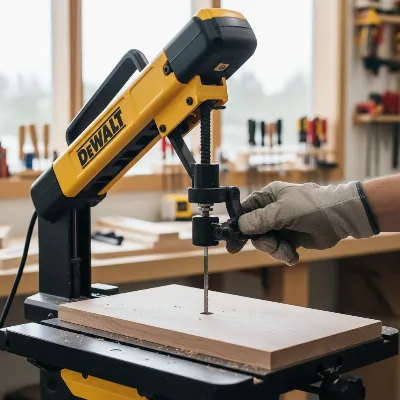 DeWalt DW788 scroll saw showing the tool-free blade change mechanism and an operator easily installing a blade for an internal cut.
Cast-Iron Table & Beveling
The DW788 features an oversized, heavy-duty cast-iron table for excellent material support and stability during cutting. This table can bevel 45 degrees to both the left and right, allowing users to create precise angled cuts and compound angles for complex designs and joinery.
Dust Blower and Controls
All primary controls, including the on/off switch, variable speed knob, and blade tensioning lever, are conveniently located on the front upper arm. The integrated flexible dust blower effectively clears sawdust from the cutting line, maintaining excellent visibility for precision and accuracy.
DeWalt DW788 Performance Review
The DeWalt DW788 consistently receives high marks for its overall performance, excelling in key areas that define a superior scroll saw experience.
Precision and Accuracy
The DW788’s exceptional precision and accuracy stem from its double parallel-link arm design, which delivers incredibly low vibration. This stability enables users to execute intricate patterns with fine detail and remarkable control, making it suitable for delicate artistic pieces and demanding woodworking projects. Users report the saw feels solid and planted, even on challenging cuts.
Power and Speed
With its 1.3 Amp motor, the DW788 provides ample power for cutting materials up to 2 inches thick. The variable speed range of 400-1750 SPM allows for optimal blade speed adjustments for various materials, from thin plywood to dense hardwoods or softer metals, ensuring efficient and clean cuts without burning.
Ease of Use
The DW788 is user-friendly for both beginners and experienced woodworkers. Its tool-free blade clamps simplify blade changes, and conveniently located controls on the upper arm allow for quick adjustments mid-project. The liftable arm further enhances ease of use for internal cuts, making the process smooth and efficient.
Durability and Build Quality
DeWalt is known for robust tools, and the DW788 is no exception. Its heavy-duty construction, including a solid cast-iron table and sturdy base, ensures long-term reliability and stability. This saw is built for rigorous use, with many users reporting years of consistent, maintenance-free operation.
Areas for Improvement
While outstanding, the DeWalt DW788 has minor areas for improvement. It lacks an integrated work light, a feature common in its class. The material hold-down can sometimes be wobbly, affecting very small workpieces. Its substantial weight (56-65 pounds) provides stability but reduces portability. Some users also report the flexible air pipe for the dust blower can crack over time.
Comparing the DeWalt DW788 with Other Popular Scroll Saws
The scroll saw market offers various options. Understanding the DeWalt DW788’s position relative to competitors helps in making an informed decision.
| Feature / Model | DeWalt DW788 | Delta 40-694 | WEN 3921 |
|---|---|---|---|
| Throat Depth | 20 inches | 20 inches | 16 inches (with dual blade direction) |
| Motor | 1.3 Amp | 1.3 Amp | 1.6 Amp |
| Variable Speed (SPM) | 400-1750 SPM | 400-1750 SPM | 500-1700 SPM |
| Arm Design | Double Parallel-Link Arm | Parallel-Link Arm | Parallel Arm |
| Table Tilt | 45° Left & Right | 45° Left & Right | 45° Left & 45° Right (Dual-bevel) |
| Blade Change | Tool-free, Quick | Tool-free, Quick | Tool-free (accepts pinned & pinless) |
| Vibration | Extremely Low | Very Low | Moderate |
| Weight (Approx.) | 56-65 lbs (Heavy for stability) | ~60 lbs | ~25 lbs (More portable) |
| Notable Features | Liftable arm, Front-mounted controls | Upper arm lifts & locks, LED work light | Flexible LED light, Stand included, vacuum port |
| Pros | Superior vibration control, durable, precise, easy blade changes | Excellent power, low vibration, often includes stand | Best value, versatile, dual-bevel, lighter |
| Cons | Heavier, no integrated light, hold-down can wobble, higher price | Can be pricier, some reports of small parts loosening | Lighter build, higher vibration than DeWalt/Delta |
> “The DeWalt DW788 truly sets the benchmark for smoothness and precision in scroll sawing. Its ability to minimize vibration allows for an unparalleled level of control, making even the most challenging scrollwork feel effortless.” – Johnathan Vance, Master Woodcraftsman
Choosing the Right Scroll Saw: A Buying Guide
Selecting the ideal scroll saw depends on your skill level, project types, and budget. Considering key factors will help you make an informed decision.
Factors to Consider When Choosing a Scroll Saw:
- Throat Depth: This is the distance from the blade to the back of the saw’s frame, determining the maximum material width. A 20-inch throat, like the DW788, is versatile, while smaller saws (12-16 inches) suit smaller pieces.
- Motor Power and Variable Speed: A powerful motor (1.3 Amp or more) ensures consistent performance. Variable speed control is crucial for adapting to different wood densities and intricate cuts, preventing burning.
- Table Tilt: The ability to tilt the table (typically up to 45 degrees) allows for accurate bevel cuts, essential for creating dimension or specific joinery.
- Blade Compatibility and Changes: Most modern scroll saws use pinless blades, offering a wider variety of sizes. Tool-free blade changes significantly improve efficiency, especially for internal cuts.
- Vibration and Noise: Lower vibration leads to greater accuracy, reduced fatigue, and a more comfortable working environment. Parallel-link designs, like DeWalt’s, excel here.
- Controls and Features: Conveniently located on/off switches, speed controls, and blade tension levers enhance user experience. A dust blower, integrated work light, and liftable arm are valuable additions.
- Weight and Stability: Heavier saws (often with cast-iron tables) are more stable and vibrate less but are less portable. Consider if you need a stationary tool or something movable.
- Safety Features: Look for features like a secure hold-down foot and easily accessible controls, though scroll saws are generally safer than many other power tools.
Scroll Saw for Beginners
For newcomers, ease of use and safety are paramount. A saw with tool-free blade changes, accessible controls, and good vibration dampening will flatten the learning curve. The DeWalt DW788, despite being advanced, is recommended for beginners due to its exceptional smoothness and ease of operation, making learning more enjoyable.
Scroll Saw for Professional Woodworkers
Professionals require precision, durability, and features for high-volume or intricate work. Essential features include a larger throat capacity (20 inches or more), a robust motor, and superior vibration control. The DeWalt DW788 meets these professional requirements, offering reliability and accuracy. Quick, tool-free blade changes and a dual-bevel table are also critical for efficiency and versatility.
Scroll Saw Usage and Maintenance Best Practices
To ensure your scroll saw, especially a high-performance model like the DeWalt DW788, operates optimally and lasts for years, proper usage and routine maintenance are crucial.
Setup and Operation Tips
- Secure Your Saw: Bolt your scroll saw securely to a workbench or sturdy stand to minimize vibration and enhance accuracy and safety.
- Proper Blade Tension: Correct blade tension is vital for clean cuts and preventing breakage. A properly tensioned blade should produce a high C note when plucked.
- Correct Blade Installation: Always install the blade with the teeth pointing downwards to prevent poor cuts and workpiece jumping.
- Allow the Saw to Cut: Avoid forcing material through the blade. Let the saw’s reciprocating action do the work to prevent blade deflection, breakage, and inaccurate cuts.
- Control Your Feed Rate: Adjust your feed rate based on material thickness and density. Slower rates are better for intricate curves and harder woods.
- Sand Undersides: Lightly sand the underside of your workpiece around pilot holes before internal cuts to prevent tear-out.
Safety Guidelines
Scroll saws are generally safer than many other power tools, but safety measures are essential.
- Wear Safety Glasses: Always wear eye protection against flying sawdust or blade fragments.
- Keep Fingers Clear: Maintain a safe distance from the blade. Use a hold-down foot to stabilize the workpiece and keep hands away.
- Unplug When Changing Blades/Making Adjustments: Disconnect power before changing blades, adjusting components, or performing maintenance.
- Clear Work Area: Keep your workspace free of clutter to prevent accidents.
- Proper Lighting: Ensure your work area is well-lit for clear visibility of the cutting line.
Routine Maintenance for Longevity
Consistent care extends the life and performance of your scroll saw.
- Clean After Each Use: Vacuum or blow away sawdust from the saw table, blade clamps, and motor vents to prevent wear.
- Release Blade Tension: Release blade tension when the saw is not in use to prolong the life of the blade and tensioning mechanism.
- Lubricate Moving Parts: Periodically apply a light lubricant to the saw table to allow workpieces to slide smoothly and prevent rust.
- Inspect Blade Clamps: Check blade clamps for wear or debris. Clean them regularly, and ensure they are not overtightened.
- Check for Loose Fasteners: Periodically check and tighten any fasteners to maintain the saw’s rigidity and accuracy.
- Store Blades Properly: Keep spare blades in a dry, organized container to prevent rust and damage.
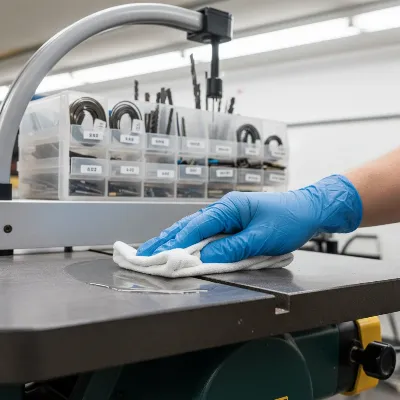 A person performing routine maintenance on a scroll saw, wiping down the cast iron table with a cloth and lubricating it, with various scroll saw blades in a storage container nearby.
Common Scroll Saw Issues and Troubleshooting
Even with a high-quality machine like the DeWalt DW788, issues can arise. Knowing how to diagnose and resolve them saves time.
Blade Breaking or Slipping
- Problem: Blades break frequently or slip out of the clamps.
- Causes: Blade is over-tensioned or under-tensioned; clamped too tightly or not tightly enough; blade is dull; workpiece is being forced; oily blade ends.
- Fixes: Adjust blade tension correctly. Ensure clamps hold firmly. Replace dull blades. Allow the saw to cut without forcing. Clean blade ends with mineral spirits.
Excessive Vibration
- Problem: The saw vibrates more than usual, affecting cut quality.
- Causes: Saw is not securely mounted; worn arm pivots; incorrect blade tension.
- Fixes: Ensure the saw is firmly bolted down. Check blade tension. Consult a professional if vibration persists, though the DW788 is known for low vibration.
Inaccurate or Non-Perpendicular Cuts
- Problem: Cuts are not straight, or edges are not square to the table.
- Causes: Blade is under-tensioned; blade is dull; workpiece is being pushed sideways; table or blade is not square.
- Fixes: Increase blade tension. Change the blade. Feed material smoothly. Check and adjust blade’s squareness to the table.
Burning Material
- Problem: The material shows burn marks along the cut line.
- Causes: Blade speed is too fast; blade is dull; wrong blade type/size; feed rate is too slow.
- Fixes: Lower blade speed. Replace dull blades. Use a blade with fewer teeth per inch for thicker materials. Slightly increase feed rate. Apply painter’s tape to the cut line.
Workpiece Jumping
- Problem: The material lifts or bounces excessively during cutting.
- Causes: Blade installed upside down; material not held tight; blade too large for thickness; warped material; pushing material too aggressively.
- Fixes: Verify blade is installed correctly (teeth down). Hold material firmly. Use a blade with more teeth per inch for thinner materials. Sand warped material flat. Slow down feed rate.
Conclusion
The DeWalt 20-inch Variable Speed Scroll Saw (DW788) exemplifies precision engineering and user-focused design. Its double parallel-link arm minimizes vibration, enabling exceptionally smooth and accurate cuts for intricate woodworking. With tool-free blade changes, convenient controls, and a robust cast-iron table, the DW788 offers efficiency and durability. While its weight and lack of an integrated work light are minor considerations, its stability and ease of use make it a formidable choice for hobbyists and professionals seeking masterful detail.
Frequently Asked Questions
Frequently Asked Questions
What kind of projects is the DeWalt DW788 best suited for?
The DeWalt DW788 excels at intricate projects such as wooden puzzles, detailed intarsia, fine fretwork, custom signage, and precise joinery for furniture and cabinetry. Its 20-inch throat capacity and exceptional accuracy make it versatile enough for both small, delicate pieces and larger decorative elements, handling various materials with ease.
Can a beginner use the DeWalt DW788 effectively?
Yes, absolutely. While a professional-grade saw, the DeWalt DW788 is often recommended for beginners due to its low vibration, which makes it much easier to control and achieve clean cuts. Its tool-free blade changes and conveniently located controls also simplify the learning process, allowing new users to focus on technique rather than machine complexities.
What are the main benefits of the DW788's double parallel-link arm design?
The double parallel-link arm design significantly reduces vibration and noise compared to traditional scroll saws. This results in dramatically smoother and more accurate cuts, enhances user control, and minimizes fatigue during extended use. It also keeps the blade consistently perpendicular to the work, reducing unwanted over or undercutting.
Does the DeWalt DW788 come with a stand or a work light?
The DeWalt DW788 typically does not come with an integrated stand or a built-in work light. While its heavy-duty cast-iron base provides excellent stability for benchtop use, many users choose to purchase a compatible stand separately. An external LED work light can be easily added to illuminate the cutting area effectively.
What types of blades does the DeWalt DW788 use?
The DeWalt DW788 primarily uses 5-inch plain end (pinless) scroll saw blades. This type of blade offers the widest variety of tooth configurations and sizes, providing versatility for cutting different materials and achieving various levels of detail, from rough cuts to super-fine fretwork.
How do I reduce blade breakage with my DeWalt DW788?
To reduce blade breakage, ensure correct blade tension (not too tight, not too loose), use a fresh, sharp blade suitable for your material, and avoid forcing the workpiece through the saw. Always let the blade do the cutting at its own pace, and clean blade ends with mineral spirits to remove manufacturing oil.
Maintain Your DeWalt DW788 Scroll Saw
Proper usage and routine maintenance are crucial to ensure your DeWalt DW788 scroll saw operates at its best and lasts for years.
Vacuum or blow away sawdust from the saw table, blade clamps, and motor vents. Accumulated dust can cause wear and tear on moving parts, reducing the saw's lifespan and performance.
When the saw is not in use, release the blade tension. This simple step prolongs the life of both the blade and the saw's internal tensioning mechanism, preventing unnecessary stress.
Periodically apply a light lubricant, such as WD-40 or a quality paste wax, to the saw table. This allows workpieces to slide smoothly and helps prevent rust, ensuring consistent cutting performance.
Regularly check blade clamps for wear or debris and clean them. If blades are slipping, ensure they are not overtightened to the point of spreading the jaws, or check for oily residue on blade ends which can be cleaned with mineral spirits.
Due to vibration during operation, screws and bolts can sometimes loosen. Periodically check and tighten any fasteners to maintain the saw's rigidity, accuracy, and overall stability.

Absolutely love my DeWalt DW788! I’m a hobbyist, and this machine has elevated my crafting significantly. The tool-free blade changes are a lifesaver, especially when I’m in the middle of a complex piece and need to swap blades quickly. It handles delicate curves beautifully, making my intricate designs much easier to achieve.
I’ve had my DeWalt DW788 for about six months now, and it’s been a game-changer for my intarsia projects. The double parallel-link arm design really does make a difference; the vibration is minimal, which helps a lot with those super fine cuts. Changing blades is a breeze too, which is great when I’m switching between different wood types.
This scroll saw is fantastic for detailed work. I mostly use it for cutting out small wooden ornaments and custom signs, and the precision is excellent. My only minor gripe is that the dust blower could be a bit stronger; I still find myself needing to clear sawdust manually sometimes, even with the variable speed motor set just right.
I bought the DW788 after hearing so many good things, especially about its ability to handle materials up to 2 inches thick. While it’s generally a solid machine, I’ve found that cutting thicker hardwoods can sometimes feel a bit underpowered, even at higher SPM settings. It gets the job done, but it’s not as effortless as I’d hoped for those specific tasks.