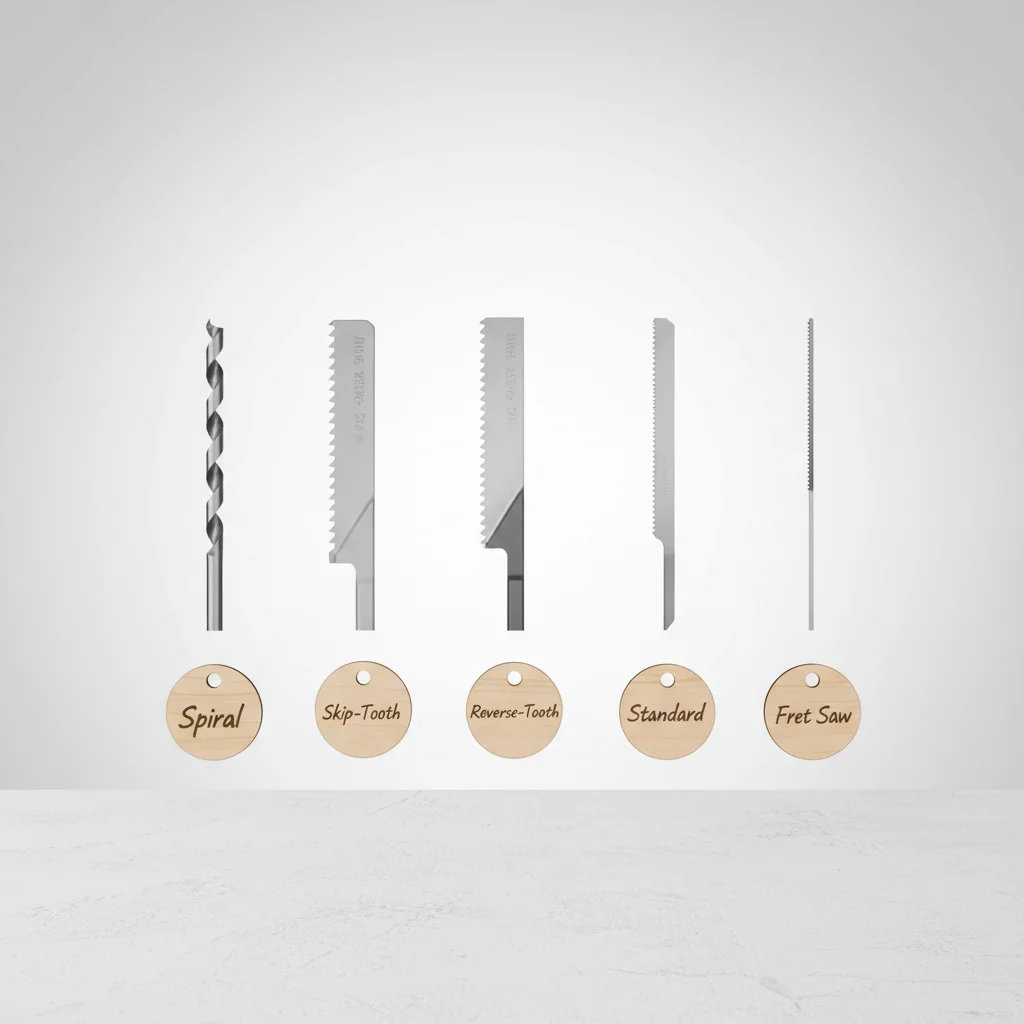
Choosing the right scroll saw blade type is crucial for achieving clean cuts and preventing frustration in your woodworking projects. There are typically five main types of scroll saw blades, each designed for specific materials and cutting styles. Understanding these differences will significantly improve your results, whether you’re working with delicate veneers or thicker hardwoods.
Understanding Blade Material and Tooth Configuration
Scroll saw blades are primarily made from high-carbon steel, hardened steel, or bi-metal, with varying tooth configurations. High-carbon steel blades are common and suitable for general woodworking, offering good flexibility and sharpness. Hardened steel blades provide increased durability for tougher materials, while bi-metal blades combine the best of both worlds, offering excellent longevity and cutting performance. The tooth configuration, including the number of teeth per inch (TPI) and the tooth style (e.g., skip-tooth, reverse-tooth, double-skip), dictates the blade’s aggressiveness and the smoothness of the cut.
Five Essential Scroll Saw Blade Types
Let’s delve into the five most common and essential scroll saw blade types you’ll encounter and how to best utilize them:
- Standard Tooth Blades: These are general-purpose blades with evenly spaced teeth, ideal for a wide range of woods and plastics. They offer a good balance of cutting speed and finish.
- Skip-Tooth Blades: Featuring a gap between each tooth, skip-tooth blades clear sawdust more efficiently, reducing heat buildup and preventing burning. They are excellent for softer woods and intricate cuts.
- Reverse-Tooth Blades: These blades have a few teeth near the bottom that point upwards, helping to minimize tear-out on the underside of the workpiece. They are particularly useful for projects where a clean finish on both sides is critical.
- Double-Skip Tooth Blades: Similar to skip-tooth but with an even larger gap, these blades are designed for very fast cutting and excellent chip clearance in thicker materials, though they may leave a slightly rougher finish.
- Spiral Blades: Unique in their design, spiral blades have teeth that wrap around the entire blade, allowing you to cut in any direction without rotating the workpiece. They are perfect for intricate fretwork and 360-degree cuts.
Matching Blades to Materials and Projects
|
Our Picks for the Best Scroll Saw in 2026
As an Amazon Associate I earn from qualifying purchases.
|
||
| Num | Product | Action |
|---|---|---|
| 1 | 2025 Scroll saw patterns: Scroll saw patterns: Inspirations for wood lovers: 164 patterns with Trees of Life, Hearts, Sailboats, animal family puzzles, landscapes... |

|
| 2 | FOXBC 5-Inch Scroll Saw Blade Pin End Replacement for Wen 3921 3923, Dremel, Craftsman, Penn State, Delta, Ryobi and All 15in.and 16in.Scroll Saw For Wood, High Carbon Steel - 48 Pack |
|
| 3 | 3D Scroll Saw Projects: 35 Fun Compound-Cut Projects, More Than 150 Patterns (Fox Chapel Publishing) Scroll Saw Woodworking & Crafts Magazine Compilation - Ornaments, Home Décor, Chess Set, and More |
|
| 4 | Scroll Saw Workbook, 3rd Edition: Learn to Master Your Scroll Saw in 25 Skill-Building Chapters (Fox Chapel Publishing) Ultimate Beginner's Guide with Projects to Hone Your Scrolling Skills |
|
| 5 | Making Wooden People & Pets with Personality: 24 Easy Projects for the Scroll Saw (Fox Chapel Publishing) Full-Size Patterns for Beginners and Intermediate Scrollers to Create Handmade Gifts in Wood |
|
| 6 | Big Book of Scroll Saw Woodworking: More Than 60 Projects and Techniques for Fretwork, Intarsia, and Other Scroll Saw Crafts (Fox Chapel Publishing) Patterns for Beginners to Advanced Woodworkers |
|
| 7 | Scrolling 101: Everything the Beginner Needs to Know (Fox Chapel Publishing) Scroll Saw Basics, Choosing Blades, Adapting Patterns, Using a Starter Saw, Sanding, and a Skill-Building Exercise Pattern |
|
| 8 | BLACK+DECKER Jig Saw, 4.5 -Amp (BDEJS300C) |
|
| 9 | WEN Adjustable Scroll Saw Stand for all WEN and DeWALT® Scroll Saws (MSA1621) |
|
| 10 | Shop Fox W1872 16" VS Scroll Saw with Foot Switch, LED, Miter Gauge, Rotary Shaft |
|
Selecting the correct blade for your material is paramount. For instance, when cutting thin plywood or veneers, a fine-toothed skip-tooth or reverse-tooth blade (e.g., #2 or #3) will provide a clean cut with minimal tear-out. For thicker hardwoods, a larger skip-tooth or double-skip blade (e.g., #5 or #7) will be more effective, allowing for faster material removal. Plastics and acrylics often benefit from fine-toothed blades to prevent melting and achieve smooth edges. Metal cutting with a scroll saw requires very fine-toothed, hardened blades, often with a wax lubricant to reduce friction and heat.
Consider the intricacy of your project as well. For highly detailed fretwork, spiral blades offer unparalleled maneuverability. For general scroll saw work, a standard tooth blade is a reliable starting point. Always perform a test cut on a scrap piece of the same material to ensure you’ve chosen the optimal blade for the desired finish and cutting speed.
Blade Maintenance and Longevity
Proper blade maintenance can significantly extend the life of your scroll saw blades. Always ensure your blade tension is correct; too loose, and the blade can wander or break; too tight, and it can overheat. Clean your blades regularly to remove resin and sawdust buildup, which can dull the teeth and increase friction. A simple brass brush or a specialized blade cleaner can do wonders. Store your blades properly to prevent rust and damage. Replacing blades when they become dull is also crucial, as a dull blade will lead to rough cuts, increased effort, and potential burning of the wood.
Troubleshooting Common Blade Issues
Even with the right blade, issues can arise. If your blade is breaking frequently, check your tension, ensure the workpiece is not being forced, and verify that the blade is appropriate for the material thickness. Burning on the wood usually indicates a dull blade, incorrect feed rate, or insufficient chip clearance; try a skip-tooth or double-skip blade. Rough cuts often point to a dull blade or incorrect blade selection for the material. By understanding these common problems and their solutions, you can maintain optimal performance and achieve professional-quality results with your scroll saw.
