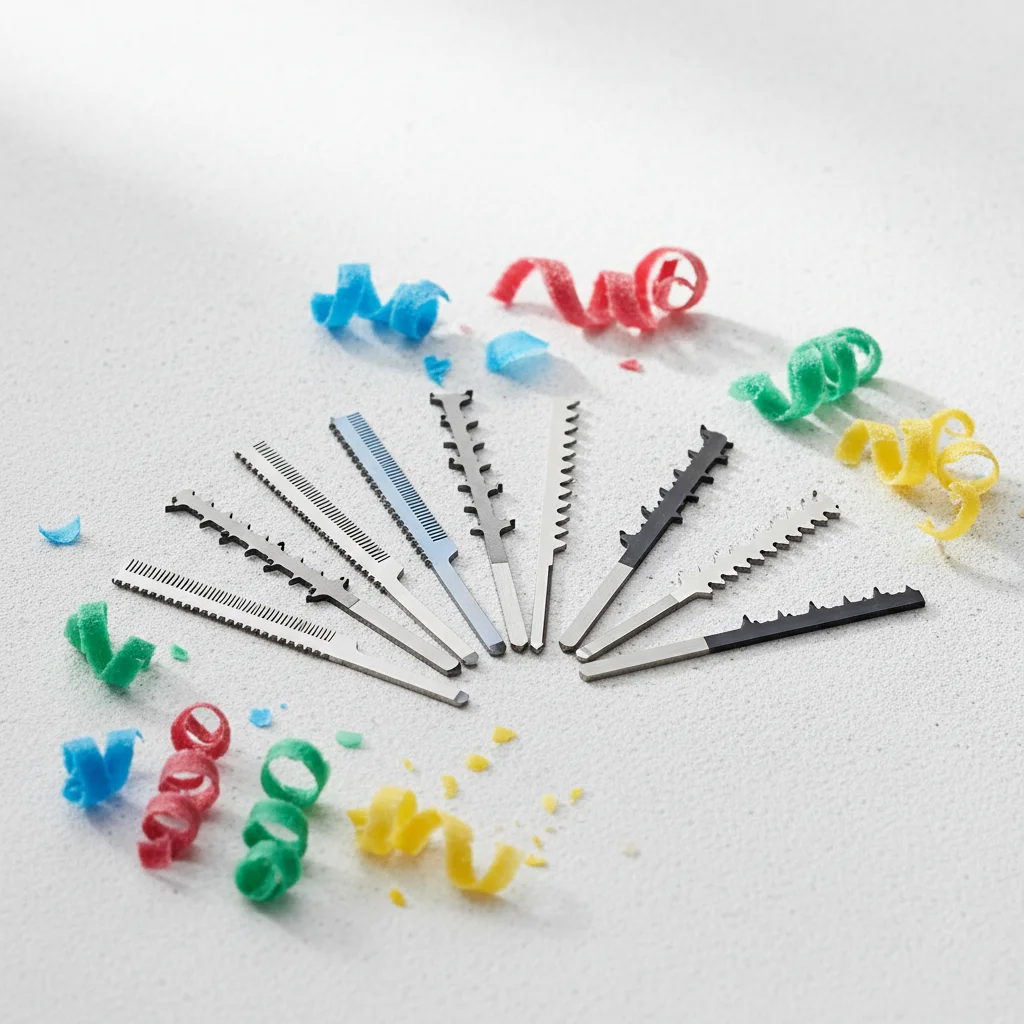
When selecting scroll saw blades for cutting plastic, carbon steel blades with a skip-tooth or reverse-tooth design are generally the best choice. These specific blade types minimize melting and chipping, providing cleaner cuts on various plastic materials. The right blade can make a significant difference in the quality of your plastic projects, preventing common issues like rough edges or material damage.
Understanding Plastic Types and Blade Needs
Different plastics react uniquely to cutting. Softer plastics like acrylic and polycarbonate can melt easily with friction, requiring blades that dissipate heat quickly. Harder plastics, such as ABS or PVC, are more prone to chipping if the blade is too aggressive or has an incorrect tooth configuration. Therefore, understanding the specific plastic you’re working with is crucial for selecting the optimal blade.
For most scroll saw applications involving plastic, a fine-toothed blade is preferred. The higher tooth count per inch (TPI) results in a smoother cut and reduces the likelihood of material tearing or melting. However, the tooth geometry is equally important. Skip-tooth blades have a gap between teeth, which helps clear chips and reduce heat buildup, while reverse-tooth blades have a few teeth pointing upwards at the bottom of the blade to minimize tear-out on the underside of the material.
Carbon Steel vs. Other Blade Materials
Carbon steel is the most common and recommended material for scroll saw blades used on plastic. It offers a good balance of sharpness, flexibility, and heat resistance for this application. While bi-metal blades are excellent for metal, their increased hardness can sometimes generate too much heat for softer plastics, leading to melting. Diamond-coated blades are specialized for very hard materials like glass or ceramic and are generally overkill for most plastics, potentially causing excessive friction and melting.
- Carbon Steel: Best all-around for various plastics, good heat dissipation.
- High-Speed Steel (HSS): More durable than carbon steel, but can generate more heat.
- Bi-Metal: Excellent for metal, but often too aggressive for plastics.
- Diamond Coated: Specialized for extremely hard materials, not ideal for most plastics.
Recommended Blade Configurations for Plastic
|
Our Picks for the Best Scroll Saw in 2026
As an Amazon Associate I earn from qualifying purchases.
|
||
| Num | Product | Action |
|---|---|---|
| 1 | Scrolling 101: Everything the Beginner Needs to Know (Fox Chapel Publishing) Scroll Saw Basics, Choosing Blades, Adapting Patterns, Using a Starter Saw, Sanding, and a Skill-Building Exercise Pattern |

|
| 2 | WEN Adjustable Scroll Saw Stand for all WEN and DeWALT® Scroll Saws (MSA1621) |
|
| 3 | Big Book of Scroll Saw Woodworking: More Than 60 Projects and Techniques for Fretwork, Intarsia, and Other Scroll Saw Crafts (Fox Chapel Publishing) Patterns for Beginners to Advanced Woodworkers |
|
| 4 | FOXBC 5-Inch Scroll Saw Blade Pin End Replacement for Wen 3921 3923, Dremel, Craftsman, Penn State, Delta, Ryobi and All 15in.and 16in.Scroll Saw For Wood, High Carbon Steel - 48 Pack |
|
| 5 | Scroll Saw Workbook, 3rd Edition: Learn to Master Your Scroll Saw in 25 Skill-Building Chapters (Fox Chapel Publishing) Ultimate Beginner's Guide with Projects to Hone Your Scrolling Skills |
|
| 6 | Making Wooden People & Pets with Personality: 24 Easy Projects for the Scroll Saw (Fox Chapel Publishing) Full-Size Patterns for Beginners and Intermediate Scrollers to Create Handmade Gifts in Wood |
|
| 7 | 2025 Scroll saw patterns: Scroll saw patterns: Inspirations for wood lovers: 164 patterns with Trees of Life, Hearts, Sailboats, animal family puzzles, landscapes... |
|
| 8 | 3D Scroll Saw Projects: 35 Fun Compound-Cut Projects, More Than 150 Patterns (Fox Chapel Publishing) Scroll Saw Woodworking & Crafts Magazine Compilation - Ornaments, Home Décor, Chess Set, and More |
|
| 9 | BLACK+DECKER Jig Saw, 4.5 -Amp (BDEJS300C) |
|
| 10 | Shop Fox W1872 16" VS Scroll Saw with Foot Switch, LED, Miter Gauge, Rotary Shaft |
|
For general plastic cutting, a #2 or #3 skip-tooth or reverse-tooth carbon steel blade is an excellent starting point. These sizes offer a good balance for both intricate and general cuts. When working with very thin plastics, you might consider a #0 or #1 blade for even finer detail. For thicker plastics, a #5 or #7 skip-tooth blade can be effective, provided you maintain a slower feed rate to prevent overheating.
Always ensure your blade is sharp. A dull blade will generate more friction, leading to melting and poor cut quality. Regularly inspect your blades and replace them as soon as you notice any signs of dullness or damage.
Optimizing Your Scroll Saw Settings for Plastic
Beyond the blade itself, your scroll saw’s settings play a vital role in successful plastic cutting. A slower speed setting is almost always preferable when cutting plastic. High speeds generate more friction and heat, which can quickly melt the material, especially softer acrylics. Experiment with your saw’s variable speed control to find the sweet spot that produces a clean cut without melting.
Proper tension is also critical. Too little tension can cause the blade to wander and create rough edges, while too much tension can lead to premature blade breakage. Refer to your scroll saw’s manual for recommended tension settings, and always perform a tension test before starting your project. Using a zero-clearance insert can also significantly reduce tear-out on the underside of the plastic, providing a cleaner finish.
Safety and Best Practices for Cutting Plastic
When cutting plastic, always wear appropriate safety gear, including safety glasses and hearing protection. Plastic dust can be fine and irritating, so consider using a dust mask and ensuring good ventilation in your workspace. It’s also beneficial to use a sacrificial board underneath your plastic workpiece to prevent damage to your scroll saw table and to provide better support for the material, especially when making intricate cuts. Take your time, let the blade do the work, and avoid forcing the material through the blade.

I appreciate the breakdown of different plastic types. I mostly work with polycarbonate, and I found that the reverse-tooth design really does help prevent chipping. I still get a tiny bit of friction heat on thicker pieces, but it’s much better than what I was using before. Good advice here.
I’ve been struggling with melting edges on my acrylic projects for ages, and this really helped. Switching to a carbon steel, skip-tooth blade made a huge difference. My cuts are so much cleaner now, and I’m not wasting nearly as much material. Definitely a game changer for my crafting.
I tried the recommended blades for ABS plastic, and while they did reduce chipping, I found they dulled a bit faster than I expected. For the price, I was hoping for a little more longevity. It’s not bad, but I might try a different brand next time to see if I can get more use out of them.
Finally, someone explains why my PVC projects always looked so rough! The tip about using blades that dissipate heat quickly for softer plastics was spot on. My latest project with some thinner PVC sheets came out perfectly smooth. No more rough edges for me!