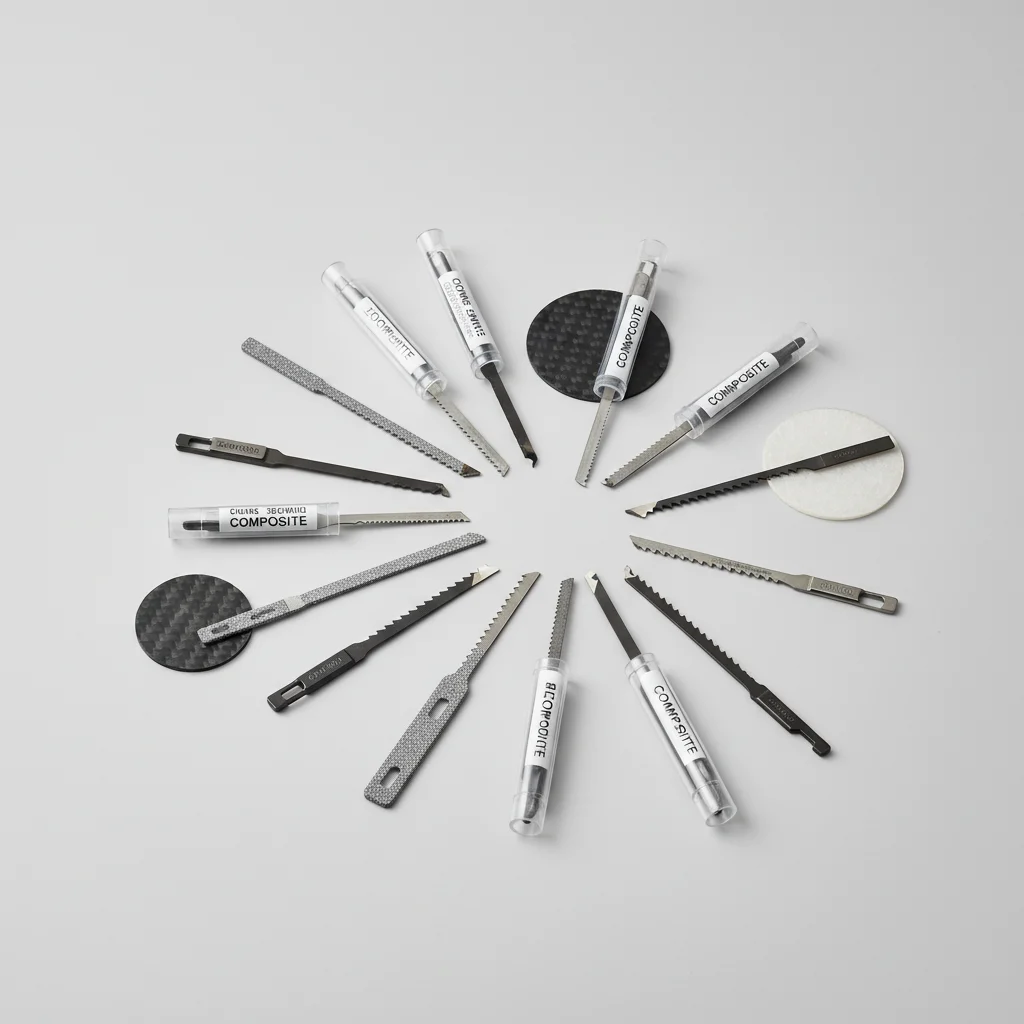
When cutting composite materials with a scroll saw, carbide-tipped blades are unequivocally the best choice. Their superior hardness and wear resistance allow them to effectively cut through abrasive and dense composites without dulling quickly or breaking. While other materials might attempt the cut, carbide provides the cleanest edges and longest blade life.
Understanding Composite Materials and Their Challenges
Composite materials, such as carbon fiber, fiberglass, and various resin-bonded laminates, present unique challenges for cutting tools. These materials are often highly abrasive, causing rapid wear on conventional steel blades. They can also be quite brittle, leading to chipping or delamination if the wrong blade or technique is used. The key is to find a blade that can withstand the abrasive nature while providing a clean, precise cut. For best scroll saws roundups on this site.
Why Carbide-Tipped Blades Excel
Carbide-tipped scroll saw blades feature cutting edges made from tungsten carbide, a material significantly harder than high-carbon steel or even bi-metal. This extreme hardness allows them to maintain a sharp edge for much longer when encountering the tough fibers and resins in composites. The tips are brazed onto a more flexible steel body, providing both durability and the necessary resilience for scroll saw work. They are particularly effective for intricate cuts where precision is paramount.
- Exceptional hardness for abrasive materials.
- Extended blade life compared to steel.
- Reduced risk of chipping or delamination.
- Maintains sharp edge for cleaner cuts.
- Suitable for intricate and detailed work.
Alternative Blade Materials and Their Limitations
|
Our Picks for the Best Scroll Saw in 2026
As an Amazon Associate I earn from qualifying purchases.
|
||
| Num | Product | Action |
|---|---|---|
| 1 | Shop Fox W1872 16" VS Scroll Saw with Foot Switch, LED, Miter Gauge, Rotary Shaft |

|
| 2 | FOXBC 5-Inch Scroll Saw Blade Pin End Replacement for Wen 3921 3923, Dremel, Craftsman, Penn State, Delta, Ryobi and All 15in.and 16in.Scroll Saw For Wood, High Carbon Steel - 48 Pack |
|
| 3 | 3D Scroll Saw Projects: 35 Fun Compound-Cut Projects, More Than 150 Patterns (Fox Chapel Publishing) Scroll Saw Woodworking & Crafts Magazine Compilation - Ornaments, Home Décor, Chess Set, and More |
|
| 4 | Scroll Saw Workbook, 3rd Edition: Learn to Master Your Scroll Saw in 25 Skill-Building Chapters (Fox Chapel Publishing) Ultimate Beginner's Guide with Projects to Hone Your Scrolling Skills |
|
| 5 | Scrolling 101: Everything the Beginner Needs to Know (Fox Chapel Publishing) Scroll Saw Basics, Choosing Blades, Adapting Patterns, Using a Starter Saw, Sanding, and a Skill-Building Exercise Pattern |
|
| 6 | BLACK+DECKER Jig Saw, 4.5 -Amp (BDEJS300C) |
|
| 7 | WEN Adjustable Scroll Saw Stand for all WEN and DeWALT® Scroll Saws (MSA1621) |
|
| 8 | 2025 Scroll saw patterns: Scroll saw patterns: Inspirations for wood lovers: 164 patterns with Trees of Life, Hearts, Sailboats, animal family puzzles, landscapes... |
|
| 9 | Making Wooden People & Pets with Personality: 24 Easy Projects for the Scroll Saw (Fox Chapel Publishing) Full-Size Patterns for Beginners and Intermediate Scrollers to Create Handmade Gifts in Wood |
|
| 10 | Big Book of Scroll Saw Woodworking: More Than 60 Projects and Techniques for Fretwork, Intarsia, and Other Scroll Saw Crafts (Fox Chapel Publishing) Patterns for Beginners to Advanced Woodworkers |
|
While carbide is ideal, some might consider other options. High-speed steel (HSS) blades offer better wear resistance than standard carbon steel but will still dull relatively quickly when cutting composites, leading to frequent blade changes and potentially rougher cuts. Diamond-grit blades are another option, particularly for very hard or ceramic-based composites, but they tend to be more expensive and can produce a wider kerf, which might not be suitable for fine scroll saw work. For most common woodworking composites, carbide offers the best balance of performance and cost.
Choosing the Right Blade Geometry and TPI
Beyond material, the tooth per inch (TPI) and blade geometry are crucial. For composites, a higher TPI (typically 18-24 TPI) is generally recommended to minimize chipping and produce a smoother finish. Reverse-tooth blades can also be beneficial as they help to reduce tear-out on the underside of the material. Always ensure the blade is tensioned correctly to prevent deflection and ensure a straight, clean cut.
Safety and Best Practices When Cutting Composites
Cutting composites can release fine dust particles that are harmful if inhaled. Always wear appropriate personal protective equipment, including a respirator or dust mask, and safety glasses. Work in a well-ventilated area or use a dust collection system. Feed the material at a consistent, moderate pace, allowing the blade to do the work without forcing it. For thicker composites, consider making multiple passes with a slightly lighter touch to prevent overheating the blade and material.

I tried a carbide-tipped blade on some resin-bonded laminates as suggested. While it did cut through, I still experienced a little bit of chipping on the underside, even with careful technique. It was better than my old blades, but I was hoping for a perfectly clean edge. Maybe I need to adjust my feed rate more.
I’ve been struggling with cutting carbon fiber for ages, always ending up with frayed edges. After reading about carbide-tipped blades here, I decided to give them a try. What a difference! The cuts are so much cleaner and I’m not going through blades nearly as fast. Definitely worth the investment for anyone serious about working with composites.
I appreciated the breakdown of why carbide is best for fiberglass. I’d been using regular steel blades and they just weren’t holding up. Switched to a carbide-tipped blade and it’s a huge improvement in terms of blade life and cut quality. My only minor complaint is that they can be a bit pricier than what I’m used to, but the performance justifies it.
This information on scroll saw blades for composites was exactly what I needed! I was about to start a project with some dense composite material and was worried about dulling my blades. The explanation of carbide’s wear resistance made perfect sense, and my first cuts were incredibly smooth. No more frustration with quickly worn-out blades!