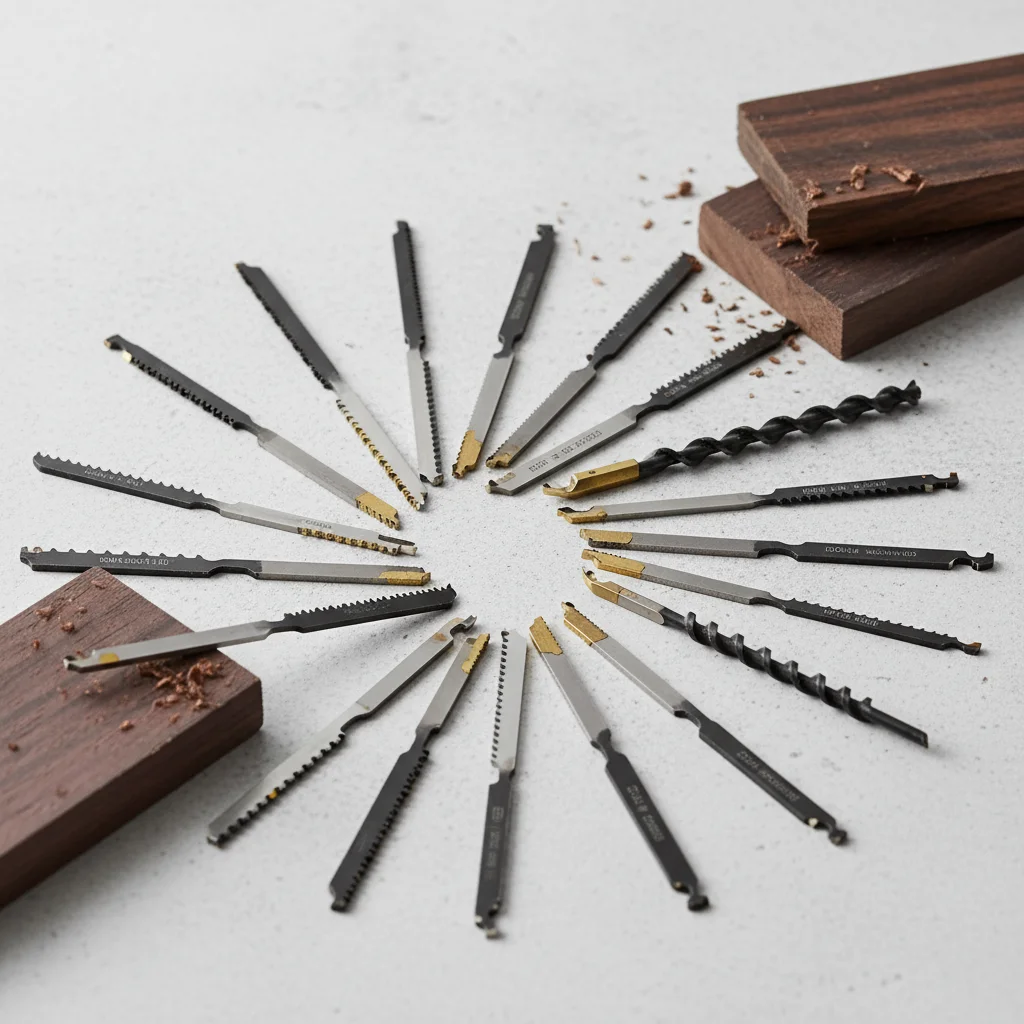
When selecting scroll saw blades for cutting hardwoods, carbon steel blades are generally considered the best option due to their excellent balance of sharpness, durability, and affordability. Specifically, skip-tooth or reverse-tooth carbon steel blades with a TPI (teeth per inch) between 7 and 12 are ideal for achieving clean cuts in dense materials like oak, maple, and cherry.
Understanding Hardwood Characteristics for Scroll Sawing
Hardwoods present unique challenges for scroll saw users. Their dense grain structures and often higher moisture content require blades that can withstand significant friction and heat without dulling quickly or breaking. The hardness of the wood directly impacts the blade’s performance, necessitating a material that maintains its edge through prolonged use. Additionally, hardwoods can be prone to splintering if the blade isn’t sharp enough or if the tooth configuration isn’t appropriate for the material.
Carbon Steel Blades: The Workhorse for Hardwoods
Carbon steel is the most common and versatile material for scroll saw blades, offering a good compromise between cost and performance. These blades are relatively easy to sharpen and come in a wide variety of tooth configurations. For hardwoods, the strength and rigidity of carbon steel are crucial for preventing deflection and ensuring straight, precise cuts. While not as hard as some other materials, their flexibility helps prevent brittle breakage when encountering knots or inconsistencies in the wood.
- Excellent balance of sharpness and durability.
- Affordable and widely available.
- Good for general-purpose hardwood cutting.
- Less prone to brittle breakage than harder materials.
- Can be resharpened with appropriate tools.
High-Speed Steel (HSS) Blades for Enhanced Durability
|
Our Picks for the Best Scroll Saw in 2026
As an Amazon Associate I earn from qualifying purchases.
|
||
| Num | Product | Action |
|---|---|---|
| 1 | 2025 Scroll saw patterns: Scroll saw patterns: Inspirations for wood lovers: 164 patterns with Trees of Life, Hearts, Sailboats, animal family puzzles, landscapes... |

|
| 2 | FOXBC 5-Inch Scroll Saw Blade Pin End Replacement for Wen 3921 3923, Dremel, Craftsman, Penn State, Delta, Ryobi and All 15in.and 16in.Scroll Saw For Wood, High Carbon Steel - 48 Pack |
|
| 3 | BLACK+DECKER Jig Saw, 4.5 -Amp (BDEJS300C) |
|
| 4 | Making Wooden People & Pets with Personality: 24 Easy Projects for the Scroll Saw (Fox Chapel Publishing) Full-Size Patterns for Beginners and Intermediate Scrollers to Create Handmade Gifts in Wood |
|
| 5 | Big Book of Scroll Saw Woodworking: More Than 60 Projects and Techniques for Fretwork, Intarsia, and Other Scroll Saw Crafts (Fox Chapel Publishing) Patterns for Beginners to Advanced Woodworkers |
|
| 6 | 3D Scroll Saw Projects: 35 Fun Compound-Cut Projects, More Than 150 Patterns (Fox Chapel Publishing) Scroll Saw Woodworking & Crafts Magazine Compilation - Ornaments, Home Décor, Chess Set, and More |
|
| 7 | Scroll Saw Workbook, 3rd Edition: Learn to Master Your Scroll Saw in 25 Skill-Building Chapters (Fox Chapel Publishing) Ultimate Beginner's Guide with Projects to Hone Your Scrolling Skills |
|
| 8 | WEN Adjustable Scroll Saw Stand for all WEN and DeWALT® Scroll Saws (MSA1621) |
|
| 9 | Scrolling 101: Everything the Beginner Needs to Know (Fox Chapel Publishing) Scroll Saw Basics, Choosing Blades, Adapting Patterns, Using a Starter Saw, Sanding, and a Skill-Building Exercise Pattern |
|
| 10 | Shop Fox W1872 16" VS Scroll Saw with Foot Switch, LED, Miter Gauge, Rotary Shaft |
|
For those who frequently work with very dense or exotic hardwoods, High-Speed Steel (HSS) blades offer superior durability and heat resistance compared to standard carbon steel. HSS blades retain their sharpness longer, even under high friction, making them an excellent choice for extended cutting sessions or when working with particularly challenging hardwoods. However, they are typically more expensive and can be more brittle, requiring careful handling to prevent breakage.
Bi-Metal Blades: The Premium Choice for Longevity
Bi-metal blades combine the best features of different materials, often featuring a high-speed steel cutting edge welded to a more flexible carbon steel body. This construction provides exceptional longevity and resistance to wear, making them the premium choice for professional woodworkers or those who demand the absolute best performance and blade life when cutting hardwoods. While they represent a higher initial investment, their extended lifespan can offset the cost over time, especially for frequent use.
Carbide-Tipped Blades: For Extreme Hardness
For the absolute hardest woods, such as lignum vitae or ironwood, or when cutting abrasive materials embedded within wood, carbide-tipped scroll saw blades are the ultimate solution. These blades feature extremely hard carbide teeth that can withstand immense wear and maintain their edge far longer than any other material. They are significantly more expensive and less flexible, making them suitable for very specific, demanding applications rather than general hardwood cutting.
Choosing the Right Tooth Configuration for Hardwoods
Beyond blade material, the tooth configuration is critical for hardwood cutting. Skip-tooth blades, with a gap between each tooth, help clear sawdust efficiently, reducing heat buildup and preventing burning. Reverse-tooth blades, which have a few teeth pointing upwards at the bottom of the blade, help minimize tear-out on the underside of the workpiece, resulting in cleaner exits. A TPI between 7 and 12 is generally recommended for hardwoods, providing a good balance between cutting speed and smoothness.

I tried the reverse-tooth carbon steel blades for some cherry wood, and while the cuts were pretty clean, I found them to heat up a bit faster than I expected. It’s not a deal-breaker, but I had to take more breaks to let things cool down. Still, for the price, they’re a decent option for occasional hardwood work.
I’ve been struggling with oak projects for ages, always getting splintering no matter what blade I used. Switching to the skip-tooth carbon steel blades mentioned here made a huge difference. My cuts are so much cleaner now, and I’m not constantly replacing dull blades. Definitely a game-changer for my workshop.
Finally, someone explains why my old blades were failing on dense woods! The point about friction and heat makes so much sense. I invested in some good quality carbon steel blades, and my projects with walnut and other hardwoods are coming out perfectly. No more frustration with dulling edges.
I appreciate the breakdown on TPI for hardwoods. I usually just grab whatever’s on hand, but focusing on the 7-12 TPI range really improved my results with maple. The durability of these carbon steel blades is impressive too; they hold up well even with extended use on denser woods. Good info!