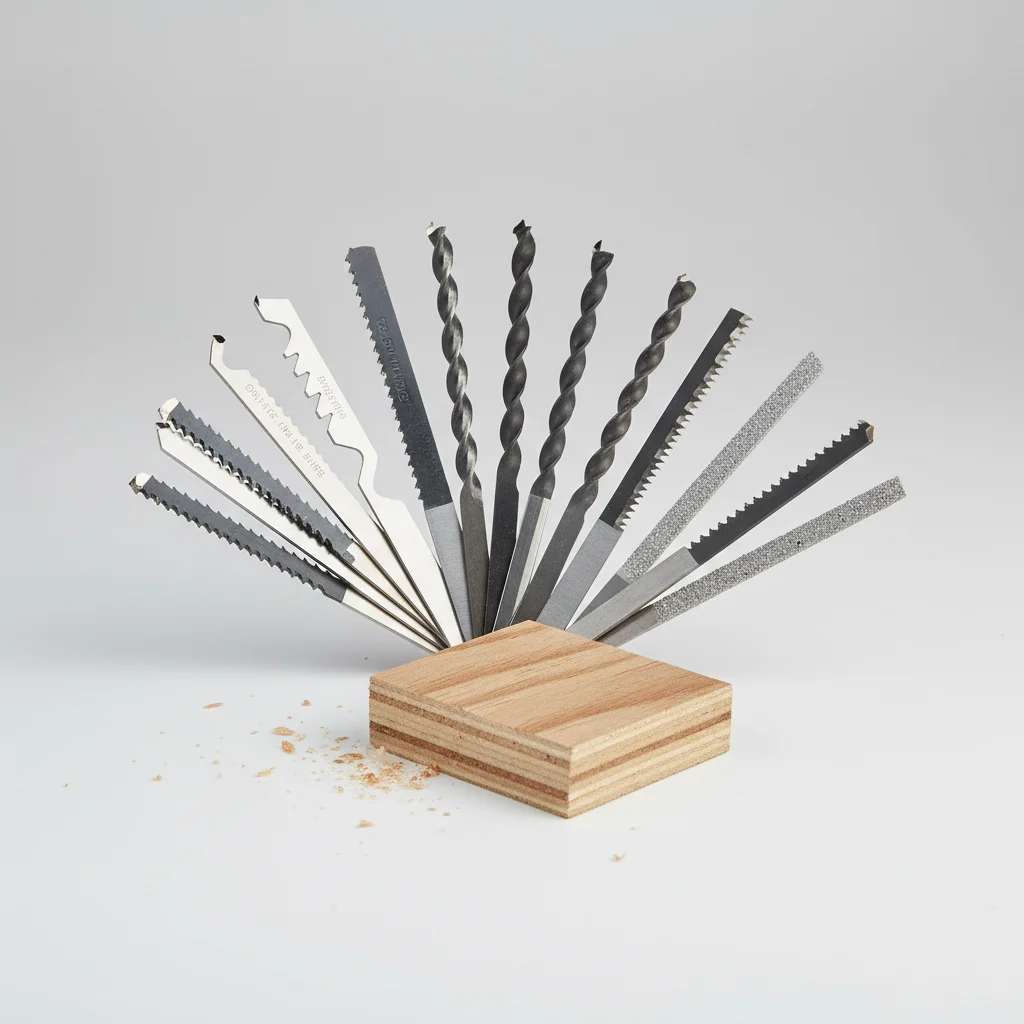
When cutting plywood with a scroll saw, carbon steel blades are generally the best choice due to their excellent balance of sharpness, durability, and flexibility. Plywood, with its alternating grain directions and adhesive layers, presents unique challenges that require a blade capable of clean cuts without excessive splintering or premature dulling. While other materials like bi-metal or diamond-coated blades have their specific uses, carbon steel offers the most consistent and reliable performance for the average plywood project.
Understanding Plywood’s Challenges for Scroll Sawing
Plywood is constructed from multiple thin layers of wood veneer glued together, with the grain of adjacent layers typically oriented at 90-degree angles. This cross-grain construction provides strength but can make cutting difficult. The adhesive used between layers can also be abrasive, leading to faster blade dulling. Furthermore, the varying densities within the wood layers can cause blades to wander if they are not rigid enough or have an inappropriate tooth geometry. Selecting the right blade material and tooth configuration is crucial for achieving smooth edges and preventing tear-out, especially on the top and bottom veneers.
Why Carbon Steel Blades Excel for Plywood
Carbon steel blades are a workhorse in scroll sawing, and their properties make them particularly well-suited for plywood. They are sharp, relatively inexpensive, and come in a wide range of tooth per inch (TPI) and thickness options. For plywood, a skip-tooth or reverse-tooth blade in carbon steel is often recommended. Skip-tooth blades have gaps between teeth, which helps clear sawdust and reduces heat buildup, while reverse-tooth blades have a few teeth pointing upwards at the bottom of the blade to minimize tear-out on the underside of the workpiece. The flexibility of carbon steel also helps it navigate the internal stresses of plywood without breaking.
- Excellent balance of sharpness and durability.
- Wide availability in various TPI and thicknesses.
- Cost-effective for general woodworking.
- Good flexibility to resist breakage in varied grain.
- Effective with skip-tooth and reverse-tooth designs for clean cuts.
Considerations for Blade Thickness and TPI
|
Our Picks for the Best Scroll Saw in 2026
As an Amazon Associate I earn from qualifying purchases.
|
||
| Num | Product | Action |
|---|---|---|
| 1 | 3D Scroll Saw Projects: 35 Fun Compound-Cut Projects, More Than 150 Patterns (Fox Chapel Publishing) Scroll Saw Woodworking & Crafts Magazine Compilation - Ornaments, Home Décor, Chess Set, and More |

|
| 2 | Scrolling 101: Everything the Beginner Needs to Know (Fox Chapel Publishing) Scroll Saw Basics, Choosing Blades, Adapting Patterns, Using a Starter Saw, Sanding, and a Skill-Building Exercise Pattern |
|
| 3 | 2025 Scroll saw patterns: Scroll saw patterns: Inspirations for wood lovers: 164 patterns with Trees of Life, Hearts, Sailboats, animal family puzzles, landscapes... |
|
| 4 | Scroll Saw Workbook, 3rd Edition: Learn to Master Your Scroll Saw in 25 Skill-Building Chapters (Fox Chapel Publishing) Ultimate Beginner's Guide with Projects to Hone Your Scrolling Skills |
|
| 5 | Big Book of Scroll Saw Woodworking: More Than 60 Projects and Techniques for Fretwork, Intarsia, and Other Scroll Saw Crafts (Fox Chapel Publishing) Patterns for Beginners to Advanced Woodworkers |
|
| 6 | FOXBC 5-Inch Scroll Saw Blade Pin End Replacement for Wen 3921 3923, Dremel, Craftsman, Penn State, Delta, Ryobi and All 15in.and 16in.Scroll Saw For Wood, High Carbon Steel - 48 Pack |
|
| 7 | Shop Fox W1872 16" VS Scroll Saw with Foot Switch, LED, Miter Gauge, Rotary Shaft |
|
| 8 | Making Wooden People & Pets with Personality: 24 Easy Projects for the Scroll Saw (Fox Chapel Publishing) Full-Size Patterns for Beginners and Intermediate Scrollers to Create Handmade Gifts in Wood |
|
| 9 | WEN Adjustable Scroll Saw Stand for all WEN and DeWALT® Scroll Saws (MSA1621) |
|
| 10 | BLACK+DECKER Jig Saw, 4.5 -Amp (BDEJS300C) |
|
For plywood, the thickness of the blade should be chosen based on the intricacy of the cut and the thickness of the material. Thinner blades (e.g., #2 or #3) are ideal for very fine details and tight curves, while thicker blades (e.g., #5 or #7) provide more stability for straighter cuts and thicker plywood. The TPI (teeth per inch) is also critical. A higher TPI (e.g., 10-15 TPI) will produce a smoother cut with less tear-out, which is highly desirable for plywood, but will cut slower. A lower TPI (e.g., 5-7 TPI) cuts faster but may result in a rougher edge. A good starting point for general plywood work is a #5 or #7 skip-tooth or reverse-tooth carbon steel blade with 7-10 TPI.
Alternative Blade Materials and Their Niche Uses
While carbon steel is generally preferred, other blade materials have specific applications that might be relevant for certain plywood projects. Bi-metal blades, which combine a high-speed steel cutting edge with a flexible carbon steel back, offer superior durability and heat resistance. They are excellent for prolonged cutting sessions or when working with very dense or abrasive plywoods, though they are typically more expensive. Diamond-coated blades are not usually necessary for wood-based plywood but could be considered for composite plywoods that contain extremely hard or abrasive fillers, as they excel at cutting very hard materials like ceramics or glass. However, their aggressive nature can sometimes lead to more tear-out in standard wood plywood.
Tips for Optimal Plywood Cutting
Beyond selecting the right blade, several techniques can improve your results when cutting plywood. Always ensure your workpiece is securely held against the scroll saw table to prevent vibration and movement. Use a slow, consistent feed rate, allowing the blade to do the work without forcing it. For very thin plywood, consider sandwiching it between two pieces of scrap wood to minimize tear-out on both sides. Regularly check your blade for signs of dullness or damage, as a sharp blade is essential for clean cuts and safe operation. Proper tensioning of the blade is also crucial; a blade that is too loose will wander and break easily, while one that is too tight can cause excessive vibration and premature wear.

I tried the carbon steel blades as suggested for my plywood projects. They do cut well and seem pretty durable, but I found them to be a bit more expensive than my usual bulk pack. For simple, straight cuts, I’m not sure the extra cost is always worth it for me. I might stick to them for more detailed work though.
I’ve always struggled with splintering when cutting plywood, especially on intricate designs. After reading about carbon steel blades here, I decided to give them a try. What a difference! My cuts are so much cleaner now, and the blades seem to last a good while even with the abrasive glue in some of the cheaper plywood. Definitely recommend them for anyone doing a lot of plywood work.
I usually just grab whatever blades are on sale, but the explanation about plywood’s cross-grain construction really made sense. I picked up some carbon steel blades and they’ve been great for my latest project, which involves a lot of 1/4 inch birch ply. I still get a tiny bit of tear-out on the back sometimes, but it’s way less than before. Good advice!
This was super helpful! I was using bi-metal blades for everything, thinking they were the best all-around. But the point about carbon steel being ideal for the adhesive layers in plywood really clicked. My blades aren’t dulling nearly as fast now, and I’m getting much smoother edges. Thanks for the clear breakdown!