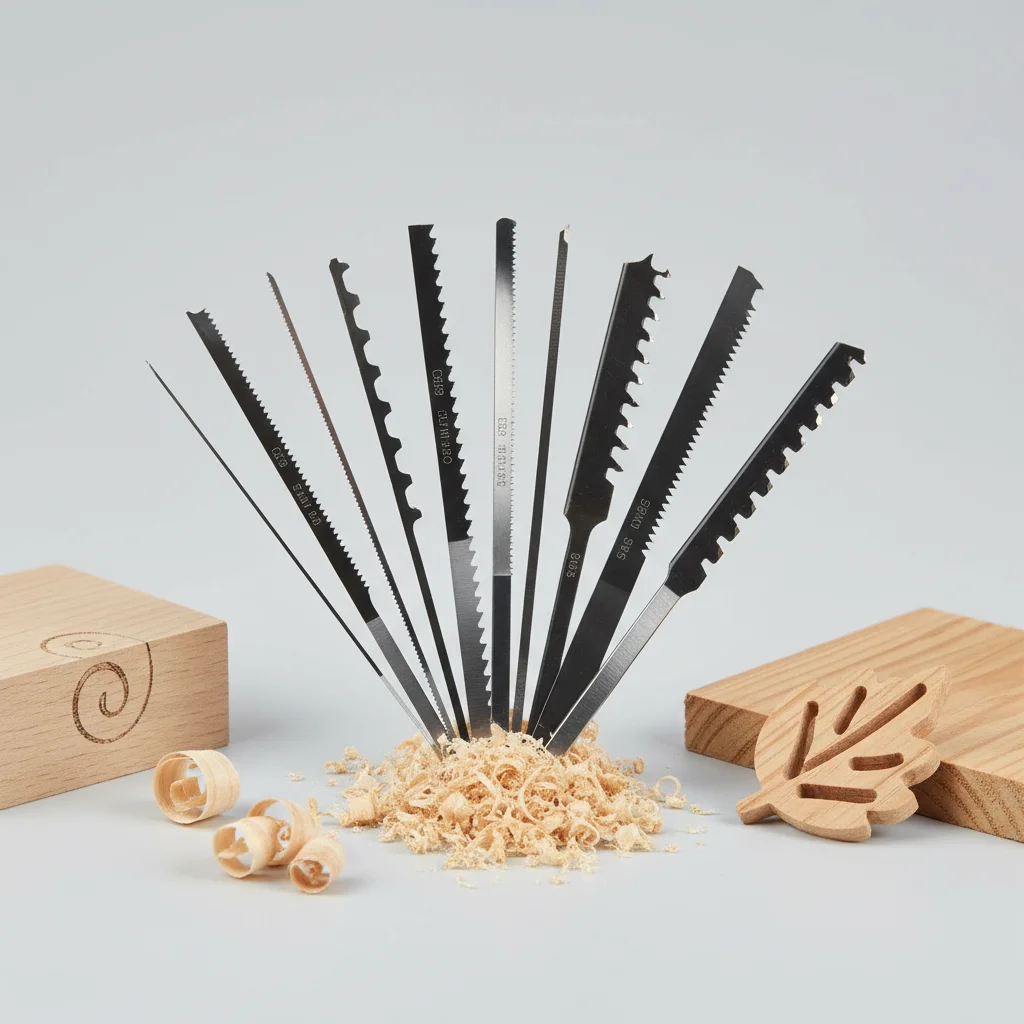
When selecting scroll saw blades for cutting softwoods, carbon steel blades are generally the best choice due to their flexibility, sharpness, and cost-effectiveness. These blades offer excellent performance for intricate cuts in materials like pine, cedar, and basswood, providing clean edges without excessive splintering. Their ability to maintain a sharp edge through softer grains makes them ideal for a wide range of woodworking and crafting projects.
Understanding Carbon Steel Blades for Softwoods
Carbon steel scroll saw blades are the workhorse for many woodworkers, especially when dealing with softwoods. Their composition allows for a fine, sharp edge that glides through less dense wood fibers with ease. This material is particularly forgiving for beginners, as it reduces the likelihood of blade breakage when encountering minor resistance. The flexibility of carbon steel also contributes to smoother turns and more precise control, which is crucial for detailed scroll saw work.
For optimal results, consider blades with a lower TPI (teeth per inch) when cutting thicker softwoods, as this will allow for faster material removal and prevent excessive heat buildup. Conversely, higher TPI blades are excellent for very thin softwoods or when extremely fine detail is required, minimizing tear-out on delicate pieces.
The Role of Blade Thickness and Width
Beyond material, the thickness and width of your scroll saw blade significantly impact its performance with softwoods. Thinner blades, typically #2 or #3, are perfect for intricate patterns and tight curves, as they remove less material and allow for greater maneuverability. Wider blades, such as #5 or #7, offer more stability for straight cuts and larger pieces, reducing deflection and ensuring a consistent line.
When working with softwoods, a balance between blade strength and flexibility is key. A blade that is too thin might break easily under pressure, while one that is too thick could hinder intricate work. Experimenting with different sizes within the carbon steel range will help you find the perfect match for your specific softwood projects.
Why Other Materials Are Less Ideal for Softwoods
|
Our Picks for the Best Scroll Saw in 2026
As an Amazon Associate I earn from qualifying purchases.
|
||
| Num | Product | Action |
|---|---|---|
| 1 | FOXBC 5-Inch Scroll Saw Blade Pin End Replacement for Wen 3921 3923, Dremel, Craftsman, Penn State, Delta, Ryobi and All 15in.and 16in.Scroll Saw For Wood, High Carbon Steel - 48 Pack |

|
| 2 | BLACK+DECKER Jig Saw, 4.5 -Amp (BDEJS300C) |
|
| 3 | Scroll Saw Workbook, 3rd Edition: Learn to Master Your Scroll Saw in 25 Skill-Building Chapters (Fox Chapel Publishing) Ultimate Beginner's Guide with Projects to Hone Your Scrolling Skills |
|
| 4 | Big Book of Scroll Saw Woodworking: More Than 60 Projects and Techniques for Fretwork, Intarsia, and Other Scroll Saw Crafts (Fox Chapel Publishing) Patterns for Beginners to Advanced Woodworkers |
|
| 5 | 2025 Scroll saw patterns: Scroll saw patterns: Inspirations for wood lovers: 164 patterns with Trees of Life, Hearts, Sailboats, animal family puzzles, landscapes... |
|
| 6 | Shop Fox W1872 16" VS Scroll Saw with Foot Switch, LED, Miter Gauge, Rotary Shaft |
|
| 7 | WEN Adjustable Scroll Saw Stand for all WEN and DeWALT® Scroll Saws (MSA1621) |
|
| 8 | 3D Scroll Saw Projects: 35 Fun Compound-Cut Projects, More Than 150 Patterns (Fox Chapel Publishing) Scroll Saw Woodworking & Crafts Magazine Compilation - Ornaments, Home Décor, Chess Set, and More |
|
| 9 | Scrolling 101: Everything the Beginner Needs to Know (Fox Chapel Publishing) Scroll Saw Basics, Choosing Blades, Adapting Patterns, Using a Starter Saw, Sanding, and a Skill-Building Exercise Pattern |
|
| 10 | Making Wooden People & Pets with Personality: 24 Easy Projects for the Scroll Saw (Fox Chapel Publishing) Full-Size Patterns for Beginners and Intermediate Scrollers to Create Handmade Gifts in Wood |
|
While other blade materials exist, they are generally less suited for softwoods. Bi-metal blades, for instance, are designed for harder materials like metals and hardwoods, offering superior durability but often at a higher cost and with less flexibility. Their aggressive cutting action can sometimes lead to more tear-out in softwoods, making them less desirable for delicate projects.
Similarly, diamond-coated blades are specifically for abrasive materials like glass, tile, or stone, and offer no advantage for wood. Tungsten carbide blades, while extremely hard, are also overkill for softwoods and can be brittle, making them prone to snapping if not handled with extreme care. For the vast majority of softwood applications, carbon steel remains the most practical and effective choice.
Maintaining Your Carbon Steel Blades
Proper maintenance extends the life and performance of your carbon steel scroll saw blades. After each use, it’s beneficial to clean any accumulated sawdust or resin from the blade. A simple brush or compressed air can help. Storing blades in a dry environment prevents rust, which can dull the cutting edge and compromise performance. Regularly inspecting your blades for any signs of wear, such as dull teeth or bends, will ensure you’re always working with a sharp and effective tool.
- Clean blades after each use to remove sawdust and resin.
- Store blades in a dry place to prevent rust.
- Inspect blades regularly for dullness or damage.
- Replace dull blades promptly for optimal cutting.
- Consider a blade lubricant for very sticky softwoods.
Where to Find Quality Carbon Steel Blades
Finding high-quality carbon steel scroll saw blades is crucial for achieving the best results with your softwood projects. Many reputable woodworking suppliers offer a wide range of sizes and TPI options. Look for brands known for their consistent quality and sharpness. Investing in a good set of blades will not only improve your cutting experience but also contribute to the longevity of your scroll saw.Consider purchasing a variety pack to experiment with different sizes and find what works best for your specific needs.

I tried the carbon steel blades for some intricate cuts in pine, and while they were sharp, I did experience a bit more blade breakage than I expected. Maybe it’s my technique, but I was hoping for a bit more forgiveness. They do provide clean edges when they work, but I’m still on the hunt for something that holds up better for my specific style.
These carbon steel blades are a game-changer for my crafting projects! I mostly work with basswood for small ornaments, and the flexibility of these blades makes navigating tight curves so much easier. I used to struggle with other types of blades, but these glide through the wood, leaving perfectly smooth lines every time. So glad I gave them a try.
I recently switched to carbon steel blades for my cedar projects after reading about their cost-effectiveness. They perform really well, giving me nice smooth edges without much splintering. My only minor gripe is that sometimes I wish they lasted just a little longer before needing a swap, but for the price, you can’t really beat them.
I’ve been using carbon steel blades for my pine projects for years, and they really are the best. I appreciate how they keep a sharp edge even after a lot of use, which means fewer blade changes. The clean cuts I get on basswood are fantastic for my detailed intarsia work. Definitely recommend them for anyone working with softwoods.