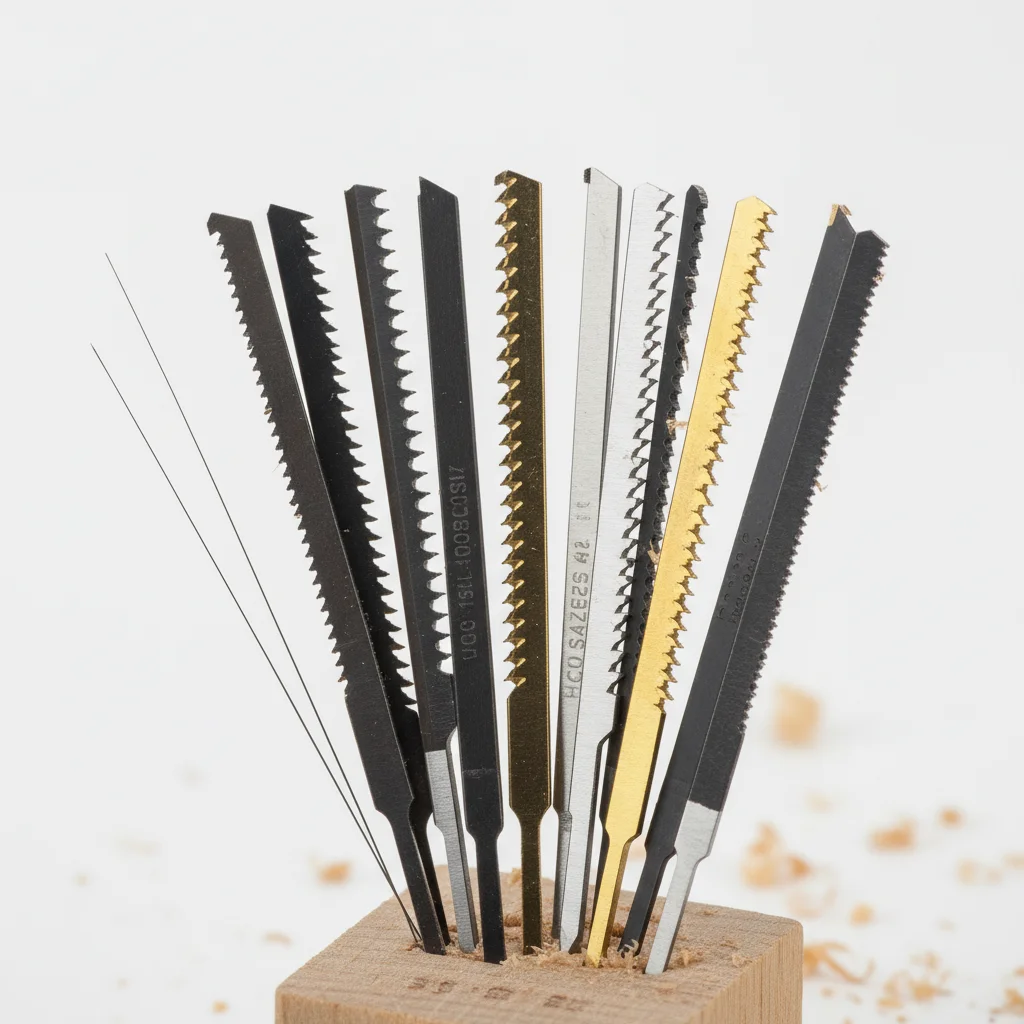
When cutting thin wood with a scroll saw, carbon steel blades are generally the best choice due to their flexibility and ability to create fine, intricate cuts without excessive breakage. Their design allows for delicate work on materials like veneer, plywood, and thin hardwoods, typically up to 1/4 inch thick.
Understanding Blade Materials for Thin Stock
Scroll saw blades come in various materials, each suited for different applications. For thin wood, the primary considerations are the blade’s ability to resist snapping under delicate pressure and its capacity to produce a clean cut. Carbon steel blades excel here, offering a good balance of strength and flexibility. They are less brittle than high-speed steel (HSS) blades, which can be prone to breaking when encountering the subtle resistance of thin, flexible wood.
Another option, though less common for general thin wood cutting, is bi-metal blades. While highly durable and excellent for metals, their increased rigidity can sometimes be a disadvantage when working with very thin, delicate wood pieces where a slight bend in the blade is beneficial for intricate turns.
The Role of TPI and Thickness
Beyond material, the Teeth Per Inch (TPI) and thickness of the blade are crucial for cutting thin wood. A higher TPI (e.g., 18-24 TPI) is essential for smooth, splinter-free cuts on thin stock. These finer teeth remove less material with each pass, reducing the risk of tearing out delicate wood fibers. Similarly, thinner blades (e.g., #0, #1, or #2) are preferred. They create a narrower kerf, allowing for tighter turns and more intricate designs, which is often the goal when working with thin wood.
- Carbon Steel: Offers flexibility and good cutting performance for thin wood.
- High TPI (18-24): Ensures smooth cuts and minimizes splintering.
- Thin Blades (#0-#2): Ideal for intricate designs and tight curves.
- Reverse Tooth Blades: Helps reduce tear-out on the underside of the workpiece.
- Skip Tooth Blades: Provides good chip clearance, preventing overheating.
Optimizing Your Technique for Thin Wood
|
Our Picks for the Best Scroll Saw in 2026
As an Amazon Associate I earn from qualifying purchases.
|
||
| Num | Product | Action |
|---|---|---|
| 1 | 2025 Scroll saw patterns: Scroll saw patterns: Inspirations for wood lovers: 164 patterns with Trees of Life, Hearts, Sailboats, animal family puzzles, landscapes... |

|
| 2 | WEN Adjustable Scroll Saw Stand for all WEN and DeWALT® Scroll Saws (MSA1621) |
|
| 3 | FOXBC 5-Inch Scroll Saw Blade Pin End Replacement for Wen 3921 3923, Dremel, Craftsman, Penn State, Delta, Ryobi and All 15in.and 16in.Scroll Saw For Wood, High Carbon Steel - 48 Pack |
|
| 4 | Scroll Saw Workbook, 3rd Edition: Learn to Master Your Scroll Saw in 25 Skill-Building Chapters (Fox Chapel Publishing) Ultimate Beginner's Guide with Projects to Hone Your Scrolling Skills |
|
| 5 | Scrolling 101: Everything the Beginner Needs to Know (Fox Chapel Publishing) Scroll Saw Basics, Choosing Blades, Adapting Patterns, Using a Starter Saw, Sanding, and a Skill-Building Exercise Pattern |
|
| 6 | BLACK+DECKER Jig Saw, 4.5 -Amp (BDEJS300C) |
|
| 7 | Big Book of Scroll Saw Woodworking: More Than 60 Projects and Techniques for Fretwork, Intarsia, and Other Scroll Saw Crafts (Fox Chapel Publishing) Patterns for Beginners to Advanced Woodworkers |
|
| 8 | Making Wooden People & Pets with Personality: 24 Easy Projects for the Scroll Saw (Fox Chapel Publishing) Full-Size Patterns for Beginners and Intermediate Scrollers to Create Handmade Gifts in Wood |
|
| 9 | Shop Fox W1872 16" VS Scroll Saw with Foot Switch, LED, Miter Gauge, Rotary Shaft |
|
| 10 | 3D Scroll Saw Projects: 35 Fun Compound-Cut Projects, More Than 150 Patterns (Fox Chapel Publishing) Scroll Saw Woodworking & Crafts Magazine Compilation - Ornaments, Home Décor, Chess Set, and More |
|
Even with the right blade, proper technique is vital for successful thin wood cutting. Always ensure your workpiece is securely held against the scroll saw table. Apply gentle, consistent pressure, allowing the blade to do the work. For very thin or fragile pieces, consider using a backing board, such as a piece of scrap plywood, to provide additional support and prevent tear-out. This technique is particularly useful for intricate fretwork or when cutting veneers.
Adjusting your scroll saw’s speed is also important. A moderate to slightly slower speed can give you more control and reduce vibration, which is beneficial when working with delicate materials. Experiment with different speeds on scrap pieces to find the optimal setting for your specific wood type and blade combination.
Blade Maintenance and Longevity
To ensure your blades perform optimally and last longer, proper maintenance is key. Regularly clean your blades to remove sawdust and resin buildup, which can hinder cutting performance and cause friction. A small wire brush or a specialized blade cleaner can be effective. Store your blades in a dry environment to prevent rust, especially carbon steel blades, which are more susceptible to corrosion than stainless steel or bi-metal options. Replacing blades promptly when they show signs of dullness or damage will not only improve cut quality but also reduce strain on your scroll saw motor.
Conclusion
For cutting thin wood on a scroll saw, carbon steel blades with a high TPI and a thin profile are the most effective choice. Combining these blades with careful technique and consistent maintenance will allow you to achieve precise, clean, and intricate cuts on even the most delicate wood pieces.

I’ve been struggling with snapping blades when working on delicate veneer projects, and the carbon steel blades mentioned here are a game-changer. They really do offer that perfect balance of flexibility and strength. My cuts on 1/8 inch plywood have never been cleaner, and I’m not going through blades nearly as fast. Highly recommend for anyone doing intricate work!
I appreciate the breakdown of blade materials. I’ve always just grabbed whatever was cheapest, but understanding why carbon steel is better for thin hardwoods up to 1/4 inch makes a lot of sense. I’ve noticed a significant improvement in my detailed cuts since switching. My only minor complaint is they seem to dull a little faster than the HSS blades I used to use, but the reduced breakage is worth it.
I tried the carbon steel blades for some very thin balsa wood, and while they were flexible, I still had some issues with them bending slightly on really tight turns. They’re definitely better than the high-speed steel blades I was using before, which would just snap. I was hoping for a bit more precision on the super delicate stuff, but for general thin wood like 1/4 inch plywood, they’re pretty good.
Finally, someone explains why my blades keep breaking when I’m trying to cut intricate designs on thin wood! The point about HSS blades being too brittle for delicate pressure really resonated with my experience. Switching to carbon steel has made a huge difference in my ability to create fine, intricate cuts without constant frustration. My projects look so much more professional now.