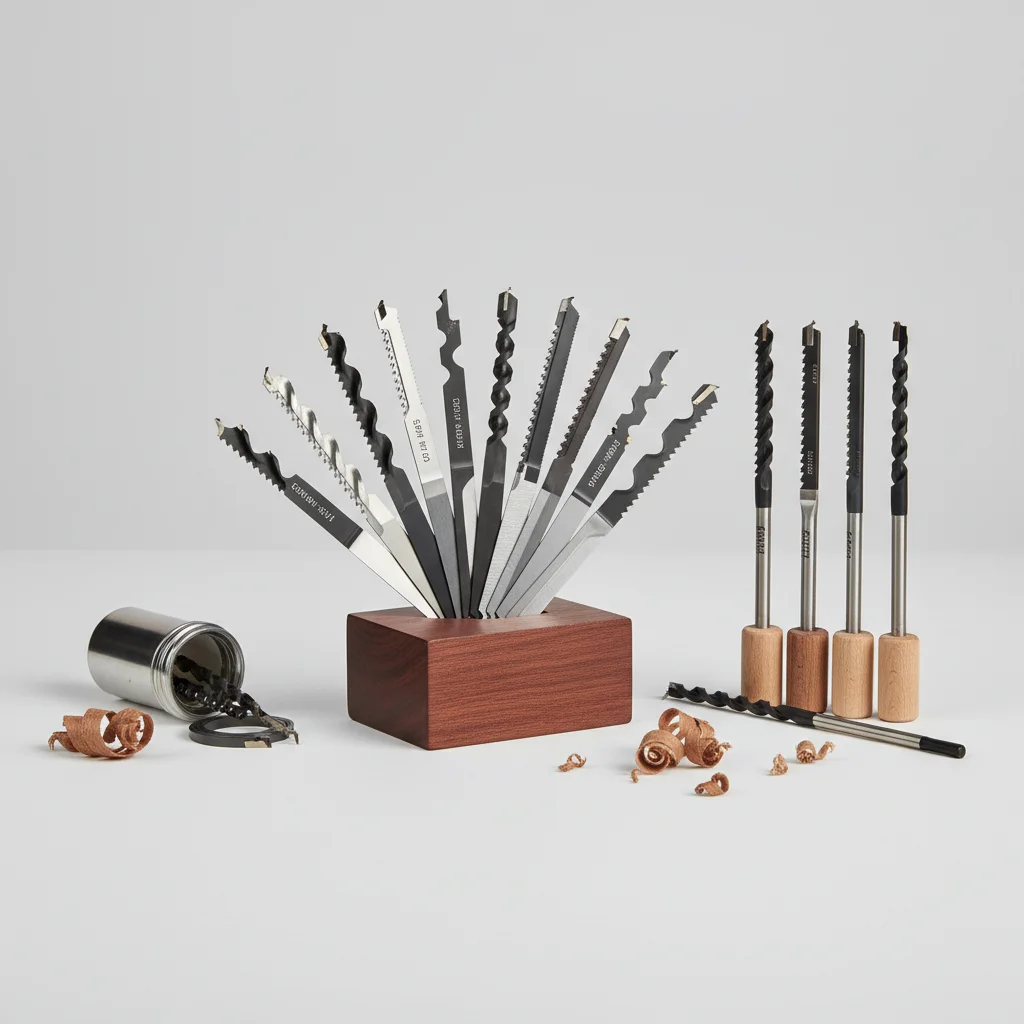
Choosing the right scroll saw blade material is crucial when working with hardwoods to ensure clean cuts and prevent premature blade wear. For optimal results with dense woods like oak, maple, or walnut, carbon steel blades are generally the best choice due to their strength and durability. While other materials have their uses, carbon steel offers the ideal balance of sharpness retention and resistance to the stresses of cutting hardwoods.
Understanding Blade Materials for Hardwoods
When tackling hardwoods, the material composition of your scroll saw blade directly impacts cutting efficiency and blade longevity. Carbon steel blades, often referred to as high-carbon steel, are a popular choice because they can be hardened to a greater degree than standard steel, allowing them to maintain a sharp edge longer against the abrasive nature of hardwoods. This reduces the frequency of blade changes and improves the overall quality of your cuts. For best scroll saws roundups on this site.
Another option, though less common for general hardwood scrolling, is bi-metal blades. These blades combine two different metals, typically a high-speed steel cutting edge welded to a more flexible backing. While excellent for metal cutting, their primary advantage for hardwoods is often overkill and they can be more expensive. For most scroll saw users, carbon steel provides the necessary performance without the added cost.
Why Carbon Steel Excels with Dense Woods
Carbon steel blades are specifically engineered to withstand the friction and resistance encountered when cutting dense materials. Their robust construction minimizes deflection, ensuring straighter and more accurate cuts, which is particularly important for intricate designs in hardwoods. The ability of carbon steel to dissipate heat effectively also helps prevent the blade from overheating and dulling quickly, extending its working life.
When selecting carbon steel blades, consider the TPI (teeth per inch) and thickness. For hardwoods, a higher TPI (e.g., 7-12 TPI) will generally produce smoother cuts, while a slightly thicker blade can offer more stability for deeper cuts without excessive vibration. Experimenting with different sizes within the carbon steel category will help you find the perfect match for your specific hardwood projects.
Alternatives and Considerations for Specific Hardwoods
|
Our Picks for the Best Scroll Saw in 2026
As an Amazon Associate I earn from qualifying purchases.
|
||
| Num | Product | Action |
|---|---|---|
| 1 | BLACK+DECKER Jig Saw, 4.5 -Amp (BDEJS300C) |

|
| 2 | Shop Fox W1872 16" VS Scroll Saw with Foot Switch, LED, Miter Gauge, Rotary Shaft |
|
| 3 | Making Wooden People & Pets with Personality: 24 Easy Projects for the Scroll Saw (Fox Chapel Publishing) Full-Size Patterns for Beginners and Intermediate Scrollers to Create Handmade Gifts in Wood |
|
| 4 | WEN Adjustable Scroll Saw Stand for all WEN and DeWALT® Scroll Saws (MSA1621) |
|
| 5 | Scroll Saw Workbook, 3rd Edition: Learn to Master Your Scroll Saw in 25 Skill-Building Chapters (Fox Chapel Publishing) Ultimate Beginner's Guide with Projects to Hone Your Scrolling Skills |
|
| 6 | Scrolling 101: Everything the Beginner Needs to Know (Fox Chapel Publishing) Scroll Saw Basics, Choosing Blades, Adapting Patterns, Using a Starter Saw, Sanding, and a Skill-Building Exercise Pattern |
|
| 7 | FOXBC 5-Inch Scroll Saw Blade Pin End Replacement for Wen 3921 3923, Dremel, Craftsman, Penn State, Delta, Ryobi and All 15in.and 16in.Scroll Saw For Wood, High Carbon Steel - 48 Pack |
|
| 8 | 2025 Scroll saw patterns: Scroll saw patterns: Inspirations for wood lovers: 164 patterns with Trees of Life, Hearts, Sailboats, animal family puzzles, landscapes... |
|
| 9 | 3D Scroll Saw Projects: 35 Fun Compound-Cut Projects, More Than 150 Patterns (Fox Chapel Publishing) Scroll Saw Woodworking & Crafts Magazine Compilation - Ornaments, Home Décor, Chess Set, and More |
|
| 10 | Big Book of Scroll Saw Woodworking: More Than 60 Projects and Techniques for Fretwork, Intarsia, and Other Scroll Saw Crafts (Fox Chapel Publishing) Patterns for Beginners to Advanced Woodworkers |
|
While carbon steel is the go-to, certain very hard or exotic woods might benefit from specialized blades. For instance, some scroll saw users might consider carbide-tipped blades for extremely dense or abrasive hardwoods, though these are less common and significantly more expensive for scroll saws. For the vast majority of hardwood projects, a good quality carbon steel blade will suffice.
It’s also important to consider the type of cut you’re making. For delicate fretwork in hardwoods, a very fine-toothed carbon steel blade will be essential. For larger, more aggressive cuts, a slightly coarser carbon steel blade might be more efficient. Always ensure your blade is sharp; a dull blade will burn the wood and lead to poor results, regardless of its material.
- Carbon steel blades offer superior durability and edge retention for hardwoods.
- Higher TPI carbon steel blades provide smoother cuts in dense woods.
- Thicker carbon steel blades enhance stability for deeper hardwood cuts.
- Bi-metal blades are an option but often overkill and more costly for hardwoods.
- Regular blade changes are crucial for maintaining cut quality and safety.
Maintaining Your Blades for Hardwood Projects
Proper maintenance extends the life of your scroll saw blades, especially when working with hardwoods. Always ensure your blade tension is correct; too loose, and the blade can wander or break; too tight, and it can put undue stress on the blade and saw. Regularly clean your blades to remove resin and sawdust buildup, which can cause friction and heat. A simple brush and some blade cleaner can make a significant difference.
When you notice your cuts becoming rougher, or if you smell burning wood, it’s a clear sign that your blade is dull and needs to be replaced. Keeping a supply of fresh carbon steel blades on hand will ensure you’re always ready to tackle your next hardwood project with precision and efficiency.Investing in quality blades is just as important as the scroll saw itself.
Conclusion
For anyone working with hardwoods on a scroll saw, carbon steel blades are the undisputed champion. Their ability to maintain sharpness, resist wear, and provide clean, precise cuts makes them the ideal choice for a wide range of projects. By understanding the properties of different blade materials and selecting the appropriate carbon steel blade for your specific hardwood, you can achieve professional-quality results and enjoy a more efficient and satisfying woodworking experience.

I’ve been struggling with oak projects for ages, always breaking blades or getting really rough cuts. Switched to carbon steel blades after reading up on them, and wow, what a difference! My cuts are so much cleaner now, and the blades actually last. Definitely recommend them for anyone working with dense woods like maple or walnut.
I mostly use my scroll saw for intricate designs in cherry and some harder exotic woods. The carbon steel blades hold up really well, much better than the standard ones I used to buy. I still find myself changing them more often than I’d like on really thick pieces, but for the price point, they’re a solid choice for durability.
I tried the high-carbon steel blades for some walnut coasters, and while they cut okay, I felt like they dulled a bit faster than I expected. Maybe I was pushing too hard, but I was hoping for a bit more longevity. They’re definitely better than regular steel, but I might try a different brand next time to see if there’s a noticeable difference in edge retention.
Finally, a blade that can handle my oak projects without snapping! I used to go through blades like crazy, especially on thicker stock. The strength and durability of these carbon steel blades are exactly what I needed. My workshop is much happier now, and so am I. Great for anyone serious about woodworking with hardwoods.