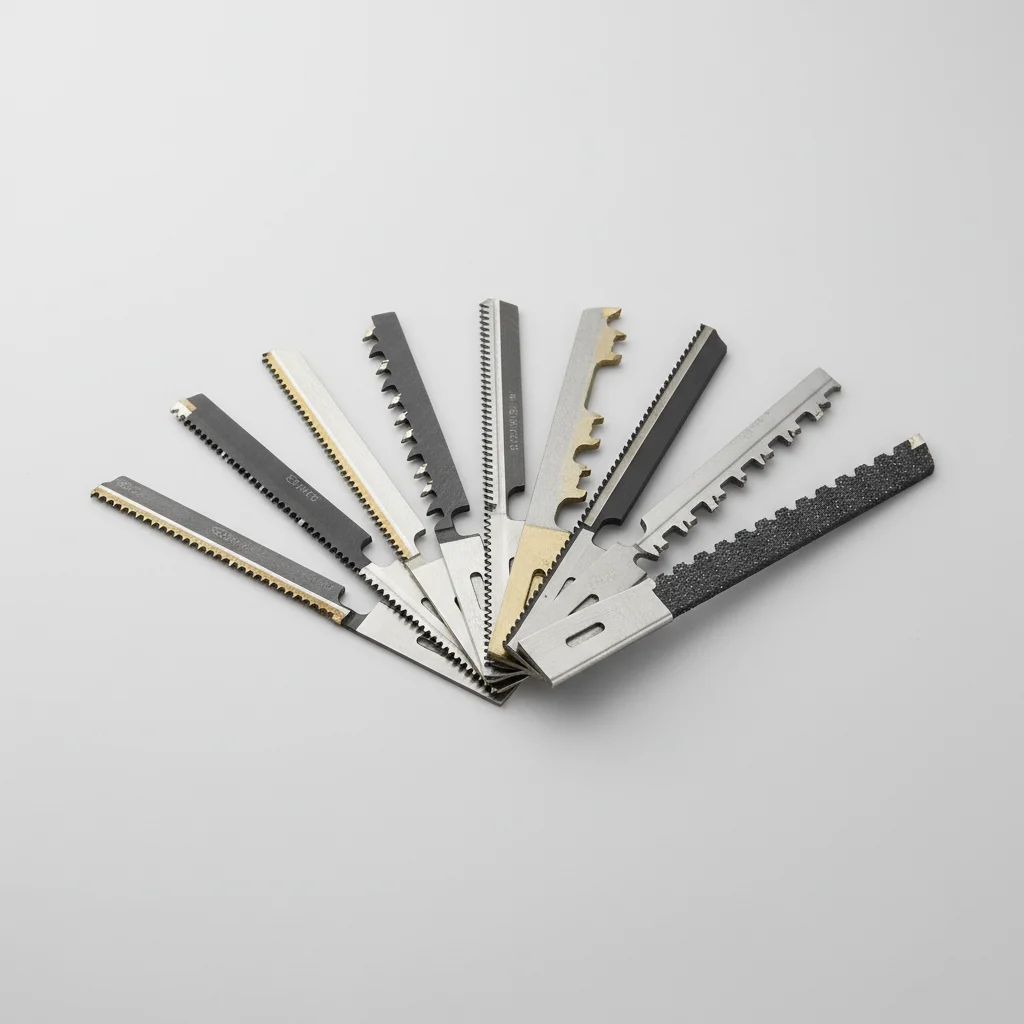
Choosing the right scroll saw blade for cutting metal is crucial for achieving clean cuts and preventing blade breakage. For most metalworking tasks with a scroll saw, a high-speed steel (HSS) blade is the superior choice due to its hardness and heat resistance. These blades are specifically designed to withstand the friction and heat generated when cutting through various metals, from thin aluminum to thicker brass.
Understanding Blade Materials for Metal
When it comes to cutting metal with a scroll saw, the material of the blade itself is paramount. Carbon steel blades, while excellent for wood, will quickly dull and break when encountering metal. High-speed steel (HSS) blades, on the other hand, are engineered with alloys like tungsten and molybdenum, giving them exceptional hardness and the ability to maintain a sharp edge even at high temperatures. This makes them ideal for cutting non-ferrous metals such as aluminum, brass, copper, and even some softer steels. Carbide-tipped blades are also available for extremely hard materials, but they are less common for general scroll saw use and often require specialized equipment. For scroll saws buying guides on this site.
Selecting the Right TPI for Metal Cutting
The Teeth Per Inch (TPI) of your scroll saw blade significantly impacts the quality and speed of your metal cuts. For metal, a higher TPI is generally preferred to create smoother cuts and reduce material tear-out. For thin metals like aluminum sheets or brass up to 1/16 inch, a blade with 20-30 TPI is recommended. For thicker metals, such as 1/8 inch copper or brass, a TPI of 15-20 will provide a good balance between cutting speed and finish. Always ensure your blade is securely tensioned to prevent flexing and ensure precise cuts.
Blade Types and Sizes for Different Metals
|
Our Picks for the Best Scroll Saw in 2026
As an Amazon Associate I earn from qualifying purchases.
|
||
| Num | Product | Action |
|---|---|---|
| 1 | Big Book of Scroll Saw Woodworking: More Than 60 Projects and Techniques for Fretwork, Intarsia, and Other Scroll Saw Crafts (Fox Chapel Publishing) Patterns for Beginners to Advanced Woodworkers |

|
| 2 | FOXBC 5-Inch Scroll Saw Blade Pin End Replacement for Wen 3921 3923, Dremel, Craftsman, Penn State, Delta, Ryobi and All 15in.and 16in.Scroll Saw For Wood, High Carbon Steel - 48 Pack |
|
| 3 | Scroll Saw Workbook, 3rd Edition: Learn to Master Your Scroll Saw in 25 Skill-Building Chapters (Fox Chapel Publishing) Ultimate Beginner's Guide with Projects to Hone Your Scrolling Skills |
|
| 4 | Shop Fox W1872 16" VS Scroll Saw with Foot Switch, LED, Miter Gauge, Rotary Shaft |
|
| 5 | Scrolling 101: Everything the Beginner Needs to Know (Fox Chapel Publishing) Scroll Saw Basics, Choosing Blades, Adapting Patterns, Using a Starter Saw, Sanding, and a Skill-Building Exercise Pattern |
|
| 6 | BLACK+DECKER Jig Saw, 4.5 -Amp (BDEJS300C) |
|
| 7 | WEN Adjustable Scroll Saw Stand for all WEN and DeWALT® Scroll Saws (MSA1621) |
|
| 8 | 2025 Scroll saw patterns: Scroll saw patterns: Inspirations for wood lovers: 164 patterns with Trees of Life, Hearts, Sailboats, animal family puzzles, landscapes... |
|
| 9 | Making Wooden People & Pets with Personality: 24 Easy Projects for the Scroll Saw (Fox Chapel Publishing) Full-Size Patterns for Beginners and Intermediate Scrollers to Create Handmade Gifts in Wood |
|
| 10 | 3D Scroll Saw Projects: 35 Fun Compound-Cut Projects, More Than 150 Patterns (Fox Chapel Publishing) Scroll Saw Woodworking & Crafts Magazine Compilation - Ornaments, Home Décor, Chess Set, and More |
|
Beyond material and TPI, the specific type and size of the scroll saw blade also play a role. Standard tooth blades are versatile for many metal applications. Reverse tooth blades can help reduce splintering on the underside of the material, which is beneficial for delicate metal sheets. Spiral blades, while excellent for intricate cuts in wood, are generally not recommended for metal as they can be less stable and prone to breaking. For most metal projects, a blade size between #2 and #5 is a good starting point, offering a balance of strength and maneuverability. Always consult your scroll saw’s manual for maximum blade thickness recommendations for metal.
- High-speed steel (HSS) blades for durability and heat resistance.
- Higher TPI (20-30) for thin metals, lower TPI (15-20) for thicker metals.
- Standard tooth blades are versatile for various metal types.
- Ensure proper blade tension to prevent breakage and improve cut quality.
- Consider blade sizes #2 to #5 for general metal scroll saw work.
Safety and Technique for Metal Scroll Sawing
Cutting metal with a scroll saw requires specific safety precautions and techniques. Always wear appropriate personal protective equipment, including safety glasses and gloves. Use a slow to medium speed setting on your scroll saw to prevent overheating the blade and the metal. Applying a cutting lubricant or wax to the blade can significantly reduce friction, extend blade life, and improve cut quality. Feed the metal slowly and steadily into the blade, allowing the blade to do the work without forcing it. For intricate designs, consider drilling pilot holes to start internal cuts.
Maintaining Your Blades and Scroll Saw for Metalwork
Proper maintenance is key to successful metal scroll sawing. Regularly clean your blades to remove metal shavings and lubricant residue, which can build up and affect performance. Store blades in a dry place to prevent rust. After cutting metal, inspect your scroll saw for any metal dust or debris and clean it thoroughly. Lubricate moving parts as recommended by your scroll saw’s manufacturer to ensure smooth operation. Investing in quality blades specifically designed for metal will not only yield better results but also protect your scroll saw from unnecessary wear and tear.
