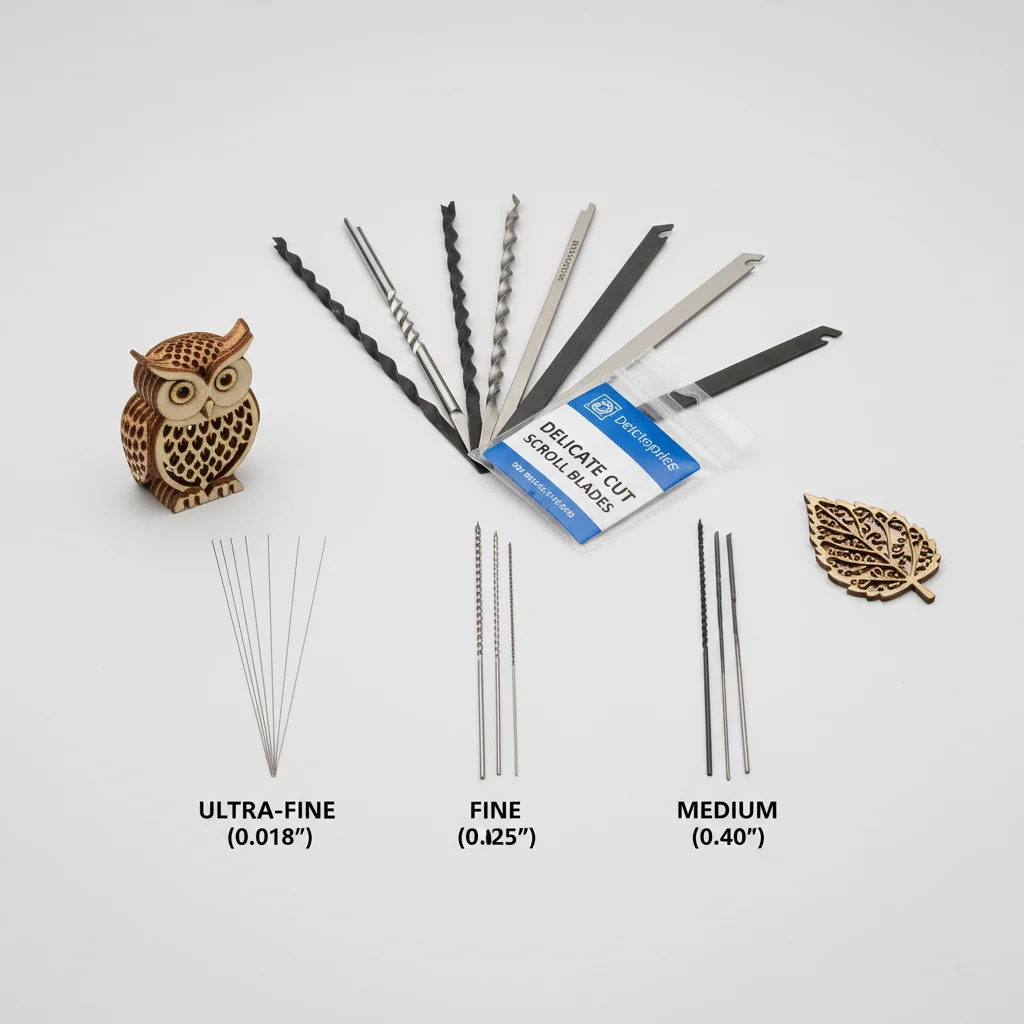
For delicate scroll saw work, the best blade thickness is typically a #2 or #3 blade, which offers a fine kerf and excellent maneuverability for intricate details. These thinner blades minimize material removal, allowing for tighter turns and more precise cuts in a variety of materials.
Understanding Blade Thickness and Its Impact
Scroll saw blade thickness, often referred to by its number (e.g., #2, #5, #7), directly correlates with the blade’s ability to navigate curves and create fine details. Thinner blades, like a #2 or #3, have a smaller kerf (the width of the cut), which is crucial when working on projects that demand high precision and minimal material loss. This is particularly important for marquetry, intarsia, or cutting very small, intricate patterns where every millimeter counts.
Conversely, thicker blades, such as a #7 or #9, are more robust and less prone to breaking, making them suitable for thicker materials or less intricate cuts. However, their wider kerf makes it challenging to achieve tight radii and fine details, often leading to less precise results in delicate applications.
Choosing the Right Thickness for Different Materials
The ideal blade thickness also depends on the material you are cutting. For very thin woods, such as 1/8-inch plywood or veneer, a #2 or #3 blade is often preferred. These blades prevent splintering and allow for smooth, clean cuts without excessive material removal. When working with slightly thicker woods, up to 1/2 inch, a #3 or #5 blade might offer a good balance of precision and durability.
For plastics like acrylic, a #2 or #3 reverse-tooth blade can be effective, as the reverse teeth help prevent melting and provide a cleaner exit cut. Always consider the material’s density and thickness when selecting your blade to ensure optimal performance and prevent blade breakage.
Tips for Achieving Delicate Cuts
|
Our Picks for the Best Scroll Saw in 2026
As an Amazon Associate I earn from qualifying purchases.
|
||
| Num | Product | Action |
|---|---|---|
| 1 | 3D Scroll Saw Projects: 35 Fun Compound-Cut Projects, More Than 150 Patterns (Fox Chapel Publishing) Scroll Saw Woodworking & Crafts Magazine Compilation - Ornaments, Home Décor, Chess Set, and More |

|
| 2 | 2025 Scroll saw patterns: Scroll saw patterns: Inspirations for wood lovers: 164 patterns with Trees of Life, Hearts, Sailboats, animal family puzzles, landscapes... |
|
| 3 | BLACK+DECKER Jig Saw, 4.5 -Amp (BDEJS300C) |
|
| 4 | Shop Fox W1872 16" VS Scroll Saw with Foot Switch, LED, Miter Gauge, Rotary Shaft |
|
| 5 | FOXBC 5-Inch Scroll Saw Blade Pin End Replacement for Wen 3921 3923, Dremel, Craftsman, Penn State, Delta, Ryobi and All 15in.and 16in.Scroll Saw For Wood, High Carbon Steel - 48 Pack |
|
| 6 | Big Book of Scroll Saw Woodworking: More Than 60 Projects and Techniques for Fretwork, Intarsia, and Other Scroll Saw Crafts (Fox Chapel Publishing) Patterns for Beginners to Advanced Woodworkers |
|
| 7 | Scrolling 101: Everything the Beginner Needs to Know (Fox Chapel Publishing) Scroll Saw Basics, Choosing Blades, Adapting Patterns, Using a Starter Saw, Sanding, and a Skill-Building Exercise Pattern |
|
| 8 | WEN Adjustable Scroll Saw Stand for all WEN and DeWALT® Scroll Saws (MSA1621) |
|
| 9 | Making Wooden People & Pets with Personality: 24 Easy Projects for the Scroll Saw (Fox Chapel Publishing) Full-Size Patterns for Beginners and Intermediate Scrollers to Create Handmade Gifts in Wood |
|
| 10 | Scroll Saw Workbook, 3rd Edition: Learn to Master Your Scroll Saw in 25 Skill-Building Chapters (Fox Chapel Publishing) Ultimate Beginner's Guide with Projects to Hone Your Scrolling Skills |
|
Beyond blade thickness, several techniques can help you achieve the most delicate cuts with your scroll saw. Firstly, always use a sharp blade; a dull blade will tear the material and make intricate cuts more difficult. Secondly, control your feed rate: a slower, consistent feed allows the blade to do its work without forcing it, reducing the risk of breakage and improving cut quality.
Additionally, proper tensioning of your scroll saw blade is critical. Too little tension can cause the blade to wander and produce inaccurate cuts, while too much tension can lead to premature blade breakage. Experiment with different tensions to find the sweet spot for your specific blade and material combination.
- Always use a sharp blade for clean, precise cuts.
- Maintain a slow and consistent feed rate.
- Ensure proper blade tension to prevent wandering or breakage.
- Practice on scrap material before starting your main project.
- Consider a magnifying lamp for enhanced visibility of intricate details.
When to Consider Thicker Blades
While thinner blades excel at delicate work, there are situations where a thicker blade is more appropriate. For instance, if you are cutting thicker stock (over 1 inch) or working with harder woods, a #7 or #9 blade will provide the necessary strength and stability to prevent excessive deflection and breakage. These blades are also better suited for roughing out larger shapes before moving to finer details with a thinner blade.
It’s also important to consider the type of cut. If you are making long, straight cuts or gentle curves where precision is less critical than speed and durability, a thicker blade can be more efficient. Always have a variety of blade thicknesses on hand to match the demands of your specific project.
Maintaining Your Blades for Optimal Performance
Proper maintenance of your scroll saw blades is essential for consistent performance, especially when performing delicate work. After each use, clean your blades to remove any accumulated sawdust or resin, which can dull the teeth and affect cutting efficiency. A small wire brush or a specialized blade cleaner can be effective for this task.
Store your blades in a dry, organized manner to prevent rust and damage. Many scroll saw users keep their blades in labeled containers or specialized blade holders, making it easy to select the correct thickness for their next project. Regularly inspecting your blades for any signs of wear, such as bent teeth or cracks, will help you replace them before they cause issues during a delicate cut.

I’ve been struggling with intricate cuts on my latest intarsia project, and the advice here about using a #2 or #3 blade was a game-changer. I always just grabbed whatever was handy, but the difference in maneuverability with the thinner blade is incredible. My lines are so much cleaner now, and I’m not fighting the wood as much. Definitely recommend paying attention to blade thickness for detailed work.
This really helped clarify why my thicker blades were giving me trouble on small patterns. I usually use a #7 for general cutting, but for the delicate stuff, it just wasn’t cutting it (pun intended!). Switched to a #3 and it’s much better for those tight turns. My only minor complaint is that the thinner blades do seem to break a bit more easily, but that’s probably just the trade-off for the precision.
I tried a #3 blade for some small wooden ornaments based on the recommendation for delicate work. While it did make tighter turns easier, I found it snapped on me a couple of times, which was frustrating. Maybe my technique needs work, or perhaps my wood was a bit too hard for it. I’ll stick to a slightly thicker blade for general use, but I can see the benefit for super fine details.
As someone who does a lot of marquetry, blade thickness is everything. I’ve always gravitated towards the finer blades, and this confirmed my choice of a #2 for minimizing material removal. It’s so important when you’re working with expensive veneers. The explanation of kerf and its impact was really clear and helpful for anyone new to scroll sawing.