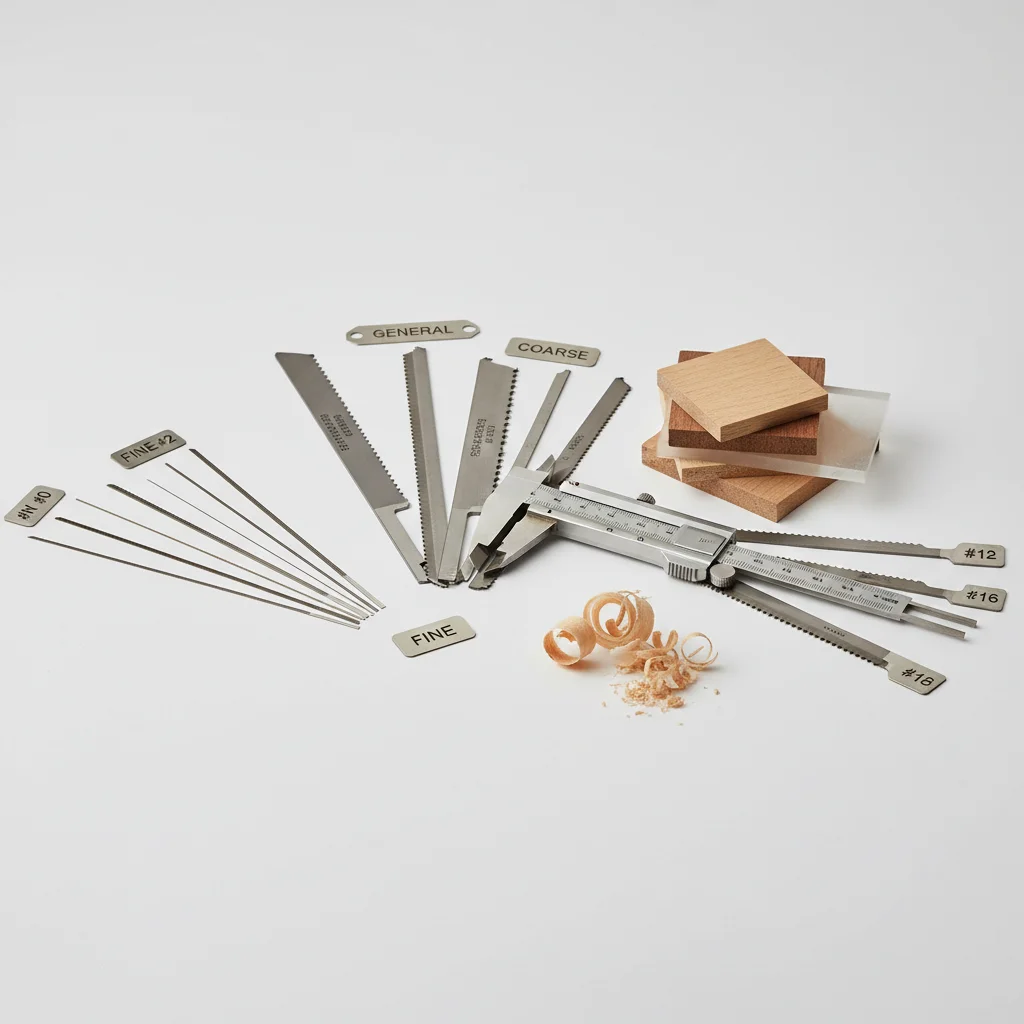
Choosing the correct scroll saw blade thickness is crucial for achieving optimal results in general-purpose cutting. For most common woodworking and crafting tasks, a #5 or #7 blade is ideal. These thicknesses offer a balanced combination of durability and maneuverability, making them suitable for a wide range of materials and project complexities without being overly fragile or too aggressive.
Understanding Blade Thickness and Its Impact
Scroll saw blade thickness, often indicated by a number (e.g., #2, #5, #7), refers to the gauge of the blade. Thicker blades are generally more robust and less prone to breaking, making them suitable for denser materials or when a slightly wider kerf is acceptable. Conversely, thinner blades allow for tighter turns and more intricate details, but they are also more delicate and can break more easily, especially with aggressive feeding or in harder woods.
For general purpose work, you need a blade that can handle various wood types, from pine to oak, and allow for both straight cuts and moderate curves. A blade that is too thin will constantly break, interrupting your workflow, while one that is too thick will make intricate cuts difficult and leave a wider, less refined kerf.
Why #5 and #7 Blades Excel for General Use
The #5 and #7 scroll saw blades strike an excellent balance for general-purpose cutting. A #5 blade is a fantastic all-rounder, offering good control for moderate curves and sufficient strength for most common wood thicknesses up to about 3/4 inch. It’s a popular choice for hobbyists and professionals alike due to its versatility.
The #7 blade, being slightly thicker, provides increased durability and is often preferred when working with slightly thicker stock or when a project involves less intricate detail but still requires good maneuverability. Both sizes offer a good compromise between cutting speed and finish quality for everyday scroll saw projects.
Factors to Consider Beyond Thickness
|
Our Picks for the Best Scroll Saw in 2026
As an Amazon Associate I earn from qualifying purchases.
|
||
| Num | Product | Action |
|---|---|---|
| 1 | 2025 Scroll saw patterns: Scroll saw patterns: Inspirations for wood lovers: 164 patterns with Trees of Life, Hearts, Sailboats, animal family puzzles, landscapes... |

|
| 2 | WEN Adjustable Scroll Saw Stand for all WEN and DeWALT® Scroll Saws (MSA1621) |
|
| 3 | Big Book of Scroll Saw Woodworking: More Than 60 Projects and Techniques for Fretwork, Intarsia, and Other Scroll Saw Crafts (Fox Chapel Publishing) Patterns for Beginners to Advanced Woodworkers |
|
| 4 | Making Wooden People & Pets with Personality: 24 Easy Projects for the Scroll Saw (Fox Chapel Publishing) Full-Size Patterns for Beginners and Intermediate Scrollers to Create Handmade Gifts in Wood |
|
| 5 | BLACK+DECKER Jig Saw, 4.5 -Amp (BDEJS300C) |
|
| 6 | 3D Scroll Saw Projects: 35 Fun Compound-Cut Projects, More Than 150 Patterns (Fox Chapel Publishing) Scroll Saw Woodworking & Crafts Magazine Compilation - Ornaments, Home Décor, Chess Set, and More |
|
| 7 | Scrolling 101: Everything the Beginner Needs to Know (Fox Chapel Publishing) Scroll Saw Basics, Choosing Blades, Adapting Patterns, Using a Starter Saw, Sanding, and a Skill-Building Exercise Pattern |
|
| 8 | Scroll Saw Workbook, 3rd Edition: Learn to Master Your Scroll Saw in 25 Skill-Building Chapters (Fox Chapel Publishing) Ultimate Beginner's Guide with Projects to Hone Your Scrolling Skills |
|
| 9 | Shop Fox W1872 16" VS Scroll Saw with Foot Switch, LED, Miter Gauge, Rotary Shaft |
|
| 10 | FOXBC 5-Inch Scroll Saw Blade Pin End Replacement for Wen 3921 3923, Dremel, Craftsman, Penn State, Delta, Ryobi and All 15in.and 16in.Scroll Saw For Wood, High Carbon Steel - 48 Pack |
|
While blade thickness is a primary consideration, other factors also play a significant role in selecting the right blade for general use. The TPI (teeth per inch) affects the smoothness of the cut, with higher TPI blades producing finer finishes. The blade material, such as carbon steel or hardened steel, influences its longevity and ability to cut different materials. Pin-end versus plain-end blades also dictates compatibility with your specific scroll saw model.
- Consider the type of wood: Softer woods might allow for slightly thinner blades, while hardwoods benefit from the robustness of #5 or #7.
- Evaluate project intricacy: For general work, a balance is key; extremely intricate work might require a finer blade, but that’s not ‘general purpose’.
- Match blade to saw: Ensure the blade type (pin-end or plain-end) is compatible with your scroll saw’s clamping mechanism.
- Don’t forget TPI: A medium TPI (around 7-12) is usually best for general-purpose cutting to balance speed and finish.
- Blade material: Carbon steel is common for general use, offering good performance and value.
When to Deviate from General Purpose Thickness
While #5 and #7 blades are excellent for general use, there will be instances where a different thickness is more appropriate. For very delicate fretwork or extremely tight curves, a #1 or #2 blade might be necessary. Conversely, for cutting thicker stock (over 1 inch) or denser materials where precision is less critical than speed and durability, a #9 or even a #12 blade could be more effective. Always assess your specific project requirements before making a final blade selection.
Having a variety of blade thicknesses on hand is always recommended for any scroll saw enthusiast. This allows you to quickly adapt to different materials and project demands, ensuring you always have the right tool for the job.Investing in a good assortment pack can save time and frustration in the long run.

This really helped clarify the whole blade thickness confusion for me. I was just grabbing whatever was on sale. Understanding that #5 or #7 is ideal for most common tasks has made my scroll sawing much more enjoyable. My cuts are smoother, and I feel more confident tackling different materials.
I’ve always struggled with blade breakage, especially on thicker hardwoods. Switching to a #7 blade, as suggested, has made a huge difference. It’s robust enough for oak and maple without sacrificing too much detail. My projects are coming out much cleaner now, and I’m not constantly stopping to change blades.
I picked up some #5 blades for general use, and while they’re good for most of my crafting, I found them a bit too aggressive for really delicate cuts on thin plywood. I had to slow down my feed rate considerably to avoid tear-out. For general purpose, they’re fine, but I’ll stick to my finer blades for intricate work.
I mostly do intricate fretwork, so I usually lean towards thinner blades. I tried a #5 for some general cuts on pine, and it worked really well. It’s a good balance for durability and still allows for decent maneuverability. I’ll definitely keep a few #5s on hand for my less detailed projects.