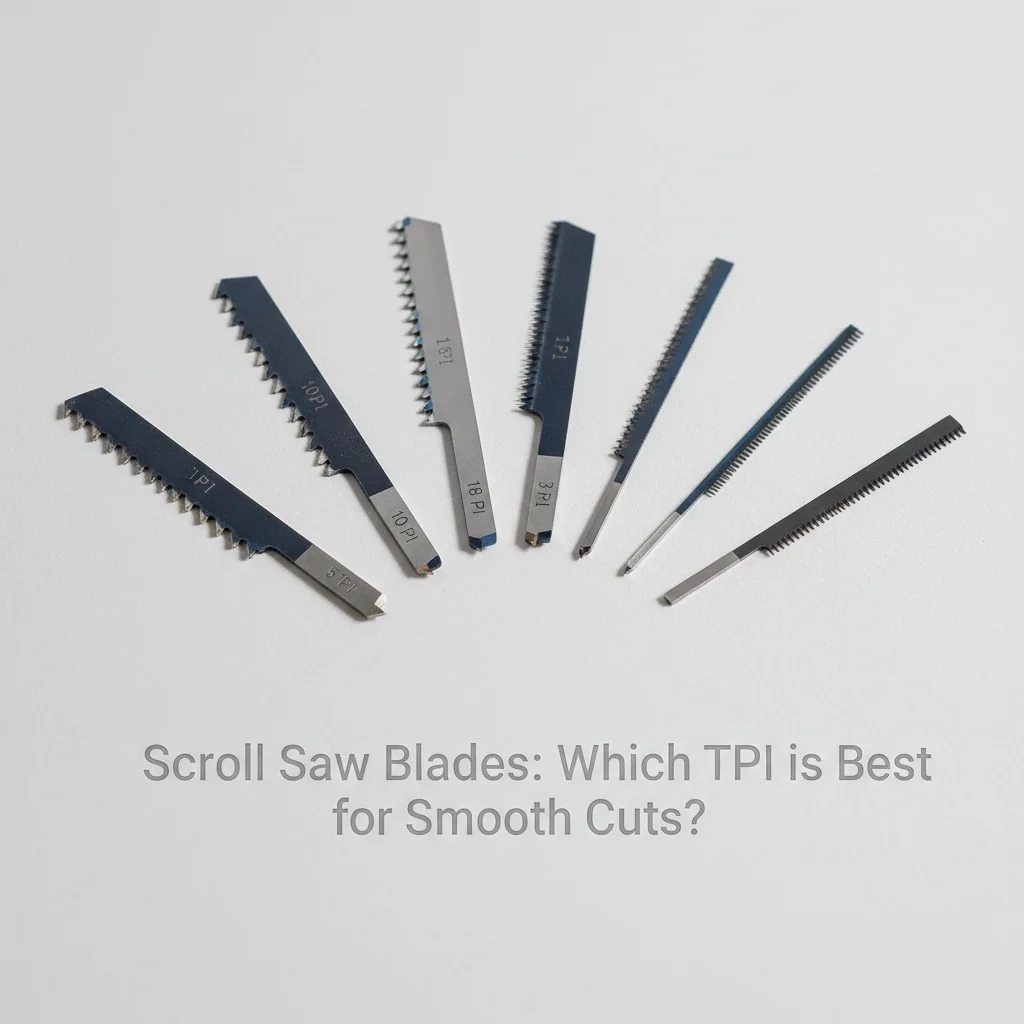
Choosing the correct TPI (Teeth Per Inch) for your scroll saw blades is crucial for achieving smooth cuts and preventing wood tear-out. For the smoothest finishes, especially on delicate or intricate projects, a higher TPI blade, typically ranging from 18 to 24 TPI, is generally recommended. These finer blades remove less material with each pass, resulting in a cleaner edge and reducing the need for extensive sanding.
Understanding TPI and Its Impact on Cut Quality
TPI directly correlates with the number of teeth on a scroll saw blade within a one-inch span. Blades with a higher TPI have more, smaller teeth, which are ideal for cutting thinner materials and achieving very fine, detailed work. Conversely, lower TPI blades have fewer, larger teeth, making them more suitable for thicker stock and faster material removal, though often at the expense of cut smoothness. The key is to match the blade’s TPI to the material thickness and the desired finish quality. For shop curated scroll saws on this site.
High TPI Blades for Intricate Details and Smoothness
When working on projects that demand exceptional detail and a glass-like finish, such as marquetry, intarsia, or delicate fretwork, blades with 18 to 24 TPI are your best allies. These blades create very fine sawdust and minimize splintering, particularly in hardwoods and veneers. They require a slower feed rate but deliver superior results, significantly reducing post-cutting cleanup. For very thin materials, even higher TPI counts can be beneficial.
- 18 TPI: Excellent for general smooth cuts in medium-density woods.
- 20 TPI: Ideal for intricate patterns and delicate hardwoods.
- 22 TPI: Perfect for very fine details and thin veneers.
- 24 TPI: Best for extremely smooth finishes on thin materials and plastics.
Medium TPI Blades for Versatility
|
Our Picks for the Best Scroll Saw in 2026
As an Amazon Associate I earn from qualifying purchases.
|
||
| Num | Product | Action |
|---|---|---|
| 1 | 3D Scroll Saw Projects: 35 Fun Compound-Cut Projects, More Than 150 Patterns (Fox Chapel Publishing) Scroll Saw Woodworking & Crafts Magazine Compilation - Ornaments, Home Décor, Chess Set, and More |

|
| 2 | FOXBC 5-Inch Scroll Saw Blade Pin End Replacement for Wen 3921 3923, Dremel, Craftsman, Penn State, Delta, Ryobi and All 15in.and 16in.Scroll Saw For Wood, High Carbon Steel - 48 Pack |
|
| 3 | Scrolling 101: Everything the Beginner Needs to Know (Fox Chapel Publishing) Scroll Saw Basics, Choosing Blades, Adapting Patterns, Using a Starter Saw, Sanding, and a Skill-Building Exercise Pattern |
|
| 4 | WEN Adjustable Scroll Saw Stand for all WEN and DeWALT® Scroll Saws (MSA1621) |
|
| 5 | Making Wooden People & Pets with Personality: 24 Easy Projects for the Scroll Saw (Fox Chapel Publishing) Full-Size Patterns for Beginners and Intermediate Scrollers to Create Handmade Gifts in Wood |
|
| 6 | Big Book of Scroll Saw Woodworking: More Than 60 Projects and Techniques for Fretwork, Intarsia, and Other Scroll Saw Crafts (Fox Chapel Publishing) Patterns for Beginners to Advanced Woodworkers |
|
| 7 | Scroll Saw Workbook, 3rd Edition: Learn to Master Your Scroll Saw in 25 Skill-Building Chapters (Fox Chapel Publishing) Ultimate Beginner's Guide with Projects to Hone Your Scrolling Skills |
|
| 8 | 2025 Scroll saw patterns: Scroll saw patterns: Inspirations for wood lovers: 164 patterns with Trees of Life, Hearts, Sailboats, animal family puzzles, landscapes... |
|
| 9 | Shop Fox W1872 16" VS Scroll Saw with Foot Switch, LED, Miter Gauge, Rotary Shaft |
|
| 10 | BLACK+DECKER Jig Saw, 4.5 -Amp (BDEJS300C) |
|
For general scroll saw work that balances speed and smoothness, blades in the 10 to 15 TPI range offer excellent versatility. These blades are a good choice for a wide variety of wood types and thicknesses, making them a staple for many scroll saw enthusiasts. They cut faster than high TPI blades but still provide a reasonably smooth finish, suitable for many decorative and functional projects.
Low TPI Blades for Fast Cutting and Thicker Stock
Blades with a lower TPI, typically 5 to 9, are designed for aggressive cutting and thicker materials. While they remove material quickly, they tend to leave a rougher finish that will require more sanding. These blades are best used when speed is a priority and the final finish is less critical, or when working with very thick stock where a finer blade might bind or break. They are also effective for cutting softer woods where tear-out is less of a concern.
Matching TPI to Material Type and Thickness
The optimal TPI isn’t just about smoothness; it also depends on the material you’re cutting. For hardwoods, a higher TPI helps prevent burning and splintering. For softwoods, a slightly lower TPI can be used for faster cutting without excessive tear-out. When cutting plastics or acrylics, a very high TPI (20+) is essential to prevent melting and achieve clean edges. Always consider the thickness of your material; thinner stock generally benefits from higher TPI, while thicker stock can handle lower TPI.
Tips for Maximizing Smoothness with Any TPI
Beyond TPI, several factors contribute to a smooth scroll saw cut. Ensure your blade tension is correct – too loose, and the blade will wander; too tight, and it risks breaking. Use a slow, consistent feed rate, allowing the blade to do the work without forcing it. Keep your workpiece firmly on the table to prevent vibration. Regularly clean your scroll saw to remove dust and debris that can affect cutting performance. Experiment with different blade types and TPIs on scrap material to find the perfect combination for your specific project and desired outcome.
