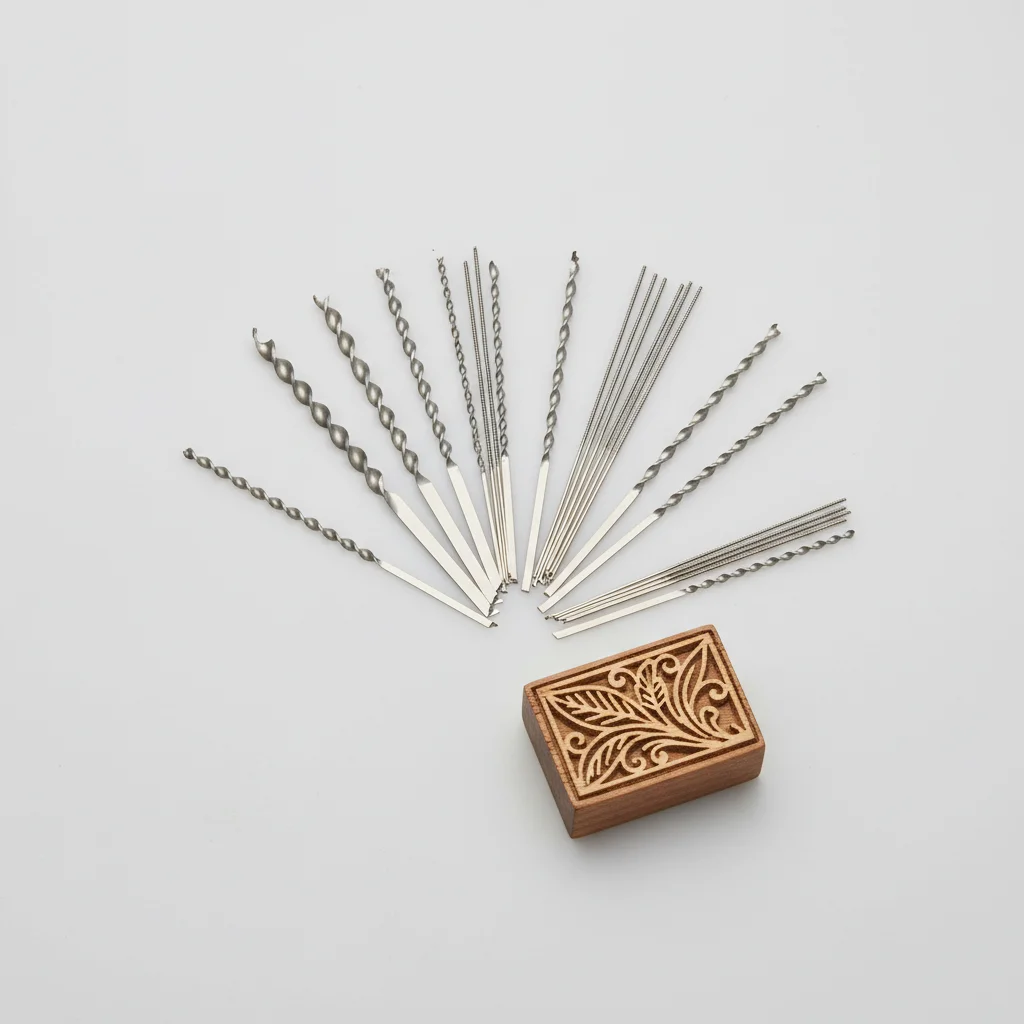
Choosing the right scroll saw blade for fretwork is crucial for achieving clean, intricate cuts without damaging your workpiece. For delicate fretwork, the best type of blade is typically a #2/0 or #3/0 reverse-tooth blade, specifically designed to minimize tear-out on the underside of your material.
Understanding Fretwork Blade Requirements
Fretwork demands precision and minimal material removal. Blades for this type of work need to be very thin to navigate tight curves and small internal cutouts. The tooth count (TPI) is also a significant factor, with higher TPI blades producing smoother cuts, which is essential for the fine details in fretwork. Additionally, the material of the blade can impact its longevity and cutting efficiency, especially when working with different wood species. For complete scroll saws library on this site.
Reverse-Tooth Blades for Clean Cuts
Reverse-tooth blades are a game-changer for fretwork. These blades have a few teeth at the bottom of the blade pointing upwards, which helps to clean up the underside of the cut as the blade exits the material. This significantly reduces tear-out, a common problem with standard blades, and saves considerable time on sanding and finishing. When selecting a reverse-tooth blade, look for fine sizes like #2/0 or #3/0 for the most intricate patterns.
Spiral Blades for Omnidirectional Cutting
|
Our Picks for the Best Scroll Saw in 2026
As an Amazon Associate I earn from qualifying purchases.
|
||
| Num | Product | Action |
|---|---|---|
| 1 | Big Book of Scroll Saw Woodworking: More Than 60 Projects and Techniques for Fretwork, Intarsia, and Other Scroll Saw Crafts (Fox Chapel Publishing) Patterns for Beginners to Advanced Woodworkers |

|
| 2 | WEN Adjustable Scroll Saw Stand for all WEN and DeWALT® Scroll Saws (MSA1621) |
|
| 3 | Scrolling 101: Everything the Beginner Needs to Know (Fox Chapel Publishing) Scroll Saw Basics, Choosing Blades, Adapting Patterns, Using a Starter Saw, Sanding, and a Skill-Building Exercise Pattern |
|
| 4 | Shop Fox W1872 16" VS Scroll Saw with Foot Switch, LED, Miter Gauge, Rotary Shaft |
|
| 5 | FOXBC 5-Inch Scroll Saw Blade Pin End Replacement for Wen 3921 3923, Dremel, Craftsman, Penn State, Delta, Ryobi and All 15in.and 16in.Scroll Saw For Wood, High Carbon Steel - 48 Pack |
|
| 6 | BLACK+DECKER Jig Saw, 4.5 -Amp (BDEJS300C) |
|
| 7 | 2025 Scroll saw patterns: Scroll saw patterns: Inspirations for wood lovers: 164 patterns with Trees of Life, Hearts, Sailboats, animal family puzzles, landscapes... |
|
| 8 | Making Wooden People & Pets with Personality: 24 Easy Projects for the Scroll Saw (Fox Chapel Publishing) Full-Size Patterns for Beginners and Intermediate Scrollers to Create Handmade Gifts in Wood |
|
| 9 | Scroll Saw Workbook, 3rd Edition: Learn to Master Your Scroll Saw in 25 Skill-Building Chapters (Fox Chapel Publishing) Ultimate Beginner's Guide with Projects to Hone Your Scrolling Skills |
|
| 10 | 3D Scroll Saw Projects: 35 Fun Compound-Cut Projects, More Than 150 Patterns (Fox Chapel Publishing) Scroll Saw Woodworking & Crafts Magazine Compilation - Ornaments, Home Décor, Chess Set, and More |
|
While not always the first choice for the absolute finest fretwork, spiral blades offer unique advantages. Their 360-degree cutting action means you don’t need to rotate your workpiece, which can be beneficial for large or awkward pieces. However, spiral blades tend to leave a slightly wider kerf and a rougher finish compared to flat blades, so they are better suited for less intricate fretwork or when speed and maneuverability are prioritized over absolute smoothness.
Blade Thickness and Width for Detail
For truly delicate fretwork, the thickness and width of your blade are paramount. Thinner and narrower blades allow for tighter turns and more intricate designs. A blade that is too thick will struggle with sharp angles and can put undue stress on your workpiece, potentially leading to breakage. Always match your blade’s dimensions to the complexity of your pattern. For most fine fretwork, blades in the #2/0 to #4 range are ideal.
- #2/0 Reverse-Tooth: Excellent for very fine details and minimal tear-out.
- #3/0 Reverse-Tooth: A good all-around choice for intricate fretwork.
- #4 Reverse-Tooth: Suitable for slightly larger fretwork patterns.
- #2 Spiral: Offers omnidirectional cutting for less intricate designs.
- #3 Spiral: Provides a balance of maneuverability and cutting power.
Maintaining Your Blades for Optimal Performance
Even the best blades will dull over time. Dull blades not only make cutting more difficult but also increase the risk of burning the wood and producing rougher cuts. Keep a supply of fresh blades on hand and change them as soon as you notice a decrease in cutting efficiency or an increase in effort required. Proper blade tension is also critical; too loose, and the blade can wander or break; too tight, and it can snap prematurely. Always refer to your scroll saw’s manual for recommended tension settings.

I appreciated the breakdown of TPI and how it affects smoothness. I usually just grab whatever’s on hand, but after reading this, I tried a higher TPI blade for a detailed oak box lid. The smoother finish saved me a lot of sanding time. It’s good to know these little details can make such a big impact on the final product.
While the reverse-tooth blades do help with tear-out, I found that the longevity of the blade material wasn’t quite what I expected when working with some harder exotic woods. They seemed to dull a bit faster than I’d hoped. For softer woods, they’re fantastic, but for denser materials, I might need to explore other options or just plan on changing blades more frequently.
The advice on using very thin blades for tight curves and small internal cutouts was spot on. I was using slightly thicker blades before and always had trouble with my turns. Switching to the thinner ones made navigating those intricate patterns so much easier and my pieces look much more professional now. It’s a small change that made a huge difference in my precision.
I’ve been struggling with tear-out on my delicate fretwork pieces for ages, and switching to the #2/0 reverse-tooth blades mentioned here has been a total game-changer. The cuts are so much cleaner, especially on the underside of my maple projects. It really makes a difference when you’re trying to get those super intricate designs just right. Highly recommend these for anyone serious about their fretwork.