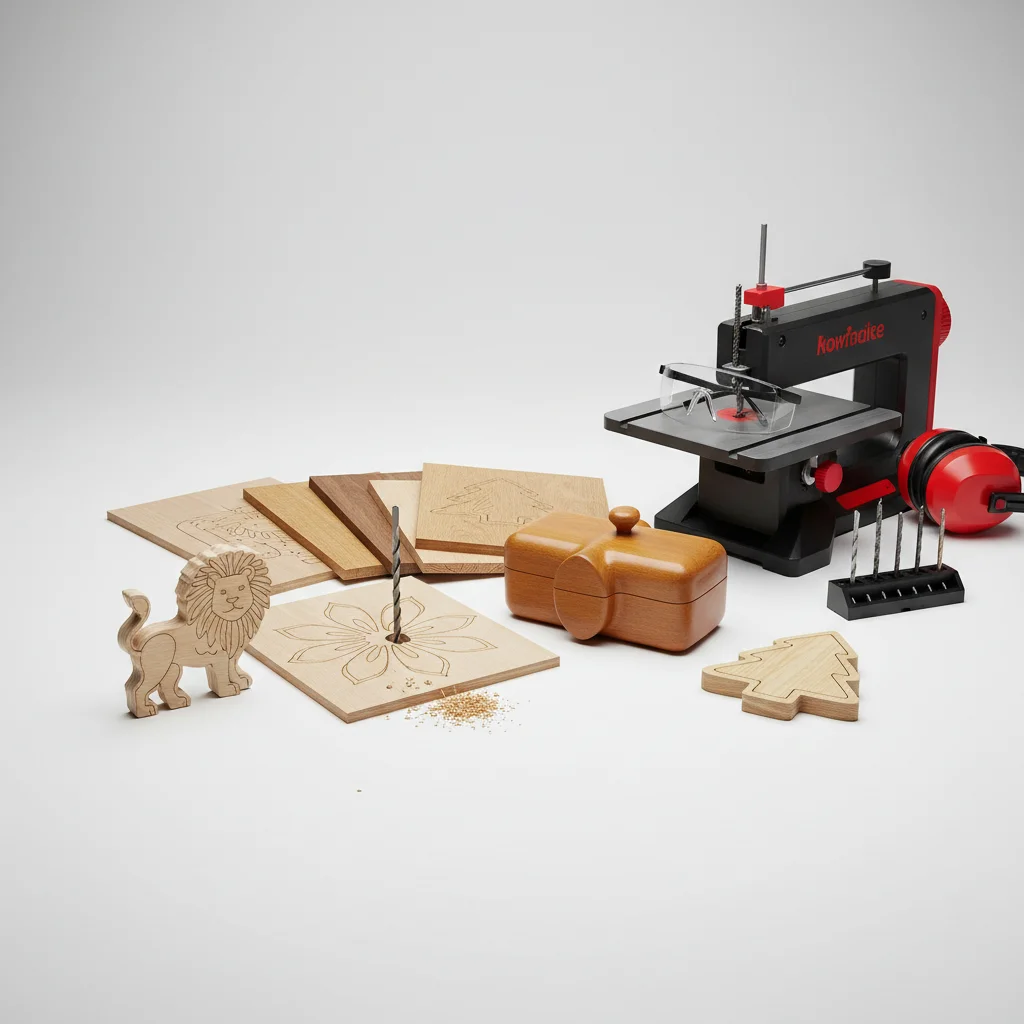
For beginners venturing into scroll saw projects, selecting the right wood is crucial for a smooth and enjoyable experience. The easiest wood types to work with are typically softwoods and some select hardwoods that offer a fine grain and minimal splintering. Specifically, basswood, poplar, and pine stand out as excellent choices for those just starting out, providing a forgiving medium for learning intricate cuts and patterns.
Why Wood Choice Matters for Scroll Saw Beginners
The type of wood you choose directly impacts the ease of cutting, the quality of your finished piece, and your overall learning curve. Softer woods require less pressure, reducing blade breakage and making it simpler to follow lines. They also tend to have a more uniform grain, which prevents the blade from veering off course unexpectedly. Harder woods, while durable, can be challenging for beginners due to their density and tendency to burn or splinter if not cut correctly. For shop curated scroll saws on this site.
Understanding the characteristics of different woods will empower you to make informed decisions for your initial projects. As you gain experience, you can gradually experiment with more challenging materials, but starting with forgiving options builds confidence and skill.
Top 3 Easiest Wood Types for Beginner Scroll Saw Users
When you’re just starting with a scroll saw, these three wood types offer the best combination of workability and availability:
- Basswood: Often considered the gold standard for scroll saw work, basswood is soft, has a very fine, even grain, and carves beautifully without splintering. It’s ideal for intricate designs and takes paint and stain well.
- Poplar: A readily available and affordable hardwood, poplar is softer than many other hardwoods, making it a good transitional wood. It has a straight, uniform grain and is less prone to tear-out than some softwoods.
- Pine: While a softwood, pine is widely accessible and inexpensive. It’s easy to cut, though some varieties can be a bit stringy or prone to splintering if the blade isn’t sharp. Look for clear pine with minimal knots for the best results.
Preparing Your Wood for Scroll Sawing
|
Our Picks for the Best Scroll Saw in 2026
As an Amazon Associate I earn from qualifying purchases.
|
||
| Num | Product | Action |
|---|---|---|
| 1 | BLACK+DECKER Jig Saw, 4.5 -Amp (BDEJS300C) |

|
| 2 | Shop Fox W1872 16" VS Scroll Saw with Foot Switch, LED, Miter Gauge, Rotary Shaft |
|
| 3 | Big Book of Scroll Saw Woodworking: More Than 60 Projects and Techniques for Fretwork, Intarsia, and Other Scroll Saw Crafts (Fox Chapel Publishing) Patterns for Beginners to Advanced Woodworkers |
|
| 4 | 2025 Scroll saw patterns: Scroll saw patterns: Inspirations for wood lovers: 164 patterns with Trees of Life, Hearts, Sailboats, animal family puzzles, landscapes... |
|
| 5 | 3D Scroll Saw Projects: 35 Fun Compound-Cut Projects, More Than 150 Patterns (Fox Chapel Publishing) Scroll Saw Woodworking & Crafts Magazine Compilation - Ornaments, Home Décor, Chess Set, and More |
|
| 6 | FOXBC 5-Inch Scroll Saw Blade Pin End Replacement for Wen 3921 3923, Dremel, Craftsman, Penn State, Delta, Ryobi and All 15in.and 16in.Scroll Saw For Wood, High Carbon Steel - 48 Pack |
|
| 7 | Making Wooden People & Pets with Personality: 24 Easy Projects for the Scroll Saw (Fox Chapel Publishing) Full-Size Patterns for Beginners and Intermediate Scrollers to Create Handmade Gifts in Wood |
|
| 8 | Scroll Saw Workbook, 3rd Edition: Learn to Master Your Scroll Saw in 25 Skill-Building Chapters (Fox Chapel Publishing) Ultimate Beginner's Guide with Projects to Hone Your Scrolling Skills |
|
| 9 | WEN Adjustable Scroll Saw Stand for all WEN and DeWALT® Scroll Saws (MSA1621) |
|
| 10 | Scrolling 101: Everything the Beginner Needs to Know (Fox Chapel Publishing) Scroll Saw Basics, Choosing Blades, Adapting Patterns, Using a Starter Saw, Sanding, and a Skill-Building Exercise Pattern |
|
Proper preparation of your wood stock is just as important as choosing the right type. Always ensure your wood is flat and free of warps. Sanding the surface lightly before you begin can help your pattern adhere better and provide a smoother finish. For intricate patterns, consider using spray adhesive to attach your template firmly to the wood, preventing any shifting during the cutting process. Make sure your wood is adequately supported on your scroll saw table to prevent vibration and ensure clean cuts.
Another critical step is to check for any hidden defects like knots or cracks, especially in pine. These can cause your blade to bind or break. Always cut around such imperfections or choose a different piece of wood if they are too prominent.
Essential Scroll Saw Blades for Beginner Woods
Even with the easiest woods, using the correct blade makes a significant difference. For basswood, poplar, and pine, fine-toothed blades (like a #2 or #3 reverse-tooth blade) are generally recommended. These blades create cleaner cuts and minimize tear-out on the underside of your workpiece. Always ensure your blade is sharp; a dull blade will lead to rough cuts, burning, and increased frustration.
Experiment with different blade types and sizes as you become more comfortable. A good starting point is a universal scroll saw blade assortment pack, which allows you to test various options without committing to a large quantity of one specific type.
Common Beginner Scroll Saw Projects
Once you have your wood and blades ready, what can you make? Simple projects like coasters, small animal figures, decorative plaques, or even personalized keychains are excellent for practicing your skills. Start with designs that have gentle curves and fewer sharp internal angles. As your confidence grows, you can move on to more complex fretwork or intarsia patterns. Remember, practice is key to mastering the scroll saw, and starting with achievable projects will keep you motivated.
Consider projects that allow you to practice different cutting techniques, such as internal cuts, external cuts, and tight turns. Many free patterns are available online, specifically designed for beginners.
