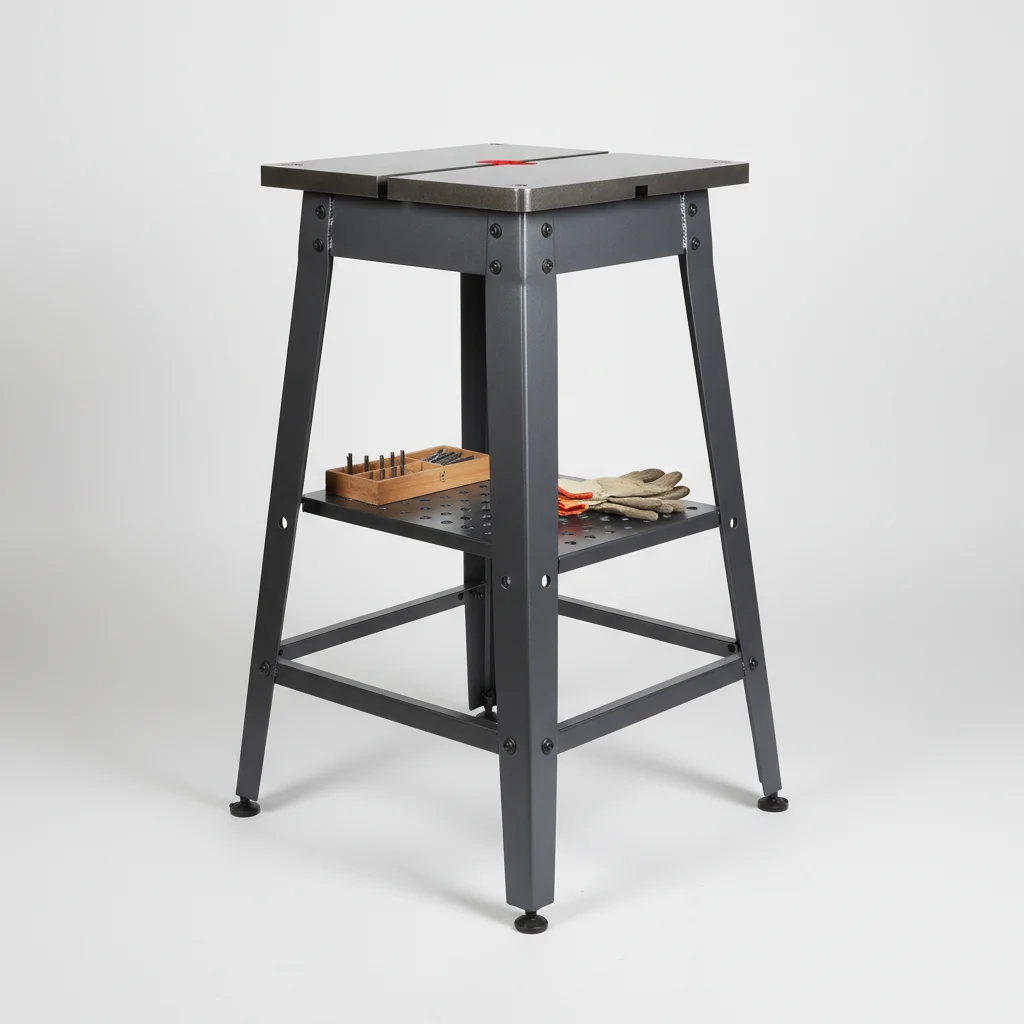
Choosing the right scroll saw stand is crucial for both stability and comfort during your woodworking projects. There are primarily three types of scroll saw stands: dedicated stands, universal stands, and workbench-mounted options. Each offers distinct advantages, with dedicated stands generally providing the best stability dueored to their custom design for specific scroll saw models.
Dedicated Scroll Saw Stands for Optimal Stability
Dedicated scroll saw stands are designed by manufacturers to perfectly fit their specific scroll saw models. This ensures a precise and secure connection, minimizing vibration and maximizing stability. These stands often feature custom mounting holes and a balanced footprint that matches the saw’s weight distribution. While they might be less versatile if you change scroll saw brands, the stability and ergonomic benefits they offer are unmatched for serious scroll saw users. Many dedicated stands also include integrated storage solutions for blades and tools, keeping your workspace organized.
Universal Scroll Saw Stands: Versatility and Adaptability
Universal scroll saw stands, as their name suggests, are designed to accommodate a wide range of scroll saw brands and models. They typically feature adjustable mounting plates or clamps that can be configured to fit various base dimensions. While they offer excellent versatility, the trade-off can sometimes be a slight reduction in absolute stability compared to a perfectly matched dedicated stand. However, many high-quality universal stands incorporate robust construction and anti-vibration features to mitigate this. They are an excellent choice for woodworkers who own multiple scroll saws or anticipate upgrading their saw in the future.
- Adjustable mounting plates for various saw models
- Often feature leveling feet for uneven floors
- Can be folded for storage in smaller workshops
- May include tool trays or power strips
- Generally more affordable than dedicated stands
Workbench-Mounted Options: Space-Saving Solutions
|
Our Picks for the Best Scroll Saw in 2026
As an Amazon Associate I earn from qualifying purchases.
|
||
| Num | Product | Action |
|---|---|---|
| 1 | Shop Fox W1872 16" VS Scroll Saw with Foot Switch, LED, Miter Gauge, Rotary Shaft |

|
| 2 | Scrolling 101: Everything the Beginner Needs to Know (Fox Chapel Publishing) Scroll Saw Basics, Choosing Blades, Adapting Patterns, Using a Starter Saw, Sanding, and a Skill-Building Exercise Pattern |
|
| 3 | WEN Adjustable Scroll Saw Stand for all WEN and DeWALT® Scroll Saws (MSA1621) |
|
| 4 | Big Book of Scroll Saw Woodworking: More Than 60 Projects and Techniques for Fretwork, Intarsia, and Other Scroll Saw Crafts (Fox Chapel Publishing) Patterns for Beginners to Advanced Woodworkers |
|
| 5 | 2025 Scroll saw patterns: Scroll saw patterns: Inspirations for wood lovers: 164 patterns with Trees of Life, Hearts, Sailboats, animal family puzzles, landscapes... |
|
| 6 | FOXBC 5-Inch Scroll Saw Blade Pin End Replacement for Wen 3921 3923, Dremel, Craftsman, Penn State, Delta, Ryobi and All 15in.and 16in.Scroll Saw For Wood, High Carbon Steel - 48 Pack |
|
| 7 | 3D Scroll Saw Projects: 35 Fun Compound-Cut Projects, More Than 150 Patterns (Fox Chapel Publishing) Scroll Saw Woodworking & Crafts Magazine Compilation - Ornaments, Home Décor, Chess Set, and More |
|
| 8 | Making Wooden People & Pets with Personality: 24 Easy Projects for the Scroll Saw (Fox Chapel Publishing) Full-Size Patterns for Beginners and Intermediate Scrollers to Create Handmade Gifts in Wood |
|
| 9 | BLACK+DECKER Jig Saw, 4.5 -Amp (BDEJS300C) |
|
| 10 | Scroll Saw Workbook, 3rd Edition: Learn to Master Your Scroll Saw in 25 Skill-Building Chapters (Fox Chapel Publishing) Ultimate Beginner's Guide with Projects to Hone Your Scrolling Skills |
|
For those with limited workshop space or who prefer a permanent setup, mounting a scroll saw directly to a workbench is a viable option. This method leverages the inherent stability of your workbench, often resulting in a very solid and vibration-free setup. However, it requires careful consideration of workbench height for ergonomic use and may limit the portability of your scroll saw. Some woodworkers create custom quick-release plates to allow for easy removal and storage of the scroll saw when not in use, offering a balance between stability and flexibility. Ensure your workbench is sturdy enough to handle the vibrations and weight of the scroll saw.
Key Features to Consider in a Scroll Saw Stand
When selecting a scroll saw stand, several features can significantly impact your experience. Look for stands made from heavy-gauge steel or cast iron for maximum durability and vibration dampening. Adjustable height is a crucial ergonomic feature, allowing you to work comfortably for extended periods. Integrated storage for blades, wrenches, and other accessories can help keep your workspace tidy and efficient. Finally, consider the footprint of the stand and whether it fits well within your available workshop space. A wider base generally contributes to better stability.
For a highly stable and feature-rich option, consider the. It offers excellent vibration dampening and a robust design suitable for demanding projects. If you need a more versatile solution that still provides great stability, theis a fantastic choice, accommodating various scroll saw models with ease.
Maintaining Your Scroll Saw Stand for Longevity
Proper maintenance of your scroll saw stand will ensure its longevity and continued performance. Regularly check all bolts and fasteners to ensure they are tight, as vibrations can sometimes loosen them over time. Keep the stand clean from sawdust and debris, which can accumulate in moving parts or affect stability. If your stand has adjustable feet, ensure they are properly leveled on your workshop floor to prevent wobbling. Periodically inspect for any signs of rust or damage, especially if your workshop is prone to humidity, and address them promptly to prevent further deterioration.
