For artisans and hobbyists who delight in bringing delicate designs to life, the mini scroll saw stands as an indispensable tool. These compact powerhouses are specifically engineered to handle intricate cuts with precision, transforming small workshops or dedicated craft spaces into hubs of creativity. Whether you’re a seasoned woodworker crafting detailed intarsia or a beginner venturing into the world of delicate fretwork, selecting the right mini scroll saw can dramatically enhance your creative output and enjoyment. This comprehensive guide will navigate you through the world of mini scroll saws, from understanding their core functions and various types to comparing popular models and providing essential buying, usage, and maintenance tips.
What is a Scroll Saw? Definition and Applications
A scroll saw is a specialized power tool characterized by a small, thin blade that moves rapidly up and down to create intricate cuts, curves, and joinery in various materials. Unlike a band saw, which uses a continuous loop blade for rougher cuts, a scroll saw’s fine blade and precise control make it ideal for detailed work that demands accuracy. Its ability to pivot the blade through a workpiece allows for tight turns and delicate interior cutouts, a feat nearly impossible with other saws.
in small crafting projects, scroll saws excel at numerous applications. They are perfect for crafting elaborate wooden puzzles, cutting delicate patterns for fretwork, creating decorative inlays (intarsia), and producing small wooden toys or figurines. Crafters also use them for intricate lettering, jewelry making from wood or soft metals, and prototyping small components. The fine control offered by a scroll saw allows for designs that truly highlight precision and artistry, making it a favorite among those who value meticulous detail. For see our scroll saws recommendations on this site.
Types of Scroll Saws for Crafters
While the general principle of a scroll saw remains consistent, models are differentiated by their design, size, and intended use, particularly for crafters focused on smaller projects. The primary focus for intricate crafting often leans towards compact and feature-rich benchtop models, with some unique portable options.
Benchtop/Compact Scroll Saws
Most mini scroll saws fall into this category. These are designed to sit on a workbench, offering a blend of stability and a relatively small footprint. They typically feature throat depths ranging from 12 to 16 inches, which is ample for most small and medium-sized crafting pieces. These saws often incorporate variable speed control, allowing crafters to adjust the blade’s strokes per minute to match the material’s density and the intricacy of the cut. Their robust construction, often with cast iron tables, helps minimize vibration, which is crucial for achieving clean, precise lines. Many compact models come equipped with features like dust blowers and work lights, enhancing visibility and maintaining a clean work area.
Dremel Moto-Saw
|
Our Picks for the Best Scroll Saw in 2026
As an Amazon Associate I earn from qualifying purchases.
|
||
| Num | Product | Action |
|---|---|---|
| 1 | 3D Scroll Saw Projects: 35 Fun Compound-Cut Projects, More Than 150 Patterns (Fox Chapel Publishing) Scroll Saw Woodworking & Crafts Magazine Compilation - Ornaments, Home Décor, Chess Set, and More |

|
| 2 | WEN Adjustable Scroll Saw Stand for all WEN and DeWALT® Scroll Saws (MSA1621) |
|
| 3 | BLACK+DECKER Jig Saw, 4.5 -Amp (BDEJS300C) |
|
| 4 | FOXBC 5-Inch Scroll Saw Blade Pin End Replacement for Wen 3921 3923, Dremel, Craftsman, Penn State, Delta, Ryobi and All 15in.and 16in.Scroll Saw For Wood, High Carbon Steel - 48 Pack |
|
| 5 | Scrolling 101: Everything the Beginner Needs to Know (Fox Chapel Publishing) Scroll Saw Basics, Choosing Blades, Adapting Patterns, Using a Starter Saw, Sanding, and a Skill-Building Exercise Pattern |
|
| 6 | 2025 Scroll saw patterns: Scroll saw patterns: Inspirations for wood lovers: 164 patterns with Trees of Life, Hearts, Sailboats, animal family puzzles, landscapes... |
|
| 7 | Making Wooden People & Pets with Personality: 24 Easy Projects for the Scroll Saw (Fox Chapel Publishing) Full-Size Patterns for Beginners and Intermediate Scrollers to Create Handmade Gifts in Wood |
|
| 8 | Scroll Saw Workbook, 3rd Edition: Learn to Master Your Scroll Saw in 25 Skill-Building Chapters (Fox Chapel Publishing) Ultimate Beginner's Guide with Projects to Hone Your Scrolling Skills |
|
| 9 | Shop Fox W1872 16" VS Scroll Saw with Foot Switch, LED, Miter Gauge, Rotary Shaft |
|
| 10 | Big Book of Scroll Saw Woodworking: More Than 60 Projects and Techniques for Fretwork, Intarsia, and Other Scroll Saw Crafts (Fox Chapel Publishing) Patterns for Beginners to Advanced Woodworkers |
|
The Dremel Moto-Saw represents a unique hybrid option for crafters requiring exceptional portability and versatility. This innovative tool functions as both a stationary benchtop scroll saw and a detachable handheld coping saw. Its compact size and lightweight design make it ideal for very small, delicate projects or for crafters with extremely limited workspace who need to store their tools away easily. While its throat depth and power might be less than larger benchtop models, its dual functionality and ease of use make it a compelling choice for hobbyists focusing on miniature work or those who prefer the flexibility of a handheld tool for certain cuts.
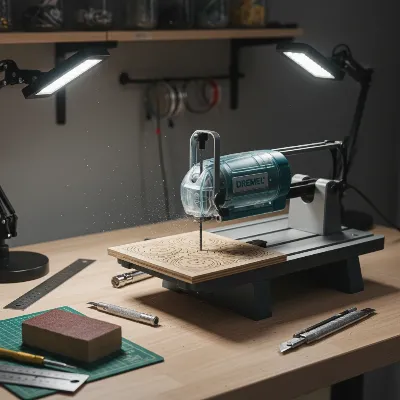 Dremel Moto-Saw in benchtop mode, cutting a small wooden piece with intricate detail, surrounded by crafting tools, soft lighting
Anatomy and Operation Principles of a Scroll Saw
Understanding the core components and how they interact is fundamental to mastering any scroll saw, especially for the detailed work involved in crafting. A scroll saw’s effectiveness hinges on its design, allowing for controlled, precise movements.
Key Components of a Scroll Saw
Every scroll saw, regardless of size, includes several essential parts:
- Blade: The heart of the saw, a thin, sharp blade moves vertically. Blades come in various tooth counts (TPI) and types (plain-end and pin-end). Plain-end (pinless) blades are generally preferred for intricate work as they are finer and can fit through smaller pilot holes, enabling more delicate internal cuts. Blade tension is critical for clean cuts and preventing breakage.
- Table: The flat surface where the workpiece rests. Most tables can tilt, allowing for angled or bevel cuts. A smooth, often cast-iron or aluminum table, provides stability and reduces friction.
- Motor: Powers the up-and-down movement of the blade. For mini scroll saws, motors are typically less powerful than industrial models but are sufficient for cutting common crafting materials like wood, plastic, and soft metals.
- Variable Speed Control: A crucial feature for crafters, this allows adjustment of the blade’s strokes per minute (SPM). Slower speeds are ideal for delicate cuts, harder materials, or plastics (to prevent melting), while faster speeds work well for softer woods and less intricate designs.
- Dust Blower: An integrated nozzle that directs a stream of air onto the cutting line, clearing sawdust and maintaining clear visibility of your pattern.
- Blade Tension Lever: This mechanism allows you to quickly adjust the tightness of the blade. Correct tension is vital for accurate cuts and blade longevity.
- Hold-Down Foot: A spring-loaded arm that presses down on the workpiece near the blade, preventing it from lifting with the blade’s upward stroke, ensuring consistent cuts and safety.
- Work Light: An adjustable LED light often positioned to illuminate the cutting area, which is invaluable for intricate work and in dimly lit workshops.
Basic Principle of Operation
The scroll saw operates on a simple yet effective principle: a motor drives an arm mechanism that moves the blade rapidly up and down through a small opening in the table. The crafter guides the workpiece along the pattern line against the moving blade. Unlike a band saw where you push the material into a continuously moving blade, with a scroll saw, you primarily guide the material, letting the fast-moving, thin blade do the cutting. For internal cuts, a pilot hole is drilled in the workpiece, the blade is detached from the upper arm, threaded through the pilot hole, and then reattached and tensioned. This allows for cutting designs entirely within a piece of material without cutting through its outer edges. The ability to control speed and blade type empowers crafters to achieve incredibly precise and varied results.
Comparing Popular Mini Scroll Saw Brands
When exploring mini scroll saws for crafting, several brands consistently stand out, each offering unique strengths that cater to different needs and budgets. Here’s a comparison of some popular options:
| Feature/Brand | SKIL 1.2 Amp 16-inch V.S. | RYOBI 1.2 Amp 16-inch | WEN 3921 16-inch Two-Direction | Dremel MS20 Moto-Saw |
|---|---|---|---|---|
| Throat Depth | 16 inches | 16 inches | 16 inches (plus 90-degree) | 10 inches |
| Motor Power | 1.2 Amps | 1.2 Amps | 1.6 Amps | 0.6 Amps |
| Speed Range (SPM) | Variable (500-1700) | Variable (500-1700) | Variable (500-1700) | Variable (1500-2250) |
| Blade Type | Plain & Pin-end | Plain & Pin-end | Plain & Pin-end | Proprietary |
| Key Features | LED work light, foot pedal, electronic variable speed, compact design. | Integrated dust collection, cast aluminum table, good balance of stability/portability. | 90-degree blade orientation for wider cuts, LED light, dust blower, vacuum port, quick blade changes. | Detachable for handheld use, compact, tool-free blade changes. |
| Portability | Good (under 30 lbs) | Good (around 27 lbs) | Good (around 25.5 lbs) | Excellent (very light, handheld option) |
| Ideal For | Beginners, small workshops, hobbyists needing precise control. | Budget-conscious crafters, good all-around performance. | Versatile hobbyists, those needing to cut wider pieces, good value. | Very small, intricate projects, extreme space-saving, portable tasks. |
- SKIL 1.2 Amp 16-inch Variable Speed Scroll Saw: This model is frequently praised for its user-friendly features, making it an excellent choice for beginners. The inclusion of an LED work light and a foot pedal significantly enhances control and safety, allowing both hands to guide the workpiece. Its compact design is well-suited for smaller workshops, offering professional-grade performance in a manageable footprint.
- RYOBI 1.2 Amp 16-inch Scroll Saw: Known for its exceptional value, the RYOBI offers a robust cast aluminum table and an integrated dust collection system. It strikes a good balance between stability and portability, making it suitable for various workshop setups. Its versatility in handling both plain and pin-end blades provides flexibility for diverse cutting applications.
- WEN 3921 16-inch Two-Direction Scroll Saw: The WEN 3921 is highly regarded for its innovative two-direction blade installation, allowing users to cut materials wider than the throat depth by orienting the blade 90 degrees. This feature, combined with variable speed, a dust blower, and an LED work light, makes it a strong contender for hobbyists seeking versatility and value. It’s often recommended as a practical choice for beginners due to its intuitive controls.
- Dremel MS20 Moto-Saw Variable Speed Compact Scroll Saw Kit: The Dremel Moto-Saw shines for its unique ability to switch between a stationary benchtop saw and a portable handheld coping saw. This makes it incredibly versatile for extremely small projects, detailed curves, and situations where maximum portability is required. Its smaller throat depth is a trade-off for its unmatched compactness and dual functionality.
While not strictly “mini,” the DeWalt DW788 20-inch Variable Speed Scroll Saw is often mentioned in discussions for its top-tier performance, low vibration, and smooth operation, making it a professional-grade option for serious crafters who have the space and budget. However, for most small crafting projects and compact workshops, the aforementioned models provide excellent performance and value.
Choosing the Right Mini Scroll Saw (Buying Guide)
Selecting the best mini scroll saw involves a careful consideration of your crafting needs, skill level, and workspace limitations. The right tool will not only fit your budget but also enhance your precision and enjoyment in every project.
Key Factors to Consider When Buying
- Motor Power and Variable Speed Control: For small crafting projects, a motor around 1.2 to 1.6 Amps is generally sufficient. More importantly, look for variable speed control. This allows you to adjust the blade’s strokes per minute (SPM) to suit different materials and intricate designs. Slower speeds prevent burning delicate woods or melting plastics, while faster speeds are efficient for general cuts.
- Throat Depth: This measurement indicates the distance from the blade to the back of the saw’s frame and determines the maximum width of material you can cut. For “mini” scroll saws and small projects, a throat depth of 12 to 16 inches is typically adequate. Larger pieces would require turning the material, potentially limiting intricate designs.
- Blade System and Ease of Change: The ability to quickly and easily change blades is paramount for crafters, especially when performing numerous internal cuts.
- Pin-end blades are thicker and quicker to change, but their pins limit the size of pilot holes you can use.
- Plain-end (pinless) blades are thinner and ideal for highly intricate work as they fit into smaller drilled holes. Look for tool-free blade clamps or quick-release mechanisms that make changing pinless blades less cumbersome.
- Table Tilt: Most scroll saw tables can tilt, usually up to 45 degrees, allowing you to make angled or bevel cuts. This feature is essential for creating dimensional projects. Some advanced saws offer a tilting arm instead of a tilting table, which allows the workpiece to remain flat for greater control.
- Vibration and Stability: Minimal vibration is crucial for precision. A heavier saw, often with a cast-iron table and base, will generally vibrate less. If choosing a lighter, more portable model, ensure it can be securely clamped or bolted to a sturdy workbench. A rubber mat can also help dampen vibrations.
- Additional Features:
- Dust Blower: Essential for keeping the cut line clear of sawdust.
- Work Light: An integrated LED light improves visibility for intricate details.
- Foot Pedal: Provides hands-free power control, which significantly improves safety and precision by allowing both hands to guide the workpiece.
- Dust Collection Port: Allows connection to a shop vacuum for cleaner air and workspace.
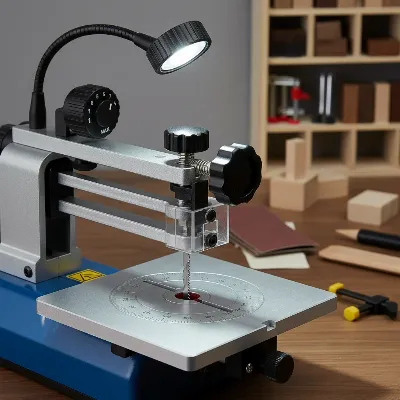 A close-up shot of a mini scroll saw highlighting key features like the blade tension knob, variable speed dial, LED work light, and tilting table, in a well-organized crafting space
Scroll Saw for Beginners
If you’re new to scroll sawing, prioritize ease of use and safety features. Look for models with:
- Intuitive Controls: Simple on/off switches, easy-to-reach speed adjustments.
- Quick Blade Change Mechanisms: Reduces frustration during learning, especially for internal cuts.
- Good Visibility: An effective dust blower and an integrated work light are highly beneficial.
- Moderate Throat Depth: A 16-inch throat is a good starting point, offering versatility without being overwhelming.
- Foot Pedal: A major upgrade for control and safety, freeing up your hands.
- Models like the SKIL 1.2 Amp or WEN 3921 are often recommended for their user-friendly designs and value.
Scroll Saw for Professional Crafters
Experienced crafters tackling complex projects will benefit from saws offering enhanced precision, durability, and a wider range of features:
- Superior Vibration Control: For the cleanest cuts, especially during long sessions.
- Excellent Blade Tensioning System: Maintains consistent tension for intricate fretwork.
- Advanced Blade Compatibility: Prioritize saws that excel with pinless blades.
- Larger, Sturdier Tables: Provide better support for diverse projects.
- Tilting Arm: If budget allows, a tilting arm (instead of just a tilting table) offers a flatter workpiece surface for improved control during angled cuts.
- While often not “mini,” higher-end saws like the DeWalt DW788 are favored by professionals for their smooth operation and reliability.
Using and Maintaining Your Mini Scroll Saw
Proper usage and regular maintenance are critical for maximizing your scroll saw’s performance, ensuring safety, and extending its lifespan. Mastering a few techniques and habits will significantly improve your crafting experience.
Steps to Prepare Before Use
- Workspace Preparation: Ensure your workspace is clean, well-lit, and free of clutter. If working in a small space, open windows or use fans for ventilation, especially when cutting materials that produce fine dust or fumes.
- Secure the Saw: For benchtop models, ensure the saw is stable. If it’s prone to vibration, clamp or bolt it to your workbench. A rubber anti-vibration mat can also be highly effective.
- Blade Installation:
- Always install the blade with the teeth pointing downward towards the table.
- For pin-end blades, simply hook the pins into the upper and lower blade clamps.
- For plain-end blades, insert the blade ends into the clamps and tighten them securely.
- Check your owner’s manual for specific instructions as mechanisms vary.
- Blade Tension: Adjust the blade tension. A common test is to pluck the blade like a guitar string; it should produce a clear, high-pitched “ping” sound, not a dull thud. Too much tension can cause blade breakage, while too little leads to twisted blades and imprecise cuts.
- Adjust Hold-Down Foot: Lower the hold-down foot until it rests gently on your workpiece, just above the blade. This prevents the material from lifting and vibrating.
- Wax the Table (Optional but Recommended): Apply a thin coat of paste wax (specifically for woodworking, avoiding automotive waxes with silicone) to the saw table. Let it dry, then buff it. This reduces friction, allowing the workpiece to glide smoothly.
Basic and Advanced Cutting Techniques
- Let the Saw Do the Work: The most crucial rule. Do not force the wood into the blade. Guide the material gently along your pattern line. Forcing can bend or break blades, overheat the motor, and result in rough cuts.
- Guiding the Workpiece: Use both hands to support and guide the material. For curves, rotate the workpiece slowly as you feed it forward. For straight lines, maintain a consistent forward motion.
- Internal Cuts: For designs entirely within a workpiece:
- Drill a small pilot hole (appropriate for your blade size) within the area you wish to remove.
- Release the blade tension, unclamp the upper end of the blade, and thread the blade through the pilot hole.
- Reattach the upper end of the blade, tension it, and adjust the hold-down foot.
- Make your cut, then reverse the process to remove the blade and free the workpiece.
- Corners: For sharp outside corners, cut past the corner slightly, back out, reposition the workpiece, and cut from the new angle. For inside corners, you might need to make small relief cuts or slow down considerably and pivot the workpiece meticulously.
- Variable Speed Application: Use slower speeds for hard woods, plastics, or very intricate curves. Higher speeds are generally suitable for softer woods and less detailed work. Experiment on scrap pieces to find the optimal speed for your material and blade.
Safety Measures
Safety is paramount when operating any power tool.
- Eye and Ear Protection: Always wear safety glasses to protect against flying debris. Hearing protection is also recommended for extended use.
- Dust Mask: Wear a dust mask, especially when cutting materials like MDF or certain hardwoods, to protect your respiratory system.
- Appropriate Clothing: Avoid loose clothing, jewelry, or long hair that could get caught in the moving blade or components.
- Keep Hands Clear: Always keep your fingers away from the blade. Use the hold-down foot and ensure a comfortable grip on your workpiece.
- Unplug When Changing Blades/Making Adjustments: Disconnect the power before performing any blade changes, adjustments, or maintenance to prevent accidental activation.
- Ventilation: Ensure good ventilation in your workspace.
Maintenance and Cleaning
Regular maintenance keeps your scroll saw in top condition:
- Clean After Each Use: Clear sawdust from the table, blade clamps, and motor housing. A shop vacuum or air compressor can be very effective. Ensure the dust blower nozzle is clear.
- Release Blade Tension: Always release the blade tension when the saw is not in use. This prevents stress on the blade and the saw’s arms, prolonging their life.
- Inspect Blades: Check blades for dullness or damage. Replace them as needed; dull blades lead to rough cuts and increased strain on the motor.
- Lubrication: Consult your owner’s manual for any specific lubrication points or requirements. Generally, modern scroll saws are largely maintenance-free in terms of internal lubrication.
- Table Waxing: Reapply paste wax to the table periodically to maintain a smooth, low-friction surface.
Common Scroll Saw Issues and Solutions
Even with proper use and maintenance, you might encounter issues. Knowing how to diagnose and address them can save time and frustration.
- Blade Breakage: This is one of the most common problems.
- Cause: Too much tension, forcing the workpiece, using the wrong blade for the material, or a dull blade.
- Solution: Check blade tension (it should “ping” when plucked), let the saw do the cutting, use the correct blade type and TPI for your material, and replace dull blades promptly.
- Excessive Vibration: Can lead to inaccurate cuts and user fatigue.
- Cause: Loose components, an unbalanced saw, or an unstable workbench.
- Solution: Ensure all saw components (clamps, table bolts) are tight. If the saw is lightweight, securely clamp or bolt it to a heavy, stable workbench. Placing a rubber mat under the saw can also significantly reduce vibration.
- Inaccurate or Rough Cuts:
- Cause: Dull blade, incorrect blade tension, forcing the workpiece, wrong blade type for the material, or inconsistent feeding speed.
- Solution: Replace dull blades, adjust blade tension, guide the workpiece gently and consistently, and use a blade with appropriate TPI (higher TPI for smoother, finer cuts).
- Blade Twisting or Bending: Often occurs during internal cuts or tight turns.
- Cause: Insufficient blade tension, forcing the workpiece, or trying to turn too sharply without adequate blade clearance.
- Solution: Increase blade tension slightly (without over-tightening). Slow down on turns and allow the blade to cut its path. Ensure you’re using a blade thin enough for the desired radius.
- Motor Overheating:
- Cause: Prolonged heavy use, forcing the workpiece, or a dull blade making the motor work harder.
- Solution: Take breaks during long cutting sessions. Always let the saw do the work; don’t force material. Keep blades sharp. Ensure the motor’s vents are not obstructed.
- Dust Buildup Obscuring Cut Line:
- Cause: Ineffective or clogged dust blower.
- Solution: Clean the dust blower nozzle regularly. Ensure the dust collection system (if connected) is working efficiently.
Most simple issues can be resolved with a quick check of blade tension, blade sharpness, and user technique. For persistent or more complex problems, consulting your scroll saw’s user manual or contacting the manufacturer’s support is recommended.
Conclusion
The mini scroll saw is an invaluable asset for anyone passionate about intricate crafting. Its ability to create delicate, precise cuts in various materials makes it a cornerstone for projects ranging from detailed puzzles to fine fretwork and artistic intarsia. By understanding the key features like variable speed control, blade types, and throat depth, crafters can confidently choose a saw that perfectly fits their workspace and creative ambitions. Proper setup, safe operation, and consistent maintenance ensure not only the longevity of your tool but also the high quality and enjoyment of every project. With the right mini scroll saw, your creative possibilities are truly limitless, allowing you to bring even the most complex designs to life with remarkable precision.
What intricate crafting project will you tackle first with your new mini scroll saw?
Frequently Asked Questions
What’s the ideal throat depth for small crafting projects?
For most small crafting projects, a throat depth of 12 to 16 inches is ideal. This range provides ample space to maneuver common project sizes like wooden puzzles, fretwork, and intarsia, while keeping the overall footprint of the saw compact enough for smaller workshops.
Can I cut metal with a mini scroll saw?
Yes, many mini scroll saws can cut thin, soft metals like brass, copper, and aluminum, provided you use the correct type of metal-cutting blade and operate the saw at a very slow speed. Always consult your saw’s manual and use appropriate safety gear, including eye protection.
What’s the difference between pinned and pinless blades?
Pinned blades have small pins at each end that hook into the saw’s clamps, making them quicker to change but thicker. Pinless (plain-end) blades are held by friction clamps and are much thinner, allowing them to fit into smaller pilot holes for intricate internal cuts, which is often preferred for detailed crafting.
How often should I change my scroll saw blade?
Blade changes depend on the material you’re cutting and the intensity of use. As a general rule, change your blade when you notice cuts becoming rougher, splintering, or if the blade begins to heat up excessively. For intricate work, sharp blades are crucial for precision, so change them frequently.
Is a foot pedal necessary for a mini scroll saw?
While not strictly “necessary,” a foot pedal is a highly recommended accessory, especially for intricate crafting. It allows for hands-free on/off control, freeing both hands to meticulously guide the workpiece, which significantly enhances precision, control, and overall safety during delicate cuts.
Frequently Asked Questions
What is the ideal throat depth for small crafting projects?
For most small crafting projects, a throat depth of 12 to 16 inches is ideal. This range provides ample space to maneuver common project sizes like wooden puzzles, fretwork, and intarsia, while keeping the overall footprint of the saw compact enough for smaller workshops.
Can a mini scroll saw be used to cut metal?
Yes, many mini scroll saws can cut thin, soft metals like brass, copper, and aluminum. This requires using the correct type of metal-cutting blade and operating the saw at a very slow speed. Always consult your saw's manual and use appropriate safety gear, including eye protection.
What is the difference between pinned and pinless scroll saw blades?
Pinned blades have small pins at each end that hook into the saw's clamps, making them quicker to change but thicker. Pinless (plain-end) blades are held by friction clamps and are much thinner, allowing them to fit into smaller pilot holes for intricate internal cuts, which is often preferred for detailed crafting.
How frequently should I replace my scroll saw blade?
Blade changes depend on the material being cut and the intensity of use. As a general rule, replace your blade when cuts become rougher, splintering occurs, or if the blade heats up excessively. For intricate work, sharp blades are crucial for precision, so frequent changes are recommended.
Is a foot pedal a necessary accessory for a mini scroll saw?
While not strictly necessary, a foot pedal is a highly recommended accessory, especially for intricate crafting. It allows for hands-free on/off control, freeing both hands to meticulously guide the workpiece, which significantly enhances precision, control, and overall safety during delicate cuts.

I picked up one of the mini scroll saws mentioned, the Dremel Moto-Saw, for some delicate fretwork. It’s super portable and great for quick projects. My only minor complaint is that changing blades can be a bit fiddly at first, but once you get the hang of it, it’s not too bad. Good value for the price point.
I was hoping the Rockwell BladeRunner X2 would be a good fit for my occasional crafting, especially with its quick-change blade system. While it’s decent for basic cuts, I found it struggled a bit with thicker hardwoods, even within its stated capacity. It’s fine for softer woods and plastics, but don’t expect miracles on anything too dense.
As a beginner, I was a bit intimidated by scroll saws, but the guide’s tips on maintenance and usage were super helpful. I ended up getting the Shop Fox W1713, and it’s been perfect for learning. The foot switch is a nice safety feature, and it’s surprisingly quiet for a power tool. My small workshop is loving it!
I’ve been using the WEN 3921 for a few months now, and it’s been a game-changer for my small intarsia projects. The variable speed control is fantastic for switching between different wood types, and it handles intricate cuts with surprising ease for its size. Definitely recommend it if you’re tight on space but still want quality.